
Books for the why, video for the how
The 8 best BJJ books, and what to read each one for
A book can’t show you timing. What a good one can do is explain why jiu-jitsu is trained the way it is, where it came from and what to learn first. These are the eight worth your time, each with one line on what to read it for.
Read BJJ books for the why and watch video for the how. White belt, one book first: Jiu-Jitsu University by Saulo Ribeiro. You know the moves but have no plan: The BJJ Map, our own PDF guide by Max van den Broek. For history read Opening Closed Guard by Robert Drysdale, and for concepts Mastering Jujitsu by Renzo Gracie and John Danaher.
The BJJ Map is our own guide: Max van den Broek, who runs BJJ More, wrote it and we sell it ourselves. As an Amazon Associate BJJ More earns from qualifying purchases, at no extra cost to you. Our review of the Jiu-Jitsu University video course contains BJJ Fanatics affiliate links.
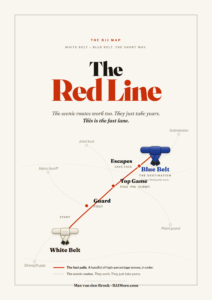
The BJJ Map
A PDF learning plan by Max van den Broek, $47. Pick it if you know plenty of techniques and still have no plan.
The cover shows the Map's Red Line: the short way from white belt to blue belt.
- PDF guide
- $47
- White and blue belts
Jiu-Jitsu University
The book people on the mat name first. Organized by belt, and white belt starts with survival.
- Technique
- Gi
- 2008
Opening Closed Guard
Where BJJ really came from, told through interviews that don’t all agree with each other.
- History
- Interviews
- 2020
 By Max van den Broek, BJJ black belt (Checkmat). 8 books, one of them our own guide. Updated November 2026.
In this guide
- Which BJJ book for which reader
- The 8 best BJJ books
- 1. The BJJ Map (our own guide)
- 2. Jiu-Jitsu University
- 3. Opening Closed Guard
- 4. Mastering Jujitsu
- 5. Breathe
- 6. A Fighter's Mind
- 7. The BJJ Globetrotter
- 8. Modern Submission Grappling
- Also named, and what left the list
- Books versus BJJ instructionals
- BJJ book questions
Which BJJ book is right for you?
Start with where you are, not with the book. Find yourself on the left. The pick on the right is where to start, and the link jumps to why.
- You’re a beginner and you feel lost in classJiu-Jitsu UniversityIt starts with surviving underneath, which is where a white belt spends most rounds.Check price on Amazon
- You know plenty of moves, but you have no planThe BJJ Map (our own guide)It ranks what to learn first and what can wait. A PDF you read in an afternoon.See The BJJ Map ($47)
- You’re a hobbyist with a job, a family and two classes a weekThe BJJ Map, then The BJJ GlobetrotterWith little mat time, knowing what to skip matters most. The Globetrotter is the one for the couch.See The BJJ Map ($47)
- You compete, or you want toA Fighter's MindFighters and coaches from several combat sports on nerves, preparation and pressure.Check price on Amazon
- You want the why, not another moveMastering JujitsuJiu-jitsu explained as one system, with a chapter on where it came from.Check price on Amazon
- You want to know where BJJ really came fromOpening Closed GuardThe history told by the people who were there, including where they disagree.Check price on Amazon
- You only train no-giModern Submission GrapplingThe one no-gi manual people on the mat name. The classics are all gi books.Check price on Amazon
- You want a good story, or a gift for a training partnerBreathe or The BJJ GlobetrotterRickson Gracie’s memoir, or a 140-day trip around the world on the mats.Check price on Amazon
- You want to learn a technique this monthNot a book: an instructionalVideo shows the movement a photo can’t. That section explains where to start.
Prefer watching to reading? Start at the best BJJ instructionals.
The 8 best BJJ books
One thing first: number 1 is our own guide.
The BJJ Map is a PDF that Max van den Broek, who runs this site, wrote and sells. It is on this list because it is a book in everything but paper, and because it answers the one question the other seven don’t: what to learn first. The seven after it are ordered by how often people on the mat recommend them in the book threads we read, and by whether you can still buy them at a normal price.
If you’d rather skip our own product, start at number 2.
The BJJ Map
By Max van den Broek
Our own guide
Read it for the order: what to learn first, and what can wait.
Full disclosure: this is our own guide, written by Max van den Broek, who runs BJJ More.
It is a PDF, not a paper book: text, checklists and flowcharts that you can read in an afternoon. Where most books explain moves or tell a story, the Map ranks guards, guard passes, pins, leg entanglements and submissions by what to learn first and what can wait. It also gives a time-to-learn estimate for each position and a list of teachers worth studying.
It costs $47, and the first chapters are free if you want to look before you pay.
I spent almost four years on the scenic route before I figured that out. This is the map I wish I’d had.
Read it if: you are a white or blue belt who collects techniques and can’t say what your game is.
Skip it if: you want step-by-step photos of techniques, or you already have a settled A-game and need narrow, advanced detail. And skip it if you only want a neutral pick: we wrote this one.
Jiu-Jitsu University
By Saulo Ribeiro with Kevin Howell
Best technique reference
Read it for survival first: how to stop losing before you try to win.
If you buy one technique book, this is the one.
It is organized by belt, and the white belt chapter is not about attacking. It is about surviving underneath, which is a far better beginner priority than collecting submissions. After that come escapes, guard, passing and submissions, in photo sequences clear enough to refresh something you already saw in class.
It is from 2008 and it is a gi book, and both show.
This is the book that gets named first in almost every book thread. People call it the bible of the sport and say they still go back to it years later. The criticism is fair as well: one owner finds a lot of it old school by now, and another loves the book but finds it hard to follow without seeing the move.
Read it if: you are a white or blue belt and want one reference on the shelf, or you want to understand why survival comes before escapes.
Skip it if: you only train no-gi, or you want a modern leg lock game. And if still photos don’t work for you, take the video version below.
That reader who couldn’t follow the photos got one answer: Saulo has since filmed it.
The video course has the same name and the same structure: five volumes in the gi, one per belt, 8 hours 51 minutes in all, released in September 2025. We watched all five volumes for our Jiu-Jitsu University video review, with clips of the survival positions.
Book for the idea, video for the movement.
Opening Closed Guard
By Robert Drysdale
Best history book
Read it for the history your academy’s lineage chart leaves out.
BJJ history is usually told as one tidy family story.
Drysdale, an ADCC and IBJJF world champion, made a documentary about where jiu-jitsu really came from, and this book is the story behind that film. It is built from interviews, and the people in it don’t always agree with each other. That makes it messier than a lineage chart, and a lot more interesting.
There is not a single technique in it.
It is the history pick on the mat too. One reader calls it his favorite on the history of the sport, another says it was fun to finally know the history. Drysdale’s newer books get named in the same threads.
Read it if: you want to know where the art you train came from, including the parts the official story skips.
Skip it if: you want training advice. Also know that the paperback is self-published and stock runs thin. There is a Kindle edition too.
Mastering Jujitsu
By Renzo Gracie and John Danaher
Best for concepts
Read it for the system: how standing, the clinch and the ground fit together.
This is the why book.
It came out in 2003, years before Danaher was known for his instructionals, and it treats jiu-jitsu as one fighting system and not as a bag of ground techniques. The opening chapter covers the history of classical jujitsu. The rest explains how a fight moves between standing, the clinch and the ground, and what you want in each.
The technique photos are from another era, and nobody recommends it for those.
On the mat it gets named when someone asks for concepts or for martial arts history, not for moves. One reader who says he doesn’t even like Danaher still calls it by far the best BJJ text. Another still uses a back mount escape from it.
Read it if: you can only take in so many techniques, and you want the thinking behind them.
Skip it if: you want current competition systems. For those, go to video.
There is no film of this book. But Danaher went on to put his whole system on video, and those courses are where the concepts from 2003 got their detail: John Danaher’s instructionals, ranked.
Breathe: A Life in Flow
By Rickson Gracie with Peter Maguire
Best memoir
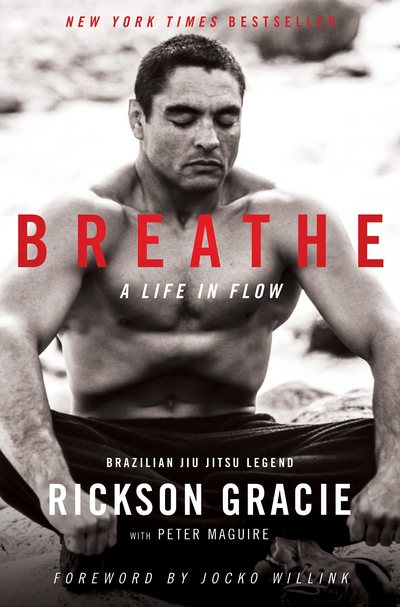
Read it for the stories, and for how Rickson thinks about training.
Rickson Gracie is more legend than person to most of us.
This memoir gives the legend a voice: the family, the fights and his idea of what jiu-jitsu is for. It is a memoir, so it is one man’s version of events. For the other versions, read it next to Opening Closed Guard.
There is nothing in it to drill.
Readers love the stories and his approach to training, and one calls it worth rereading for any athlete. Several also say, in less polite words, that Rickson is very impressed with Rickson. Both come up in the same thread, sometimes in the same comment.
Read it if: you want a readable story from inside the Gracie family, or a gift for a training partner.
Skip it if: you want neutral history or a training manual.
There is a second book
Rickson’s follow-up, Comfort in Darkness, came out in 2024. We haven’t seen enough readers talk about it to place it.
A Fighter's Mind
By Sam Sheridan
Best for competitors
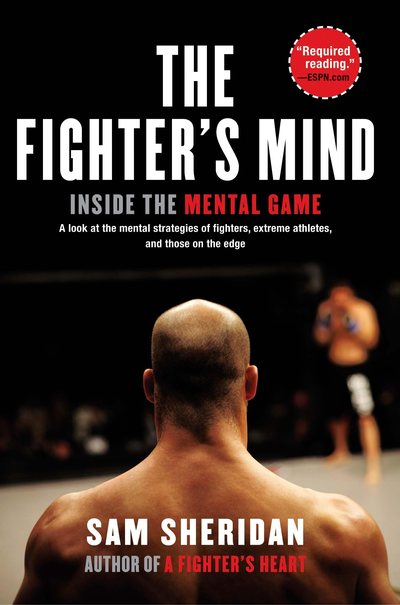
Read it for how fighters and coaches handle nerves, preparation and pressure.
This is the one book here that is not about BJJ alone.
Sheridan interviews fighters and coaches from several combat sports about the mental side, and grapplers will know Marcelo Garcia. The spread is the point: wrestlers such as Dan Gable and Randy Couture think about training and competing very differently from most jiu-jitsu people. You won’t get a mental training program, you get a set of approaches to try.
Amazon now lists it as The Fighter’s Mind: same book.
What fascinated me most is that Marcelo Garcia thinks his main competitive edge is that he loves BJJ more than anyone else.
Because he sees it that way, he makes keeping that love a priority in his training. He doesn’t lift weights: it might make him stronger, but it would take away from his love for BJJ if he felt he had to lift for it. So he builds strength during BJJ training, by squeezing people extra hard.
The interviews with Dan Gable and Randy Couture show a completely different approach: both make breaking their opponent mentally a primary goal, in a way we just don’t in BJJ.
It gets named less often than the BJJ-only books, usually in one breath with Sheridan’s first book, A Fighter’s Heart, as good reads that are not strictly about BJJ.
Read it if: you compete or plan to, and you want to hear how people at the top deal with it.
Skip it if: you want BJJ-only stories, or a step-by-step mental routine.
If the Marcelo Garcia chapter makes you want to see how he actually plays: Marcelo Garcia’s instructionals, reviewed.
The BJJ Globetrotter
By Christian Graugart
Best easy read
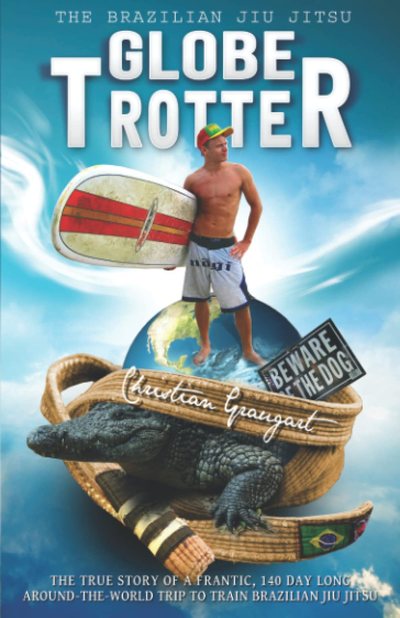
Read it to remember that this is supposed to be fun.
A grappler from Denmark buys a round-the-world ticket and trains everywhere he lands.
That is the whole book: 140 days, gym after gym, and the people he meets on the mats. Graugart later built the BJJ Globetrotters community and its training camps on the same idea. It won’t improve your guard, and it doesn’t try to.
It is the book here you are most likely to finish in a weekend.
It came up in three of the ten book threads we read, from several different people and each time as a pleasure read. A good chill read is the typical line. One reader put it in his five favorite grappling books.
Read it if: you are a hobbyist, you travel with a gi in your bag, or you need a break from studying technique.
Skip it if: you only read to get better at jiu-jitsu.
What it replaced
This spot used to belong to The Cauliflower Chronicles by Marshal D. Carper, a similar training-and-travel story set in Hawaii. It still has its fans, but the Globetrotter gets named more often. Both are fine choices: The Cauliflower Chronicles on Amazon.
Modern Submission Grappling
By Miha Perhavec
The no-gi manual
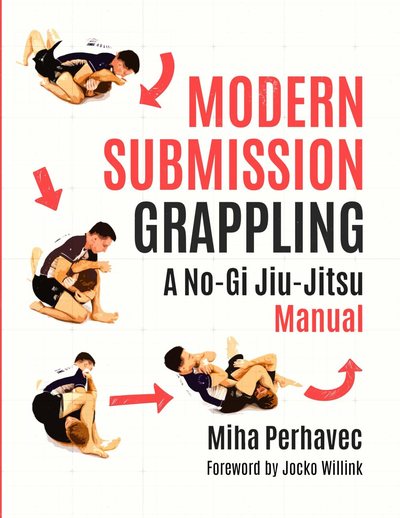
Read it if you train no-gi and want a manual that isn’t twenty years old.
Every technique classic on this list is a gi book.
This one, subtitled A No-Gi Jiu-Jitsu Manual, came out in 2024 and is the only no-gi technique book that got named in the threads we read. One reader lists it next to Jiu-Jitsu University as his two favorites. It is last on this list because it was named least, not because anyone said a bad word about it.
Our own advice for no-gi technique is still video first.
Named in two of the ten book threads, by three people. That is thin, and we would rather say so than pretend otherwise.
Read it if: you only train no-gi, you like learning from a page, and Jiu-Jitsu University feels too gi-heavy.
Skip it if: you learn better from watching. Then start at the best BJJ instructionals.
Most of these cost $10 to $35 in paperback. Jiu-Jitsu University, Opening Closed Guard and Mastering Jujitsu were around $20 to $25 on Amazon when we looked on Nov 20, 2026. Book prices move, so check before you buy.
Also named, and what left the list
Eight is a choice.
These are the books that came up on the mat more than once but didn’t make the eight, plus one that used to be on this page. We have not ranked them.
- Scientific Jiu-Jitsu, by Will Weisser (2026)
The concept book people are asking for right now: three readers in one thread praised it. It only came out in June 2026, and the author is active in those same threads, so we are letting it sit for a while before we rank it. Scientific Jiu-Jitsu on Amazon.
- Mastering the 21 Immutable Principles of Brazilian Jiu-Jitsu, by Paulo Guillobel
A short book of principles that a white belt in one thread reads a chapter at a time, and that one reader has owned for about ten years. Named in two threads.
- The Art of Learning, by Josh Waitzkin
Mostly about chess and learning itself, by a Marcelo Garcia black belt. People call it BJJ-adjacent and fully applicable.
- Brazilian Jiu-Jitsu: The Ultimate Illustrated Guidebook, by Seymour Yang (Meerkatsu)
Recommended as a simpler, drawn technique reference. It is sold through Meerkatsu’s own site, and one reader skipped it because of international shipping.
- The Black Belt Blueprint, by Nicolas Gregoriades
This was number 5 on the old version of this page: a compact book on training habits. It did not come up once in the ten book threads we read, and paperback stock on Amazon runs thin. If you want it, the Kindle edition is the easy way: The Black Belt Blueprint on Amazon.
A warning about older technique books: several of the big photo manuals from the 2000s are out of print, and the copies left can cost well over $100. Don’t pay that for techniques you can get on video.
Books versus BJJ instructionals
Books for the why, video for the how.
A photo can’t show timing, grip changes or how much weight goes where. Video can, and that is why the big technique manuals mostly date from before instructionals were everywhere. A book is better at everything around the technique: the history, the ideas, the order to learn things in, and what the people at the top think about.
People on the mat land in the same place.
To me, the most important thing you can get out of reading BJJ books is understanding the philosophy behind what we do.
Books help you answer the big whys. Why don’t we train with strikes? Why do we wear a gi, or not? Why are leg locks sometimes frowned upon? Should you go hard in training?
Answering those helps you answer the one that matters most: why do I do BJJ, and why do I do it the way I do?
I’m not a big fan of learning techniques from books. I strongly favor instructionals.
Ask whether the old technique books are still worth reading and one answer is that they are not relevant for learning jiu-jitsu these days. The answer that gets more support is that jiu-jitsu is about more than techniques, and that reading next to training helps you remember and picture what you drilled. Both are right, and they point the same way: read for understanding, watch for movement.
So a sensible stack is one source for order, one for the mechanics, and your coach.
For example: use Jiu-Jitsu University or The BJJ Map to decide that escapes are your priority, use a well-chosen instructional for the movement, and bring one question to class.
Our own guide
Stop collecting. Start connecting.
Read the opening chapters of The BJJ Map before you decide: seven training tips, the 40/40/20 training split and beginner guard choices. Email is required for the chapters and BJJ More training emails. You can unsubscribe anytime.
Read the free Map chaptersBJJ book questions
What is the best BJJ book for beginners?
Jiu-Jitsu University by Saulo Ribeiro. It is organized by belt and the white belt part is about surviving underneath, which is what a beginner needs first. If your problem is not technique but knowing what to learn in which order, our own PDF guide, The BJJ Map, is written for that.
Can you learn BJJ from a book?
You can learn concepts, vocabulary, history and the order to learn things in. You can’t learn timing from a page: for that you need a coach, a partner who resists and, for the details, video. Older technique books still work as a reference for something you have already been shown.
Is there a video version of Jiu-Jitsu University?
Yes. Saulo Ribeiro released a video course with the same name in September 2025: five volumes in the gi, one per belt, 8 hours 51 minutes in total. Our review of the video course covers all five volumes.
What is the best BJJ book for no-gi?
Modern Submission Grappling by Miha Perhavec (2024) is the one no-gi manual that people on the mat name. The classic technique books, Jiu-Jitsu University included, are gi books. For no-gi technique we would still start with video.
What is the best book about BJJ history?
Opening Closed Guard by Robert Drysdale. It is built from interviews made for his documentary on the origins of jiu-jitsu in Brazil, and it shows where the accounts disagree. For the Gracie family’s own side of the story, read Rickson Gracie’s memoir Breathe next to it.
This page is by Max van den Broek, BJJ black belt (Checkmat) and the author of The BJJ Map, which is number 1 on this list and our own product.
The other seven were chosen by reading ten book threads on r/bjj from November 2025 to September 2026 and counting which books different people kept recommending. Facts about each book come from the publisher’s or Amazon’s listing, read on Nov 20, 2026. The part about the Jiu-Jitsu University video course comes from our own review of all five volumes.
Two books left the list in this update because almost nobody on the mat named them, and two came in because people did.