
Our ranked list of the best value BJJ Fanatics instructionals in 2025, based on r/bjj sentiment, clarity of systems, applicability, coach pedigree, and production quality.

The Guard Passing Anthology: Half Guard by Lachlan Giles
An eight-volume, step-by-step half guard passing system that you can apply immediately.

The Science of Guard Passing by Lucas Lepri
A crisp gi passing blueprint centered on elite-level knee cuts.

Double Sleeve Guard by Jonathan Thomas
A beginner-friendly gi system that turns sleeve control into easy sweeps.
📋 Jump to a review (Click to expand)
🥋 #1 The Guard Passing Anthology: Half Guard by Lachlan Giles
Instructor: Lachlan Giles
Style: System Based, Conceptual, Drill Heavy
Best for: All Levels
Format: Both
Runtime: 14 hours and 24 minutes
Volumes: 8
Biggest takeaway: Force half then pass systematically.
Techniques: Half Guard Passing, Knee Cut, Smash Pass, Three Quarter Mount, Lockdown Solutions, Deep Half Answers, Consolidation
- Precision Knee Cut Passes by Lucas Lepri – Focused knee-cut system to complement half guard passing.
- No Gi Pressure Passing by Bernardo Faria – Smash-based alternative when grips are limited.
- Sloppy Seconds: Countering The Outside Passer – Great counter study for bottom players to pair with this.
You learn a complete framework for forcing half guard, solving the major variants, and consolidating. The series shows how to link passes with mount and back takes, plus narrated rolling to bridge study and sparring. It does not cover broader open-guard passing outside the half guard family.
✅ Pros
- Exceptional value with eight volumes and clear structure.
- Narrated rolling accelerates transfer from study to rolls.
- Troubleshooting covers common resistance points thoroughly.
⚠️ Cons
- Scope is narrow to half guard passing.
- Runtime can feel dense for casual viewers.
- Less emphasis on standing-to-ground transitions.
💡 I found the force-half-first approach removes guesswork and creates repeatable passing sequences. Recommendation: Buy it now.
🥋 #2 The Science of Guard Passing by Lucas Lepri
Instructor: Lucas Lepri
Style: System Based, Conceptual
Best for: Intermediate
Format: Gi
Runtime: 2 hours and 58 minutes
Volumes: 4
Biggest takeaway: Precision knee cuts solve modern guards.
Techniques: Knee Cut, Weave Passing, Lapel Guard Escapes, Spider Guard Answers, Deep Half Counters, Tripod Knee Cut
- Precision Knee Cut Passes by Lucas Lepri - Deeper dive into knee-cut variations.
- The Guard Passing Anthology: Half Guard - Broader half-guard top game system to pair with knee cuts.
You get Lepri’s core passing heuristics and a polished knee-cut tree. The focus is gi-specific situations like spider, lasso, lapel and deep half. It is not a no-gi or takedown-to-pass course.
✅ Pros
- World-class knee-cut details and sequences.
- High signal-to-noise instruction.
- Strong structure for immediate application.
⚠️ Cons
- Mostly gi-specific scenarios.
- Assumes passing basics.
- Less emphasis on standing entries.
💡 I like how Lepri layers options off the knee cut so you always have a next move. Recommendation: Wait for daily deal.
🥋 #3 Double Sleeve Guard by Jonathan Thomas
Instructor: Jonathan Thomas
Style: System Based, Conceptual
Best for: Beginner
Format: Gi
Runtime: 2 hours and 17 minutes
Volumes: 4
Biggest takeaway: Grip control drives easy sweeps.
Techniques: Double Sleeve Control, Sit Up Guard, Balloon Sweeps, Arm Drag, Back Takes
- The Sit Up Guard by Lucas Lepri - Complementary sit-up guard options off sleeve grips.
- The Science of Guard Passing - Counter-study to beat double sleeve from top.
You learn how to enter double sleeve, off-balance, then sit up to finish. The course is perfect if you want a simple open-guard plan with clear triggers. It is limited to gi and does not cover modern lapel guards.
✅ Pros
- Clear, stepwise plan for open guard success.
- Ideal system to anchor early gi development.
- Strong value at four volumes.
⚠️ Cons
- Narrow scope compared to larger open-guard libraries.
- No-gi players get little utility.
- Less detail on advanced counters.
💡 I like how the double sleeve structure gives predictable reactions you can drill fast. Recommendation: Wait for daily deal.
🥋 #4 No Gi Pressure Passing by Bernardo Faria

Instructor: Bernardo Faria
Style: System Based, Conceptual
Best for: All Levels
Format: No-Gi
Runtime: 2 hours and 30 minutes
Biggest takeaway: Pressure creates low-risk passes.
Techniques: Over Under Pass, Pressure Passing, Weave Pass, Stack Pass, Knee Slice Setups
- Pressure Passing Encyclopedia - Gi-focused encyclopedia if you want more breadth.
- The Guard Passing Anthology: Half Guard - Pair smash passing with half-guard solutions.
You learn to impose over-under style control without the gi. The focus is pressure lines, predictable reactions, and steady progress to side or mount. It is not a course on leg entanglement passing.
✅ Pros
- Highly applicable for hobbyists of all sizes.
- Energy-efficient system with clear checkpoints.
- Affordable classic from a proven passer.
⚠️ Cons
- Less focus on modern leg battles.
- Can feel linear compared to movement-heavy styles.
- Production is more talk-through than drill-driven.
💡 I appreciate how the over-under roadmap reduces chaos and makes passing feel inevitable. Recommendation: Wait for daily deal.
🥋 #5 Grilled Chicken Guard Retention System by Priit Mihkelson
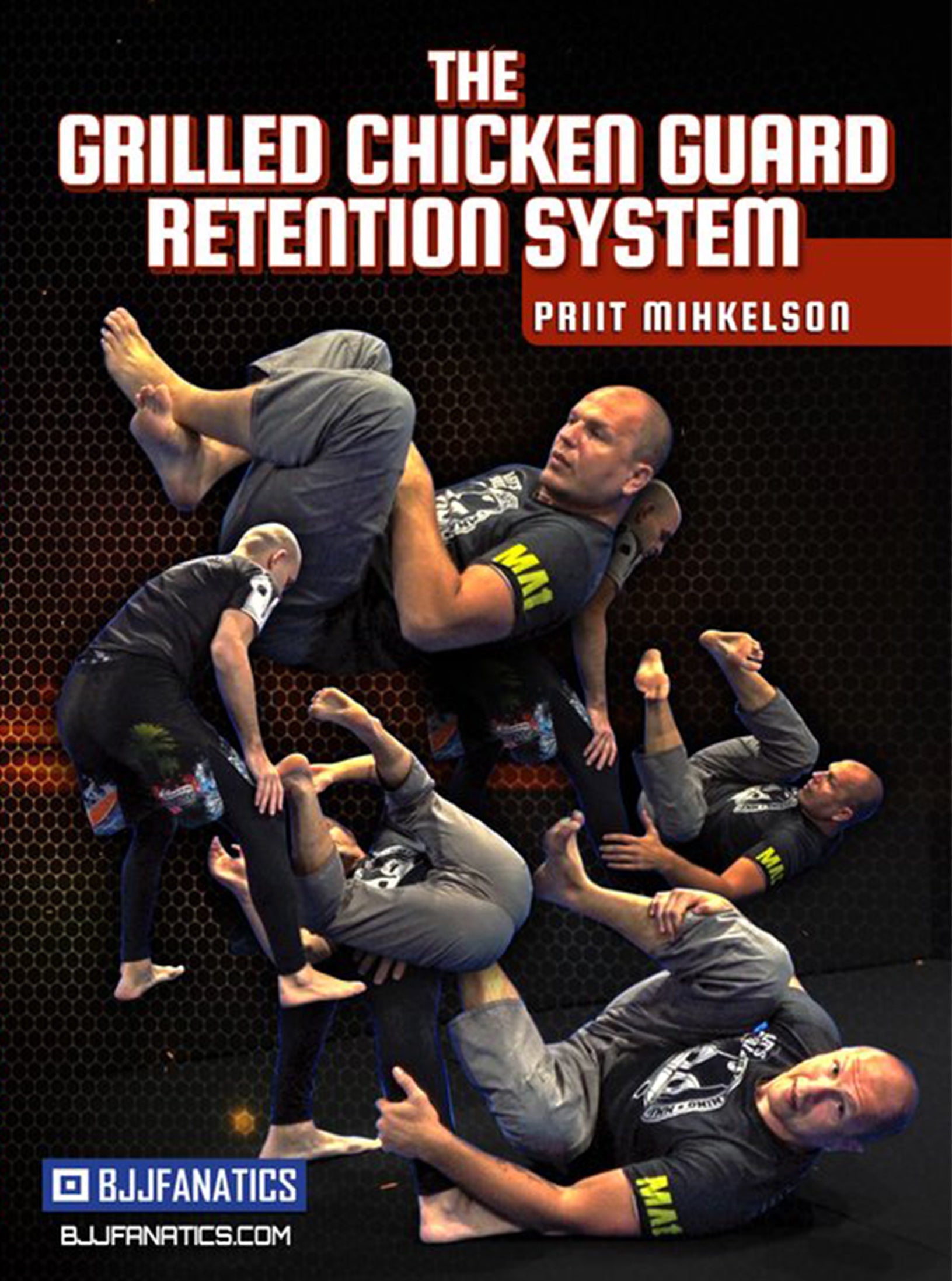
Instructor: Priit Mihkelson
Style: Conceptual, System Based
Best for: All Levels
Format: Both
Runtime: 2 hours and 14 minutes
Volumes: 4
Biggest takeaway: Posture beats speed passing.
Techniques: Guard Retention, Frames And Angles, Torreando Defense, Leg Drag Defense, Double Under Defense, Knee Cut Defense
- The Guard Passing Anthology: Half Guard - Counter-study from the top to understand half guard pressure.
- Pin Escapes & Turtle Escapes: Go Further Faster - A deeper defensive base if you want more breadth.
You learn frames, angles, and risk control to stop fast passes without flexibility. It is best as a base layer that you combine with other retention or guard systems. It does not cover detailed offensive transitions.
✅ Pros
- Fast retention gains with simple posture cues.
- Easy to drill solo and in class.
- Pairs well with other guard systems.
⚠️ Cons
- Less comprehensive than newer mega-courses.
- Polarizing delivery style for some viewers.
- Light on offense and transitions.
💡 I like how the posture rules create a safety net when everything goes wrong. Recommendation: Wait for daily deal.
🥋 #6 Special 'K' Guard by Neil Melanson

Instructor: Neil Melanson
Style: System Based, Technique Collection
Best for: Intermediate
Format: No-Gi
Runtime: 4 hours and 55 minutes
Volumes: 4
Biggest takeaway: Clamp control unlocks ruthless finishes.
Techniques: K Guard, Triangle Variations, Armbar Chains, Kimura Traps, Heel Hook Entries, Off Balancing
- The Shoulder Pin Guard System - Cheaper entry into Melanson’s clamp-style guard.
- Down Right Sloppy Half Butterfly - Alternative clamp and half-butterfly entries.
You learn to enter k-guard and chain attacks that clamp opponents in place. It pays off if you like triangles, armbars, and leg routes. It is not the easiest first open-guard for brand-new players.
✅ Pros
- Unique attacking options you rarely see elsewhere.
- Good value if you like to hunt submissions.
- Detailed finishing mechanics carry to other guards.
⚠️ Cons
- Mobility demands can exclude some body types.
- Less beginner-friendly than standard systems.
- Not a full open-guard fundamentals course.
💡 I think k-guard shines as an add-on layer once your base retention is stable. Recommendation: Skip.
🥋 #7 Sloppy Seconds: Countering The Outside Passer by Eoghan O'Flanagan

Instructor: Eoghan O'Flanagan
Style: System Based, Conceptual, Drill Heavy
Best for: Intermediate
Format: Both
Runtime: 1 hour and 44 minutes
Volumes: 4
Biggest takeaway: Punish outside passing reactions.
Techniques: Lasso Guard, Arm Drag, K Guard Entries, Hip Stomp To Saddle, Reverse Triangle, Back Takes
- Shin to Shin by Eoghan O'Flanagan - Complementary entries to leg attacks.
- The Science of Guard Passing - Study how the top player beats these traps.
You get actionable lasso, arm-drag, and K-guard counters with rolling commentary. The focus is specific and suits intermediate players. It is not a full open-guard starter course.
✅ Pros
- Direct counters to a common passing style.
- Useful narrated rolling and flowchart option.
- Connects lasso to modern K-guard entries.
⚠️ Cons
- Niche compared to broader systems.
- Less beginner-oriented.
- Higher price than many value picks.
💡 I found the lasso-to-K-guard chain a handy answer to non-grip outside passing. Recommendation: Wait for daily deal.
How we ranked 'best value'
We weighted community reception most (r/bjj sentiment and diversity of voices), then system clarity, applicability by level and ruleset, coach track record, and production quality. Sets that give you a reproducible framework scored higher than loose move dumps, and broad utility across body types and rulesets improved rankings. Price-to-runtime mattered, but only after the system’s cohesion and teaching quality.
How to get more from any instructional
Watch once at 1x to capture structure, then rewatch only the segment that solves your next sparring problem. Write a 3-line checklist, add one situational round per class, and test it for a week before adding the next link. Clip 15–45 sec drill loops for solo or partner warmups. Track success rate in rolls so you know when to advance or revisit fundamentals.
💙 Was this article helpful?
Share it with your training partners!