
Home / John Danaher / Guard retention / Danaher Guard Retention Review
John Danaher Guard Retention Review: Go Further Faster
Buy it if people walk round your legs and you are flat before you know what happened. Danaher splits every pass into five steps and gives you an answer for each.
See Guard Retention on BJJ Fanatics →Gi course. Who should buy it ↓
- Gi
- 8 volumes, 7 h 24
- 5 steps, 6 passes
- No live rounds
- Released July 2019
Guard Retention is the second course in John Danaher’s Go Further Faster series, all in the gi. It is about one thing: keeping your legs between you and a man who is trying to get round them. First a method for any pass, then six passes by name.
Yes, if you get passed and can’t say where it went wrong
He is in front of your legs, then beside your hip, then his chest is on yours, and you could not say where you lost it. Danaher can: “Grip, angle, distance, level change and pin.” (Vol 1 · 14:21) Every pass needs those five, in that order. Take one away and he does not pass. The early ones are cheap to stop. The late ones cost more.
$197 list (checked November 12, 2026). Gi only, 7 h 24, no live rounds, and the five steps are explained three times before the first named pass in Volume 6.
See Guard Retention on BJJ Fanatics →Stop him at the step he is on
The first five stops follow one pass, from his first grip to the moment his weight lands. That is the order Danaher gives the steps in, and in Volume 5 he fights them one after the other. After that come the passes he takes by name, and last what he wants you to do with the guard you kept.
Every pass starts with a grip, and this is the cheapest place to stop one. Break the grip if you can. If you can’t, Danaher says leave it where it is and put your feet on his arms: his hands still hold cloth, but they can no longer throw your legs aside.
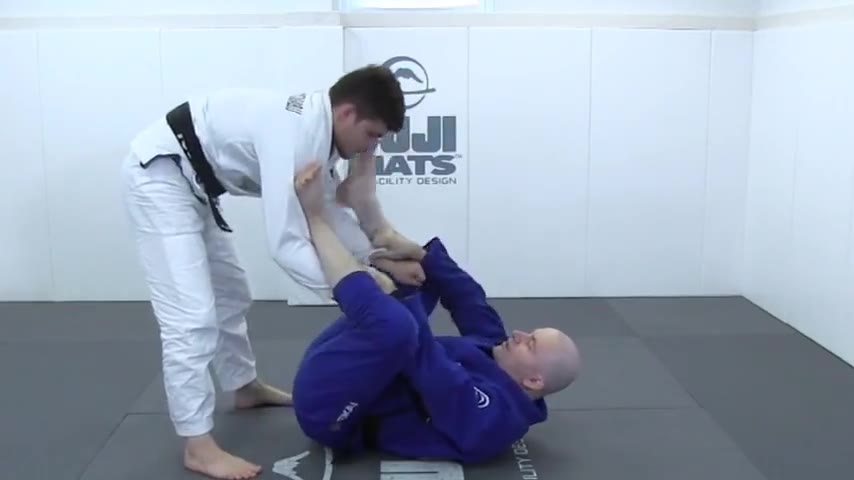
01 Put your feet on his arms
He grips your pants; you put your feet up on his arms, and when he shifts his feet, a foot stays on his arm and you keep facing him.
Vol 5 · 12:50Now he has a grip and an angle, but he is not at your hip yet. Danaher sees little threat in that, and his answer is as small as the threat: turn until you face him again.
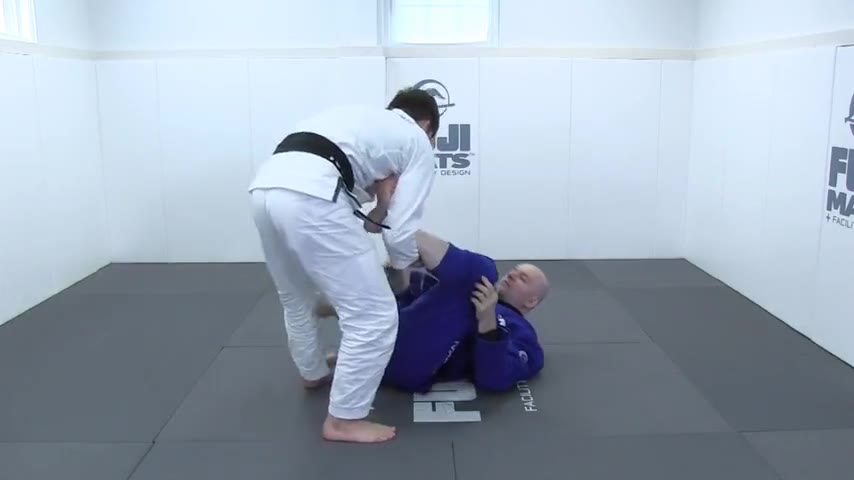
02 Turn your hips back to him
He holds your pants and steps in toward your side; you turn your hips back and your knees face him again. A small adjustment, nothing more.
Vol 5 · 13:32This is the moment the course is built on. An angle plus the distance to your hip is what Danaher calls the jeopardy point, and from here you drop whatever attack you were on and get your legs back. “You can always attack again later.” (Vol 5 · 58:37)
Danaher’s first tool is the scissor guard, the one at the top of this page: your top leg swings high and comes down across him. And when he throws your knees aside on his way in, the frame that saves you sits on your own leg, not on him.
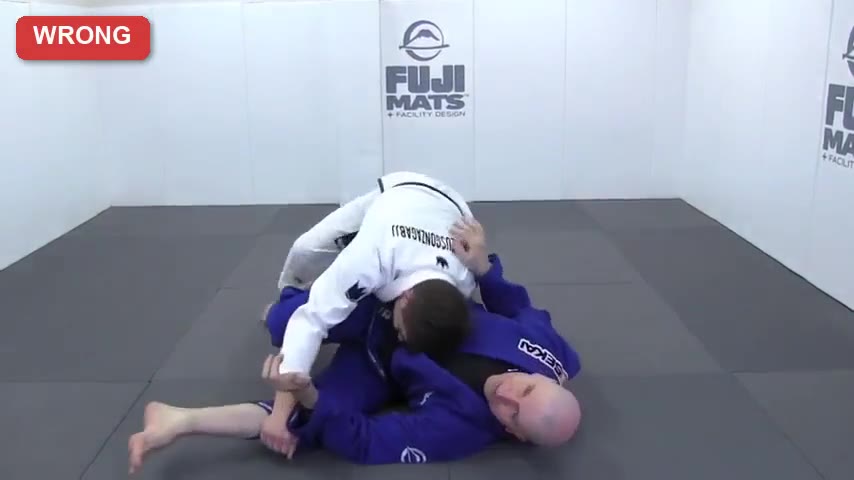
03 A hand on your own knee
Wrong: he pushes your knees aside, and with nothing on your legs your post on him folds and he gets across you. Right: with a hand frame on your own knee the knees stop turning away and your legs come back in front of him.
Vol 4 · 23:17Next he has to bring his level down onto you, and his hands are still on your legs. To get there he has to let go and go for your head, and Danaher calls that switch the weakest link in most guard passes. You know which arm it will be: if he passes to your right, his left. So your hand is already on that arm, where the bicep meets the shoulder. And if he gets to your head anyway: “I never give them the jaw.” (Vol 8 · 54:22) A forehead can still turn in under him.
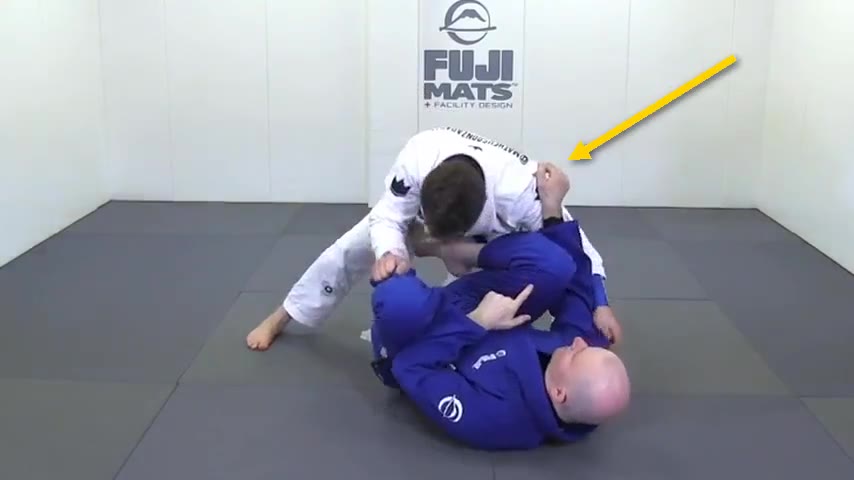
04 Your hand is on his arm first
He steps around your legs; your hand is already on his upper arm, so that arm never gets to your head, and your leg swings back over so he ends up in front of you again.
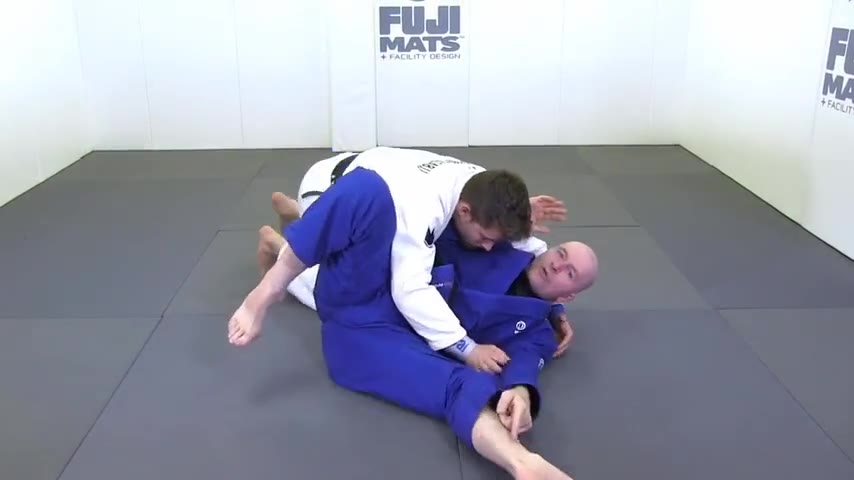
Vol 8 · 35:4805 Turn in under his chest
He drives around your legs toward your head; you turn onto your side with your head turned in under his chest instead of lying flat, and your legs swing back in front of him.
Vol 8 · 54:54“Just because someone has passed your legs doesn’t mean they’ve passed your guard.” (Vol 1 · 56:53) He still has to hold one of your shoulders on the mat for three seconds. So the last answers get a shoulder off the mat, and they cost more: you turn, and for a moment your back is open. Danaher’s first answer is the back heist: “Our whole thing is to get our hand through underneath his arm.” (Vol 5 · 36:58) Then you turn your chest to the floor. When you cannot get that hand through, you swing your legs away and come up on a hand, the move Danaher keeps for emergencies.
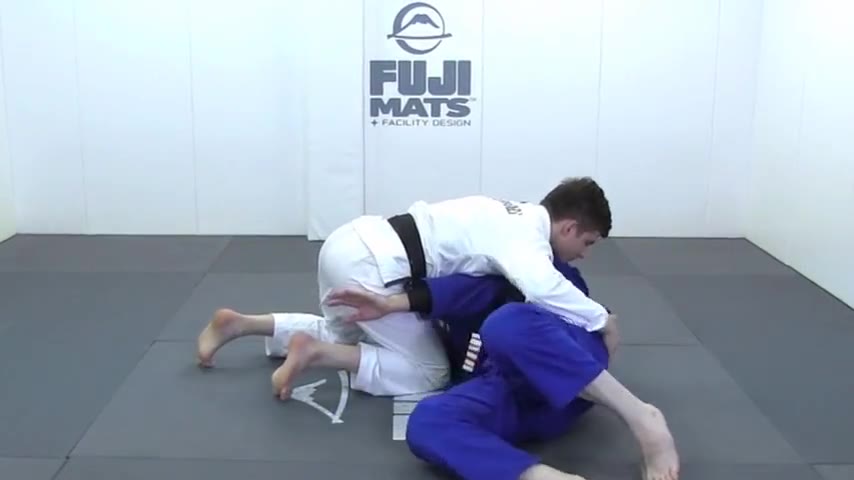
06 Turn your chest to the mat
He throws your legs past and lands chest-down over your hips; instead of showing him your chest, you turn your chest down to the mat under him, and as he comes off you roll back with your legs in front of him.
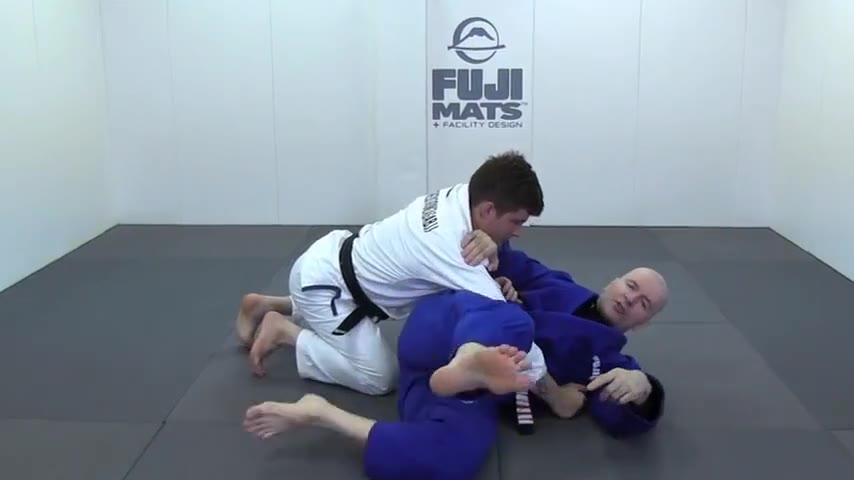
Vol 5 · 37:2007 Swing your legs and come up
He is on his knees, leaning in past your legs; you swing your legs out and use that kick to come up on one hand with an arm over his shoulder, ending seated and facing him.
Vol 5 · 48:52The answers so far work against any pass. From Volume 6 Danaher adds a second method for the passes you can name: spot the pass, know what it depends on, and answer there. He takes six. Five follow here, and the knee slice is under What’s inside, Volume 7.
The double under takes your triangles and armbars away and folds you up. But to pass, one of his hands has to reach across your middle, and Danaher says that reach comes at a price: his elbow is out in the open.
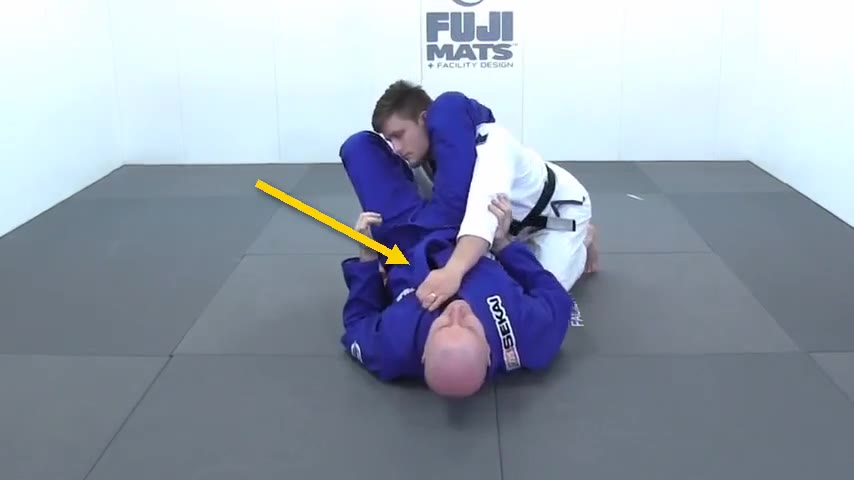
08 Push his arm past your head
His hand reaches across your centre line to your collar; grab his arm, push it across past your head, slip your knee back in front of him, and you are back in guard.
Vol 6 · 20:53The over under is the slow, heavy one: your leg trapped between his, his head over your hip, a shoulder on your belly. It is led by his front shoulder, so the early answer blocks that shoulder, first with a straight arm and then with your knee. The late answer is for when he is nearly past. You use his own drive to roll him over.
09 Your knee in front of his shoulder
He traps a leg and drives his head into your belly; you shift your hips, get your knee in front of his shoulder, pull the trapped leg free and swing it over his back, and he is back upright in your guard.
Vol 6 · 36:4810 Bridge and roll him over
He is lying across your chest, almost past; you hold on with both hands, bridge and roll him over, and you come up beside him.
Vol 6 · 53:04The torreando is the fast one. Standing, he can be beside you in a second. Its weakness is the gap: his hands are on your pants and your head is a long way off. You block first with the frame on your own knee from detail 03. Then, before his arm can reach your head, you bring a foot inside it.
11 Bring your foot down inside his arm
He holds your pants and leans over your legs; you lift your leg up past his head and bring the foot back down inside his arm, so your shin sits between him and your head.
Vol 7 · 16:45A leg drag puts both your feet on one side of him. Then he drops his shoulder in and locks your hips, and that second half is the hard one to fight. So Danaher fights the first: the moment he has your foot, bring the free leg over and turn to face him.
12 Kick your free leg high
He traps your foot at his hip; you kick your free leg up high, bring it back down, turn your hips in under him and end square to him with a hand on his collar.
Vol 8 · 6:49Danaher calls the long step one of the most underused passes there is. It makes the angle of a torreando, but he is almost chest to chest from the start, so there is no gap to use. Like the over under, it is led by his front shoulder. The good news, in Danaher’s words: “Your near side arm is 100% free.” (Vol 8 · 26:10) With that arm you take a cross grip on that side before the step comes. When the step comes anyway and he is round your legs, you do not stay flat under him.
13 Turn to your knees, then roll back
He long-steps around your legs; you turn onto your knees under him, roll back to your back, and your leg comes up over his back.
Vol 8 · 26:52Every answer above ends here, and Danaher does not want you to stop here. “Every time you successfully retain your guard, don’t congratulate yourself.” (Vol 1 · 1:13:09) Defend and nothing else, and a good passer gets through in the end, the way a boxer who only dodges gets hit. So finish with a grip you can attack from. Danaher’s first choice in the gi: a sleeve cuff, the cross collar, a foot on the hip and a foot on the bicep.
14 Sit up with his collar in your hand
He gets around your legs to your side; your hand frames on his collar while your top leg swings up and over across his chest, and your legs turn him back in front of you so you can sit up with a grip on his collar.
Vol 1 · 59:28One question the whole way: how far has his pass got?
 01
 02
 03
 04
 05
 06
 07
 08
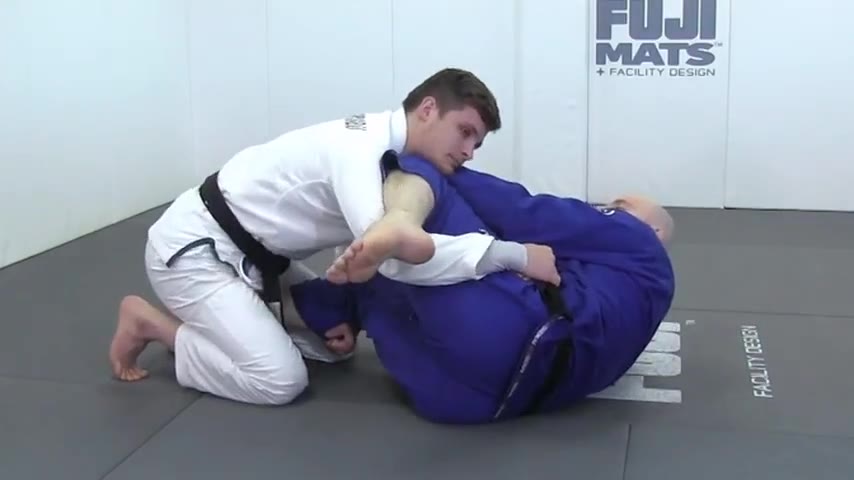 09
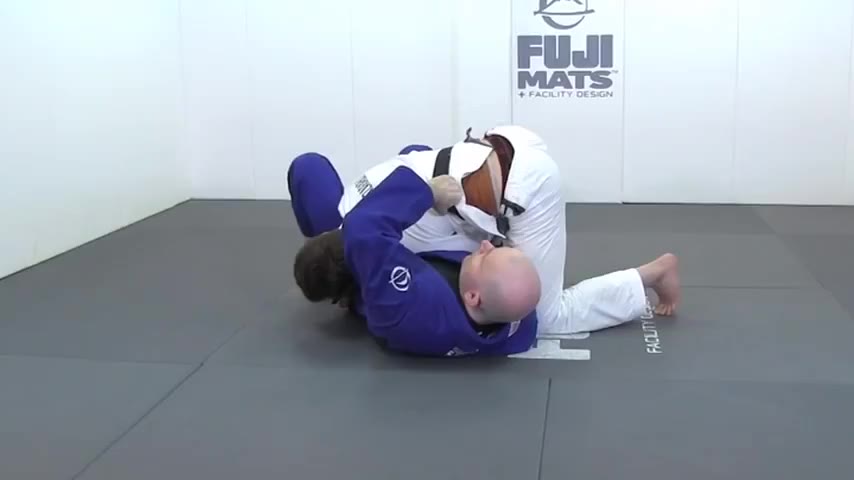 10
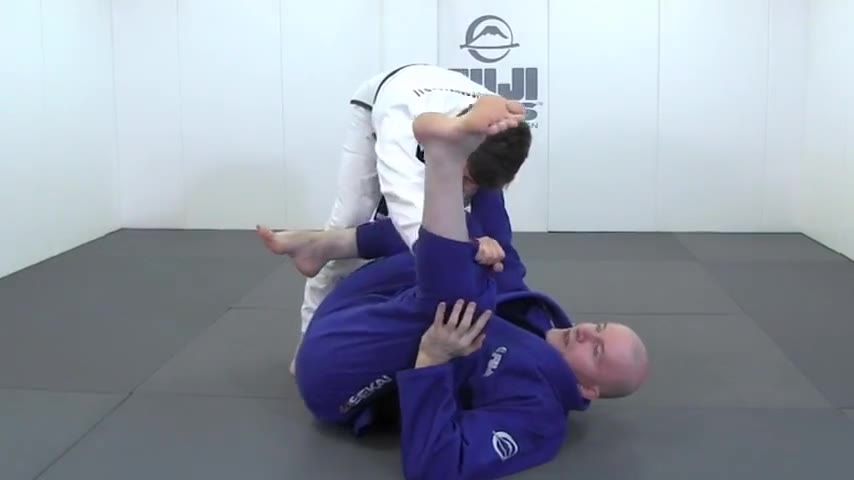 11
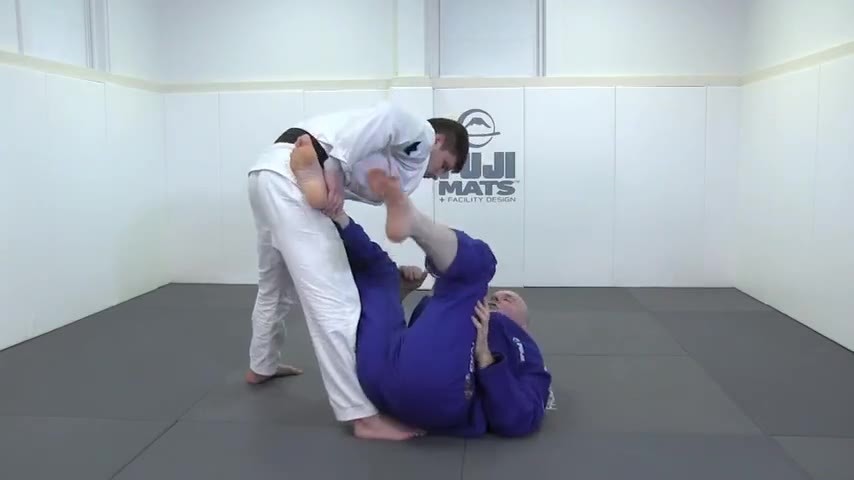 12
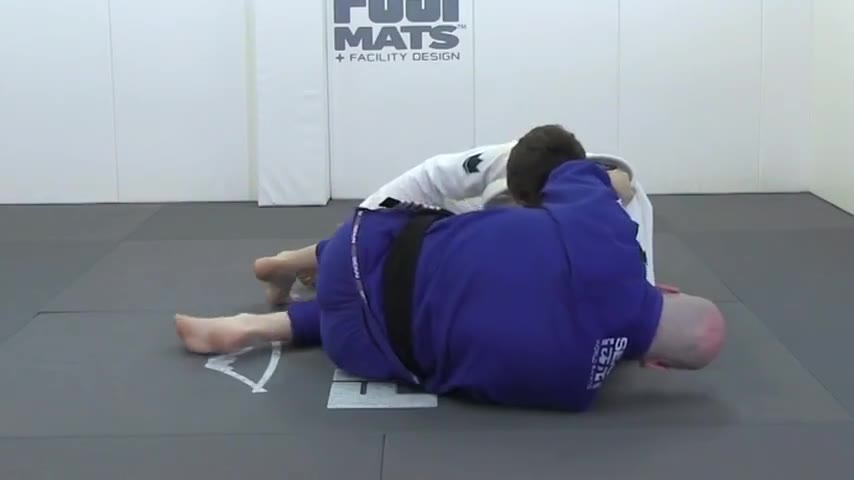 13
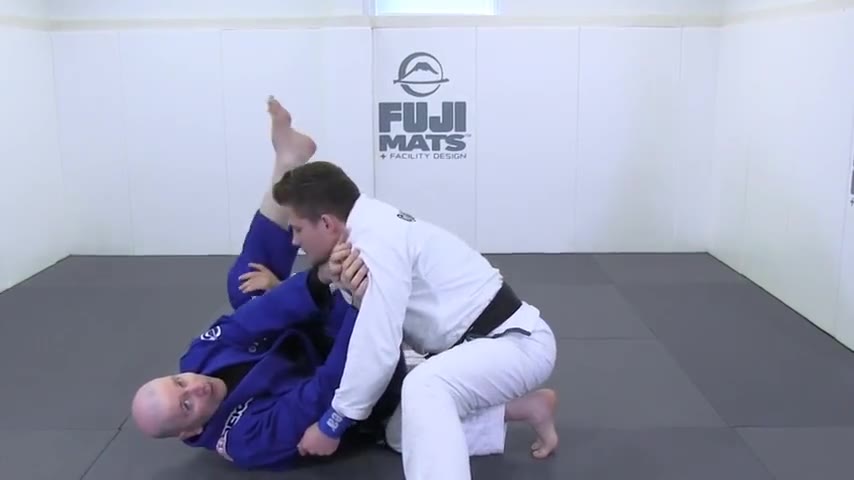 14
Who should buy it
Which one are you?
- You get passed and can’t say where it went wrongFive steps in a fixed order, and an answer for each.
- You attack while he is already at your hipDanaher’s golden rule is for you. In doubt, keep the guard first.
- You train in the giThe grip he wants you to finish with, and many of the answers, run on collar, sleeve and belt.
- You train both gi and no-giThe five steps and the leg movements need no cloth. The collar and lapel answers do.
- You are a white beltIt is his fundamentals course, and it asks for patience: 24 minutes of slides come first.
- You only train no-gi
 The Fastest Way To Develop An Unpassable Guard is Danaher’s no-gi course on the same subject.
- You get held down more than you get passed
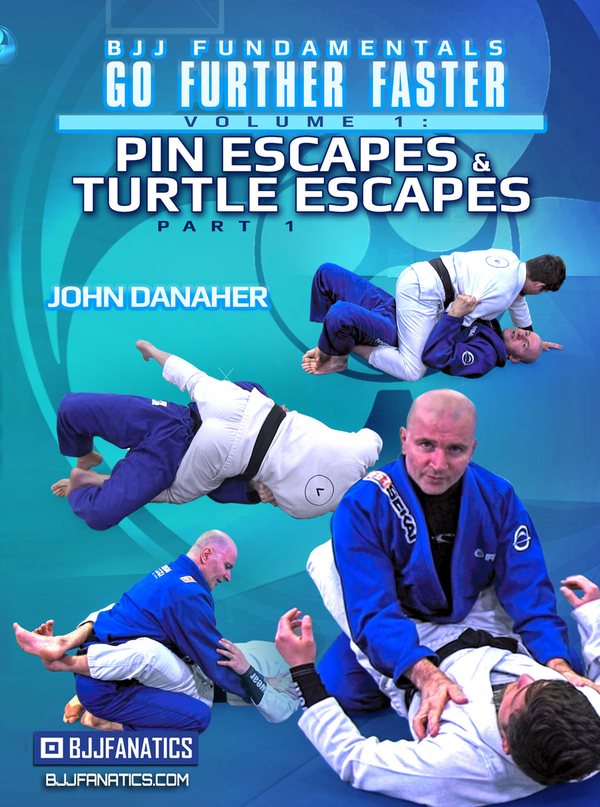 That is Pin Escapes & Turtle Escapes, the course Danaher puts before this one.
- You want sparring to watchThere are no live rounds, and no match is shown.
Which one is for you
- Guard Retention Anthology (Lachlan Giles & Ariel Tabak, two sets of 8 volumes, mostly gi with some no-gi, 2020)
For you if: you want more of everything. Sixteen volumes on the one subject, against eight here. See it on BJJ Fanatics. Or read our review. - The Fastest Way To Develop An Unpassable Guard (John Danaher, 8 volumes, 5 h 13, no-gi, 2024)
For you if: you train no-gi. Same teacher, same subject, two hours shorter. See it on BJJ Fanatics. Or read our review. - Pin Escapes & Turtle Escapes: Go Further Faster (John Danaher, 8 volumes, 10 h 52, gi, 2019)
For you if: you get held down more than you get passed. Danaher names pin escapes and guard retention as a beginner’s first two goals, in that order. See it on BJJ Fanatics. Or read our review. - The Grilled Chicken Guard Retention System (Priit Mihkelson, 4 volumes)
For you if: you want a smaller start. Four volumes against eight. See it on BJJ Fanatics.
Want the whole field? This course is one of the picks in our best guard retention instructionals.
Worth it? The pros and cons
- One idea for every pass: five things he needs, in a fixed order, and an answer for each
- It tells you when to stop attacking: the moment his knee gets to your hip
- The answers are ranked by how late it is, small and safe early, bigger and riskier late
- Six named passes get their own answers, each aimed at what that pass depends on
- Every answer is meant to end with a grip you can attack from, not with a guard that is merely back
 The five steps are explained three times before the first named pass in Volume 6, and Volume 2 is half an hour that is mostly talk. Priit Mihkelson’s Grilled Chicken is four volumes in all
- Gi only, and many answers need a collar, a lapel, a belt or a sleeve. Danaher’s own The Fastest Way To Develop An Unpassable Guard is the no-gi course
 Six passes, and no body lock pass or half guard pass among them: the body lock is never mentioned. The Guard Retention Anthology has sixteen volumes on the subject, with a whole set called Through the Legs & Close Range
 No live rounds and no match shown. Gordon Ryan’s They Shall Not Pass includes rolls
What’s inside the eight volumes
Eight volumes, all in the gi. About five and a quarter hours are method and movement, about two hours go pass by pass. Tap a volume for what’s in it.
This route is about 50 minutes and gives you the method:
- Volume 5 from 12:06, 6 minutes. The five steps of a pass, fought one after the other.
- Volume 5 from 20:57, 10 minutes. The scissor guard in three sizes.
- Volume 5 from 39:54, 9 minutes. The power prop, for when he is nearly on top of you.
- Volume 4 from 21:01, 3 minutes. The frame on your own leg.
- Volume 8 from 32:18, 9 minutes. The reach for your head, and how to block it.
- Volume 2 from 21:06, 5 minutes. Never give him your chest.
- Volume 1 from 56:49, 6 minutes. Passed legs are not a passed guard.
Then the pass that beats you most, in Volumes 6 to 8.
What can wait: the first 24 minutes of Volume 1 are slides with a voice over them. Everything on them comes back later with a partner.
Vol 1 · 1:16:06The system, told twiceslides, then the same on the mat
The first 24 minutes are slides with Danaher’s voice: the two methods, the five things a pass needs, the lines he uses to judge how close a passer is, the six passes. From 24:00 he teaches the same framework on the mat, and the partner work starts at 28:47. Here the list has six items, because he counts stripping your hands and feet off him as a step of its own. The part to watch starts at 56:49: passed legs are not a passed guard, three frames for three distances, and the scissor guard behind them (detail 14). The volume ends on the grip he wants you to finish with, and on the boxer who only dodges.
Vol 2 · 29:46Why this comes firstthe unforgivable sin, three postures
Half an hour that is mostly talk. Why keeping your guard comes before attacking from it, and the rule he calls the unforgivable sin: never let your chest end up against his chest. As long as your knee and elbow stay together, he says, nobody passes. It ends on the three postures everything happens in: seated, on your back, and turtle. Five minutes from 21:06 give you the volume.
Vol 3 · 1:02:57Movementseated, on your back, turtle, shadow grappling
The movement library, mostly Danaher alone on the mat, with short reps against a partner. Seated: the scoot, the rolling inversion, the hip heist. On your back: the shrimp, leg pummeling, the pendulum, scissoring your legs, the spinning inversion, the rollback and the back heist. He argues that scissoring is the most important movement of them all. From turtle: the shoulder roll and sitting back. One detail to steal at 47:24: roll with your head between your knees. With your head outside your knee, he shows, one finger on your hip tips you over. The last four minutes are shadow grappling, part of it without a word.
Vol 4 · 48:38Frames and gripsthree distances, framing yourself, the lines again
The most usable stretch of theory in the course. Three frames by distance: the hand at arm’s length, the forearm at half the reach and about twice the strength, and as a last line your hands on your own head and chest, so that the man lands on your hand and not on you. His rule is that frames hold and legs push. Then the frame on your own leg (detail 03) and the grip fight. The last sixteen minutes walk through the lines again from the passer’s side, for the third time.
Vol 5 · 1:17:15The five steps and the four toolsscissor guard, hip heist, back heist, power prop
The volume to start with. From 12:06 Danaher fights the five steps one after the other (details 01 and 02 come from there). Then his four tools in his own order: the scissor guard, which he calls the single most important tool for keeping a guard, in three sizes for three levels of threat; the hip heist with a cross lapel grip; the back heist, chest to the floor (detail 06); and the power prop for emergencies (detail 07). At 58:00 comes the golden rule: in doubt, keep the guard before you attack from it. The volume closes on head control: keep his hand off your head, and keep his head and his hips on the same side of you. The five conditions are listed once more at 17:51.
Vol 6 · 54:03Double under and over underthe two passes that go under your legs
Four minutes on the second method, then two passes. Against the double under: grips on his cuffs so his hand cannot cross your middle, your feet on his biceps so he cannot lift you, thumbs under his wrists when his hands lock, pushing his arm through past your head once a hand has crossed your middle (detail 08), and walking on your shoulders when you are already stacked. Against the over under, from 28:26: the straight arm and the knee early (detail 09), a knee lever later, holding his head in place where you would want to push it, and the roll when he is almost past (detail 10), which Danaher does with a grip on the belt and one on the sleeve cuff. Most moves are shown three or four times from new angles.
Vol 7 · 39:31Torreando and knee slicefeet on biceps, the frame on your own leg, the lapel
The densest volume. Torreando and X pass are taken together: don’t waste time breaking his pant grips, put your feet on his biceps; sit up into him with a cross lapel grip; the frame on your own leg, then a foot inside his arm (detail 11); an outside sit-up; an ankle pick; and a last roll when he is almost round. From 26:56 the knee slice, the one pass without a detail above. Danaher calls it the bane of guard players, because it parks a knee at your hip and takes your head through your lapel at the same time. His advice: do not spend two hands on breaking that lapel grip. Take a reverse grip on his lapel with your knee across his hip, or put a foot in front of his bicep and the other on his hip, until your legs are level again.
Vol 8 · 55:55Leg drag, long step, three last lessonsthe reach for your head, your back, your jaw
Leg drag first: turn to face him the moment he has your foot (detail 12), and if he does lock your hips, turn out behind a cross lapel grip and come up on a hand, or throw your back to the floor and hook him with your legs. A sacrifice throw is the last resort. Then the long step from 20:30 (detail 13), with an answer for when he jumps to your other side. From 32:18 come three general lessons he kept for the end: the reach for your head (details 04 and 05), which way of showing your back is safe, and forehead, not jaw. His line on the back: as long as the man cannot get his chest onto your back, it is harmless. In a match with points he would risk the back to save the guard. In submission-only he tells his students to let the pass happen. The course stops there, without a closing summary.

BJJMore earns a commission if you buy through these links, at no extra cost to you. Released by BJJ Fanatics in July 2019; reviewed on all eight volumes.
Get the next review like this one
New reviews in this format land in your inbox, with the details on video. You also get the free BJJMore email course and the instructional-platform discounts I use myself (worth $46).
FAQ
Is Danaher’s Guard Retention worth it?
Yes, if you train in the gi and your guard gets passed without you knowing where it went wrong. You get five steps, an answer for each, and six passes by name. It is long and it repeats itself, and people who own it say so too. One who watched it front to back called it “definitely a slog” and in the same breath said he saw results in his guard retention right away. That is the trade this course asks of you.
Is it gi or no-gi?
Gi, all eight volumes. The five steps and the leg movements need no cloth. The grip he wants you to finish with does, and so do several answers that run on the collar, the lapel, the belt or the sleeve. Danaher’s no-gi course on the same subject is The Fastest Way To Develop An Unpassable Guard. The two overlap a lot. The difference, from someone who knows both: this one is more about concepts, with its first volumes on movement and principles, while The Fastest Way goes quickly to counters for the common no-gi passes. The body lock pass is the clearest case: these eight volumes never mention it.
Is it good for beginners?
It is built as a fundamentals course, and Danaher names guard retention as one of a beginner’s first two goals. He shows every movement on his own before he uses it, and says of himself: “I’m a 52 year old man with a broken hip and a crippled leg.” What it asks of a beginner is patience. The partner work starts 28 minutes into Volume 1.
Danaher’s Guard Retention or Lachlan Giles’s Guard Retention Anthology?
Danaher: eight volumes in the gi, one method and six passes. Giles and Ariel Tabak: sixteen volumes in two sets, mostly gi with some no-gi. Ask people who compared them and the Anthology usually comes out ahead. Read the small print, though: an owner of this course who prefers the Anthology calls it the higher level of the two, so harder to put to use right away. Someone else adds that Lachlan’s way of retaining guard asks for flexibility, and that Danaher’s may be the friendlier one until you have it. Want one order to follow: Danaher. Want more answers for more situations: the Anthology.
Which Danaher course should I buy first?
Danaher answers that himself in Volume 2: a beginner’s first two goals are pin escapes, so nobody can hold you down, and then guard retention. So Pin Escapes and Turtle Escapes first if you get held down a lot, and this one second.
This one or The Fastest Way To Develop An Unpassable Guard?
Go by what you wear. This course is gi, 7 h 24, from 2019. The Fastest Way is no-gi, 5 h 13, from 2024. Same teacher, same subject. You do not need both.
It is 7 h 24. Where do I start?
With six minutes of Volume 5, from 12:06: the five steps of a pass in one go. Then the 50-minute route under What’s inside. Then the pass that beats you most, in Volumes 6 to 8.
Is there a discount code?
We have not been able to test a code on this course yet, so we do not list one. The list price is $197 (checked November 12, 2026), and BJJ Fanatics runs sales often, so check the price on the day you buy.
Find the step he is on
If people walk round your legs and you only notice once you are flat, this course gives you the five steps of every pass and an answer at each one. In the gi, and it takes patience.
$197 list on BJJ Fanatics, checked November 12, 2026.