
BJJ Leg Locks
Heel Hook: The Complete Guide to BJJ’s Most Dangerous Submission
How the heel hook works and how to finish it, step by step, with clips from Gordon Ryan’s and Pawel Jaworski’s instructionals. Plus what it does to a knee, when to tap, and where it’s legal.

The heel hook is the most feared and most effective submission in modern BJJ and MMA. Competitors like Gordon Ryan, Craig Jones, and Mikey Musumeci have built entire competition strategies around it. Yet many grapplers still train without understanding how heel hooks work, which makes them more vulnerable, not safer.

What is a Heel Hook Submission?
A heel hook is a leg lock submission where you grip your opponent’s heel and rotate it, creating a twisting force that attacks the knee ligaments. Although you hold the heel, the primary damage occurs at the knee joint, specifically the lateral and medial ligaments that stabilize the knee against rotational force.
There are two types of heel hooks: the outside heel hook (standard) and the inside heel hook (also called the inverted heel hook). The inside heel hook turns the heel in and the toes out, which twists the shin outward on the thigh (external rotation of the knee). The outside heel hook does the opposite: heel out, toes in, shin twisted inward (internal rotation). The inside version is generally considered the more dangerous one: the ankle barely gives in that direction, so almost all of the twist goes straight into the knee and you get less time to tap. This is why the inside heel hook is the primary finishing weapon for leg lock specialists like Craig Jones and the entire Danaher Death Squad lineage.
Key Ashi Garami Positions for Heel Hooks
 Before you can finish a heel hook, you need to control your opponent’s leg in an ashi garami (leg entanglement). The position you use determines which heel hook variation is available and how much control you have. John Danaher‘s Leglocks: Enter The System popularized a systematic framework for these positions that most modern leg lockers still use.
Single Leg X / Ashi Garami – The most basic leg entanglement. You have one leg hooked inside your opponent’s legs (the “inside hook”) with your other foot on their hip. Good for outside heel hooks and as a transition point to stronger positions.
Outside Ashi – Your outside leg goes over the top of the opponent’s trapped leg to control the knee line from the outside. This creates the angle for the outside heel hook and makes it harder for your opponent to pull their leg free. It is not the same position as cross ashi, where the trapped leg runs across your body.
50/50 – Both grapplers have their legs entangled symmetrically. Common in both gi and no gi. The 50/50 gives good heel hook access but your opponent has the same access to your legs, making it a double-edged position that rewards the faster, more technical finisher.
 Inside Sankaku (Saddle / Honey Hole / 411) – The strongest leg entanglement for finishing the inside heel hook. Your legs form a triangle around the opponent’s trapped leg, completely controlling the knee line. Once locked in, escaping is extremely difficult. This is the position you’ll see Gordon Ryan, Craig Jones, and Nicky Ryan finish most of their heel hooks from. If you want to drill the inside heel hook from the saddle specifically, Craig Jones gives two chapters to finishing it from this entanglement in Battle Tested Down Under Leglocks.
Want to learn these positions in depth? Check our guide to the best heel hook instructionals, which covers the top teaching resources for each of these entanglements.
How to Do a Heel Hook (Step by Step)
The heel hook follows three fundamental steps. The quality of your leg entanglement matters more than your grip strength or rotation speed.
1. Control the leg in an ashi garami
The first and most important step is controlling your opponent’s leg in a proper entanglement. Specifically, you need to control the knee line, which means your legs need to be positioned so your opponent cannot simply pull their knee past your hips and escape. If you don’t control the knee line, your opponent can rotate with the heel hook and relieve all pressure on their knee. This is why leg lock specialists spend most of their time fighting for position, not the submission itself.
 Pin the hip first. In Systematically Attacking The Legs, Gordon Ryan puts his inside foot on the hip and steps on it with his other foot to pin the hip down. Vol 2 · 20:06 Our full review →
2. Secure the heel
Once you have a solid entanglement, catch the heel. It goes at your wrist, right where a watch sits, not further up your forearm: the closer it slides to your elbow, the easier it slips out. For the inside heel hook, trap the toes under your armpit so the foot can’t turn. Then lock your hands in a palm-to-palm clamp or a figure-four (Kimura-style) grip. Experienced opponents fight hard to hide the heel by pointing their toes and pulling the foot in close, so the grip battle at this stage often decides whether the heel hook finishes.
Two coaches, one rule: the heel sits at the wrist
Heel slipping out of your grip? In Systematically Attacking The Legs, Gordon Ryan keeps it at his wristwatch, not in his elbow crease: the further the heel slides toward the elbow, the more it slips. Vol 2 · 40:50 Our full review → Same rule on the inside heel hook. In Unstoppable Inside Leglocks & False Reaps, Pawel Jaworski puts the big toe under his armpit and the wrist on the heel, never the blade of the forearm, which lets the heel slip. Vol 2 · 7:58 Our full review →
3. Rotate the heel and bridge into the knee
To finish, you combine two forces simultaneously. First, you rotate the heel in the direction that attacks the knee (inward for the inside heel hook, outward for the outside heel hook). Second, you bridge your hips into the side of the knee to prevent the knee from rotating together with the heel. This hip bridge is what separates a tight heel hook from one that an opponent can spin out of. Without the bridge, the entire leg rotates as one unit and no torque reaches the knee.
The bridge from step 3, on an inside heel hook. In Pawel Jaworski’s Unstoppable Inside Leglocks & False Reaps the finish comes from the hips, not the hands: the grip only blocks the ankle, the hips go up and into the knee. Vol 2 · 11:18 Our full review →Free video: Lachlan Giles on the inside heel hook setup and how to train it safely.
What Does a Heel Hook Damage?
A heel hook creates rotational force on the knee joint, which damages the ligaments that stabilize the knee against twisting. The primary structures at risk are:
- Medial Collateral Ligament (MCL) – Stabilizes the inner side of the knee. Loaded by both heel hooks.
- Lateral Collateral Ligament (LCL) – Stabilizes the outer side of the knee. Attacked mainly by the inside heel hook, which twists the shin outward.
- Anterior Cruciate Ligament (ACL) – Prevents the shin from sliding forward. Vulnerable to rotational stress from both heel hook variations. ACL tears are the most serious common heel hook injury.
- Meniscus – The cartilage pads between the thigh bone and shin bone. Both the medial and lateral meniscus can tear from rotational force.
- Ankle ligaments – The outside heel hook can also stress the ankle, though the knee is always the primary target.
The inside heel hook is generally considered more destructive because its outward twist loads the ligaments on both sides of the knee at once, and the ankle gives very little in that direction to soak it up.
Are Heel Hooks Dangerous?
Yes. Heel hooks are the most dangerous submissions in grappling. Four factors make them uniquely risky:
- Little pain warning before injury. Knee ligaments only send strong pain signals near the end of their range. With an armbar, you feel escalating pain well before the joint breaks. With a heel hook, the ligament can tear before you feel significant discomfort. This is the single most important thing to understand about heel hooks.
- Ligament injuries heal poorly. Ligaments have limited blood supply, which means slow healing. ACL tears almost always require surgery and 6-12 months of rehabilitation. MCL tears may heal without surgery, but recovery still takes months.
- Knee injuries affect daily life severely. Unlike a sore shoulder or tweaked elbow, a knee injury can prevent you from walking, driving, or working. The impact extends far beyond missing training time.
- Many grapplers underestimate them. The biggest risk factor is ignorance. Grapplers who have never trained heel hooks sometimes try to “tough it out” instead of tapping, because they don’t realize the damage can start before it really hurts.
When to Tap to a Heel Hook
If you’re new to heel hooks, tap as soon as your opponent secures a grip on your heel from any ashi garami position. As you gain experience, you’ll learn to assess whether you can still free your heel, whether the knee line control is loose enough to escape, or whether you can counter-attack with your own leg entanglement. But until you have that experience, tap early. No training roll is worth a knee reconstruction.
For a deeper understanding of when and how to escape heel hooks safely, see our guide to the best leg lock defense instructionals. Learning proper defense makes heel hook training dramatically safer for everyone involved.
When to Use a Heel Hook in Training
Only use heel hooks when your training partner explicitly agrees to roll with them and understands the risks. In training, you should catch and control, not crank. If you get the position and the grip, that’s the submission. If your opponent doesn’t realize they’re caught, tell them instead of applying force. Catching the position cleanly is what develops skill; cranking through someone’s ignorance just creates injuries and bad training partners.
Are Heel Hooks Legal?
Heel hook legality varies dramatically between organizations, rulesets, and belt levels. The trend over the past five years has been toward broader legalization, but significant restrictions remain.
Are heel hooks legal in IBJJF?
Since 2021, the IBJJF allows heel hooks in no gi competition for brown and black belts. This was a major rule change that reflected the growing dominance of leg locks in submission grappling. However, the IBJJF still prohibits heel hooks for lower belts (white through purple) in no gi, and prohibits them entirely in gi competition at all belt levels.
Are heel hooks legal in ADCC?
In the professional events, yes: heel hooks are legal at the ADCC World Championship and the ADCC Trials. ADCC’s amateur Open events are stricter: the rules on ADCC’s official site ban heel hooks in the beginner and the intermediate/advanced divisions, and regional organizers can set their own. The pro ruleset is one reason ADCC competitors tend to have more developed leg lock games than IBJJF-focused competitors, and it has driven leg lock innovation since John Danaher’s students started dominating with systematic heel hook attacks around 2017.
Are heel hooks legal in the gi?
Almost never. The gi competition circuit largely follows IBJJF rules, which ban heel hooks in gi competition at all belt levels. A few smaller organizations and gym-level competitions allow them, but this is rare. Most gyms also discourage heel hooks during gi training, though this varies by gym culture.
Are heel hooks legal in the UFC?
Yes. Heel hooks are legal in the UFC and all major MMA organizations. Ryan Hall finished BJ Penn with one at UFC 232 in 2018, and the UFC’s own video below collects every heel hook finish in its history. That said, most MMA fighters use heel hooks sparingly because entering leg entanglements from bottom position risks giving up the dominant position if the submission fails (more in 3 reasons leg locks don’t work in MMA).
Are heel hooks legal for white belts and blue belts?
It depends on the organization. The IBJJF doesn’t allow heel hooks until brown belt in no gi. ADCC’s amateur Open divisions don’t allow them either; only its pro division does. Some local no gi tournaments and submission-only events do allow them for adults at every level, white belt included. If you’re competing, always check the specific ruleset for your event.
Why Are Heel Hooks Illegal in Many BJJ Competitions?
The reasons heel hooks remain restricted vary depending on who you ask.
The safety argument
The traditional justification is safety: heel hooks are too dangerous for less experienced competitors. This has some merit at the white belt level, where grapplers may not understand the submission well enough to tap at the right time. But this argument weakens at higher belts. Brown and black belts should absolutely know when to tap to a heel hook, just as they know when to tap to an armbar.
The “too effective in the gi” argument
One common argument is that heel hooks would be “too effective” in the gi because gi pants create extra friction, making it harder to escape leg entanglements. The concern is that this would kill open guard play. There’s some logic here, but it cuts both ways. Gi grips also make it easier to defend heel hooks by grabbing sleeves and pants, and gi friction slows down the fast transitions that make heel hooks effective in no gi. The open guard would adapt, as it always has when new techniques gained popularity.
The political reality
Realistically, politics play a role. If heel hooks became legal in gi competition overnight, many established gi competitors would struggle against leg lock specialists. Gradual rule changes (like the IBJJF’s 2021 no gi legalization) allow the competitive landscape to adjust without disrupting the sport’s established hierarchies too quickly.
Should Heel Hooks Be Banned?
Heel hooks should be restricted for white belts (and possibly blue belts) in competition, but should be legal for experienced grapplers in both gi and no gi. The reasoning is simple: if grapplers never learn to attack and defend heel hooks, they’re unprepared when they encounter them. Banning heel hooks doesn’t make them less dangerous; it just ensures people are untrained when they face them.
Heel hooks are also not the only move that can wreck a knee. The flying scissor takedown (flying kani basami) is still banned at every belt in IBJJF events for that reason. The difference is that heel hooks can be trained safely: positional sparring, catch-and-release, and partners who know when to tap.
Heel Hooks Compared to Other Leg Locks
Understanding where the heel hook fits among other leg locks helps clarify why it’s the dominant submission in modern no gi grappling. For a complete breakdown of every leg attack, see our best leg lock instructionals guide.
Heel hook vs ankle lock
The straight ankle lock forces the foot to point, which strains the front of the ankle. Squeezing the Achilles tendon alone rarely gets a tap, whatever the old name (Achilles lock) suggests. The heel hook twists the knee joint. The heel hook is far more dangerous because knee ligaments are weaker than the ankle joint, and because the heel hook offers less pain warning before injury. The ankle lock is legal at every belt under IBJJF rules, in the gi and in no gi, while heel hooks are restricted to brown and black belt no gi.
The two work as a pair: whatever your partner does to stop one opens the other.
Gordon Ryan reads the foot in Systematically Attacking The Legs: if they boot the foot, the heel is open; if they point the toes, the Achilles lock is on. Vol 1 · 1:02:10 Our full review →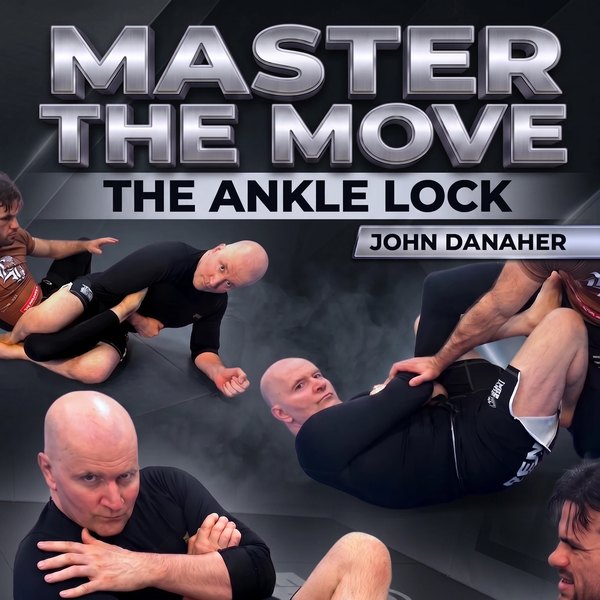 Why the old Achilles squeeze doesn’t tap: in Master The Move: The Ankle Lock, John Danaher puts his whole weight through a metal pipe on the Achilles, and nothing. His ankle lock goes after the front of the ankle instead. Vol 1 · 9:38 Our full review →
For more on ankle attacks specifically, check out our best ankle lock instructionals guide.
Heel hook vs kneebar
The kneebar hyperextends the knee by bending it backward, similar to how an armbar hyperextends the elbow. It attacks the structures at the back of the knee, which are relatively strong. The heel hook twists the knee instead and loads the ligaments on its sides (the MCL and LCL) and the ACL, which are much weaker against a twist. This is why the heel hook is easier to finish than the kneebar at the highest levels. The kneebar also gives more pain warning, making it safer relative to its finish rate.
Heel hook vs toe hold
The toe hold rotates the foot and ankle using a figure-four grip on the toes or forefoot. It applies torque to the ankle and, to a lesser extent, the knee. The outside heel hook is mechanically similar but adds hip pressure into the side of the knee, making it significantly more powerful. The toe hold only creates internal rotation, while the heel hook can create either internal or external rotation depending on the variation. Toe holds are useful as a secondary attack or as a way to force reactions that open up heel hook entries.
Inside heel hook vs outside heel hook
The outside (standard) heel hook rotates the heel outward and the toes inward, creating internal rotation at the knee. Much of this rotational force is absorbed by the ankle joint, which reduces the load on the knee. The inside (inverted) heel hook rotates the heel inward and the toes outward, creating external rotation that goes almost directly to the knee with minimal ankle involvement. This makes the inside heel hook stronger, more dangerous, and the preferred finishing weapon for top competitors. Most heel hook finishes at ADCC and other elite no gi events are inside heel hooks from inside sankaku.
Heel hook vs other leg locks
The heel hook is the most effective leg lock in modern no gi grappling: it attacks the weakest part of the knee, gives little pain warning, and can be finished from several entanglements. Other leg locks (ankle lock, kneebar, toe hold, calf slicer) serve as secondary attacks and as tools to set up heel hook entries.
Learning Heel Hooks: Where to Start
If you want to develop a serious heel hook game, start with understanding the positions (ashi garami variations) before focusing on finishes. A heel hook is only as good as the entanglement it comes from. Which course fits depends on where you get stuck:
Leglocks: Enter The System
John DanaherThe better first course: the theory behind the system and two volumes on getting to the legs.
No-gi · 2018
Systematically Attacking The Legs
Gordon RyanFor when you get to the legs but people keep slipping out before you finish. It has no entries, so it’s not a first course.
No-gi · 8 h 21 min · 2023
Unstoppable Inside Leglocks & False Reaps
Pawel JaworskiTen ways into the false reap and the inside heel hook finish, in about two hours. It assumes you already know what an inside heel hook is.
No-gi · about 2 hMostly on the receiving end? Learn the escapes first: our best leg lock defense instructionals. The full lists: the best heel hook instructionals and the best leg lock instructionals, kneebars, toe holds and calf slicers included.
Heel Hook FAQ
Are heel hooks legal in BJJ competition?
It depends on the ruleset. The IBJJF banned heel hooks for decades and only permits them for brown and black belts in its no gi adult divisions as of 2021, never in the gi. ADCC’s professional events allow them, but its amateur Open divisions don’t below the pro level. Always check the specific ruleset before you compete.
At what belt can you start doing heel hooks?
Under IBJJF no gi rules, heel hooks are legal only for adult brown and black belts, and they stay banned in the gi for every belt. ADCC’s pro events allow them regardless of belt, but its amateur Open divisions ban them below the pro division. Many no gi schools teach them earlier for training, but tournament eligibility follows the ruleset, not your experience level.
Why are heel hooks so dangerous?
The heel hook attacks the knee by twisting the heel, which rotates the shin and loads the knee ligaments (LCL, MCL and ACL) and the meniscus. Unlike an armbar, it gives little pain warning before structural damage happens, so you can tear ligaments before you tap. The damage is often the knee rather than the ankle, and recovery can take months.
How do you defend a heel hook?
Defense starts before the finish: hide your heel, clear the entanglement early, and never spin into the rotation. Once your heel is exposed, the priority is escaping the ashi garami, not muscling the leg free. Spinning the wrong way feeds the submission. When you are caught with the heel trapped and the lock closing, tap early.
What is the difference between an inside and outside heel hook?
Both finish by rotating the heel, but the entry differs. The outside heel hook attacks from outside ashi garami and rotates the heel outward. The inside heel hook, usually finished from inside sankaku (the saddle), rotates the heel inward and is stronger and more dangerous. Most elite ADCC finishes are inside heel hooks from the saddle.
How should beginners start learning heel hooks?
Learn the positions before the finishes. A heel hook is only as good as the ashi garami it comes from, so drill ashi garami variations and the inside sankaku entry first. Train with slow, controlled rotation and a partner who taps to position, not pain. Leg lock specialists like Gordon Ryan and Craig Jones built their games this way.