
Home / Jason Rau / Ankle locks / Dynamic Ankle Locks Review
Jason Rau’s Dynamic Ankle Locks Review
You get the foot, but he stands, kneels or turns his knee and your ankle lock won’t tap: keep the grip, use your legs to take his weight off it, and when his knee turns, take what the turn gives you.
See Dynamic Ankle Locks →No-gi. Who should buy it ↓
Jason Rau’s Dynamic Ankle Locks is a short no-gi course on one submission, the straight ankle lock, and it starts at the moment you already hold the foot. Rau, a black belt under Matt Serra, spends its 1 hour 27 minutes on what the other man does next.
Yes, if you get the foot but not the tap
You have the foot. He stands on it, drops to a knee, or sits and turns his knee, and squeezing harder does nothing. Rau: if his foot is on the mat, “oftentimes we’re not going to be able to finish” (Vol 1 · 9:01). So the grip stays and your legs take his weight off. Once he sits, his knee decides: the turn that saves his ankle gives you the next attack.
$79 list, $35.55 with the Black Friday code BLACKFRIDAY2026 we tested on November 23, 2026, for 1 h 27. No entries, no live rounds, no-gi only.
When the ankle lock won’t tap
Rau sorts the course by where the man’s weight is: on his feet, on a knee, on his seat. After that, by where his knee points. The five stops below follow his order.
It all starts from one place: his foot under your arm and your legs wrapped around that leg from the outside, which Rau calls outside ashi. The arm never lets go. The legs change.
- 1He stands upget under him, win the second leg (Vol 2)
- 2On one kneethe butterfly hook (Vol 2)
- 3He sits downpush his knee out (Vol 2)
- 4Knee upthe heel hook (Vol 2)
- 5Knee all the way inreap, or his back (Vol 3)
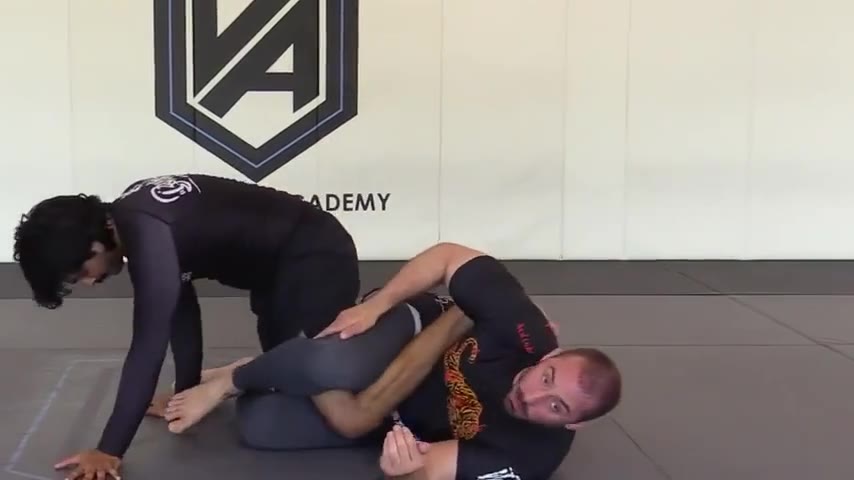
Rau starts with the case he finds people have the most trouble with. A standing man has his weight on the foot you hold, and Rau says an ankle lock there is close to impossible. So he does not try for it. He slides his outside knee between the man’s legs (Rau calls it Y guard), lifts his hips, pulls his knees to his chest and catches the second leg. With both legs held he can tip the man forward onto his hands, as in the clip at the top of this page, or knock him back onto his seat. Either way the weight is off the foot.
01 He is on his hands and you hold his leg: roll over the shoulder on the side of the leg you attack and come up belly down, his foot clamped between your knees
Rau calls this probably the tightest finish he has: belly down there is room to drop your hips, he says, so your body weight goes into the leg.
Vol 2 · 8:45One knee down. The foot you hold is still on the mat, but more of his weight now sits on his other leg. Against the standing man Rau calls the butterfly hook a big mistake: a good opponent takes small steps back until that leg is too heavy and you are stuck. Here it is the first thing he looks for. To get it in you turn onto your side, hips out, so your foot can slide under his leg.
02 He kneels over you, your leg across his thigh: turn onto your side and he tips forward onto his hand
Miss it and nothing is lost: Rau goes back to where he started and tries again, as often as he likes. If the man crowds him so the hook will not go in, he passes his knee inside to Y guard, the position from the first stop.
Vol 2 · 17:25You knocked him back in stop 1, or he sat down himself. Either way his weight is on the mat now, and Rau calls this one of the harder places to finish. Seated, he says, the question is no longer the weight on the foot but where the knee points. Most people turn the knee out, to hide the heel from a heel hook. That is the position the ankle lock wants, so Rau pushes the knee further the same way.
03 Sitting beside him with his foot held: hand on his knee, push it out, then roll down onto your shoulder and hug his ankle tight to your chest
Rau’s reason for pushing it out: it lengthens his leg, so your arm can slide down until the bicep sits on his ankle. On a seated man he prefers this deep grip.
Vol 2 · 31:53The right way out of that lock is to turn the knee back up toward the ceiling. Rau says so himself: it is how he would teach people to defend. But the turn that loosens the ankle lock shows the heel. Whatever the man does to defend the one puts him in the other.
04 You lean in for the ankle lock and he turns his leg: roll back and trap his heel against your chest under your arm. The ankle lock has become a heel hook
Rau’s cue: the hand that was on the shin pulls the shin across and digs for the heel, and the elbow hardly moves. If the man turns back to save his heel, the ankle lock is there again.
Vol 2 · 38:49Stop 4 was the knee turning up. Here it turns further in: from his seat or from a knee he swings his hips away, almost onto all fours, until his heel points up and his laces sit behind your back. Now you can squeeze as hard as you like and it will not be tight. Rau calls this the spot where he commonly sees people lose the lock, and the first half of volume 3 is about it. His first answer is a heel hook again. The other two take the back: one still reaps but skips the heel hook, and the matrix skips the reap too, for where reaping is not allowed.
05 He is up on his hands over you: throw your leg over his hip into the reap, then bring your elbow back and wrap his heel for the heel hook
With his knee turned in the reap is nearly free, Rau says: the man is handing it to you. The one thing that must not happen in the switch is his foot slipping out, so Rau pins it with his elbow as he lets go of the grip.
Vol 3 · 3:09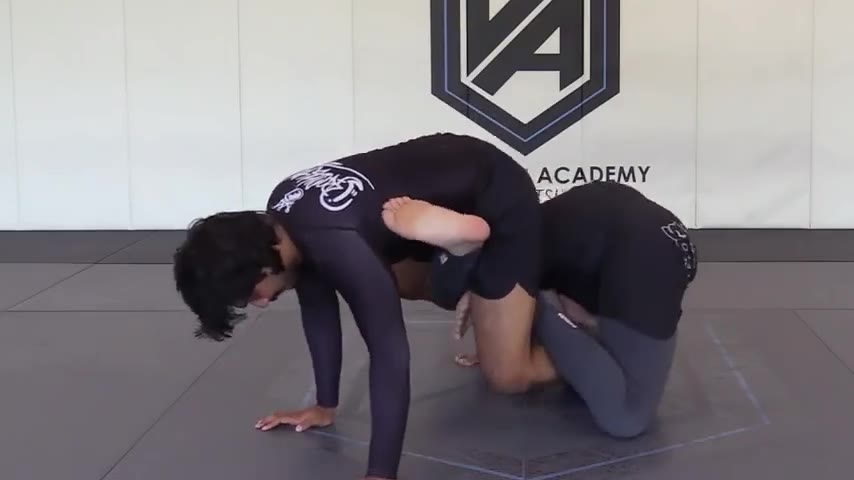 01
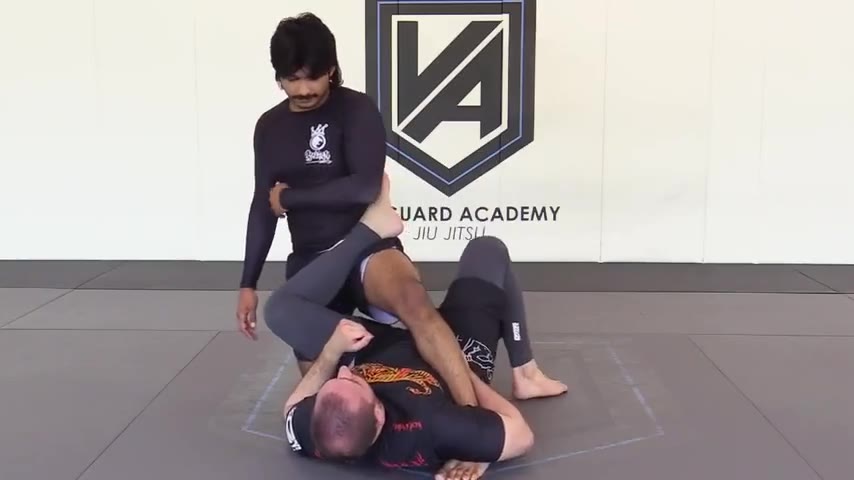 02
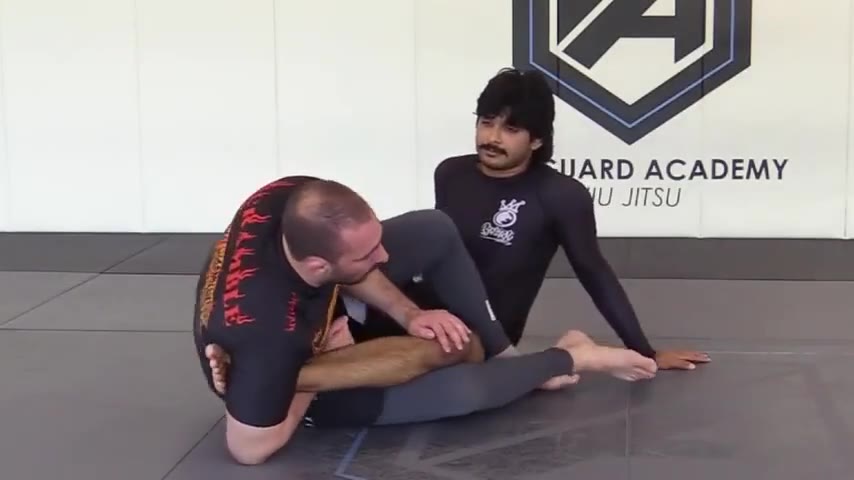 03
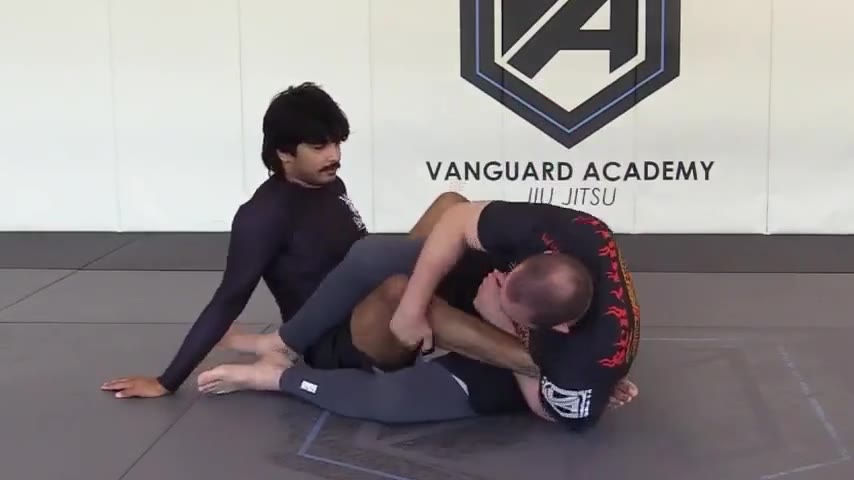 04
 05
How many of these do you do?
Count the ones you already do in a roll, not just in drilling. If most are new to you, this course will change what happens after you get the foot.
Black Friday code BLACKFRIDAY2026, tested at checkout on November 23, 2026: $35.55 instead of $79. BJJ Fanatics rotates these codes.
- No-gi
- 3 volumes, 1 h 27
- 24 chapters
- No entries
- No live rounds
- Released June 2024
Who should buy it
Which one are you?
- Gets the foot, not the tapThis is the whole course: what to do when he stands, kneels, sits or turns his knee.
- Plays outside ashi or single leg X in no-giIt starts from outside ashi, with his foot already under your arm.
- Wants one short course on one lock1 h 27 on one lock; the side trips (Aoki, heel hook, back takes) are short.
- New to leg locksThe grips and finishes are clear, but he starts with the foot already held, and he warns that keeping your own heel safe in these positions takes practice.
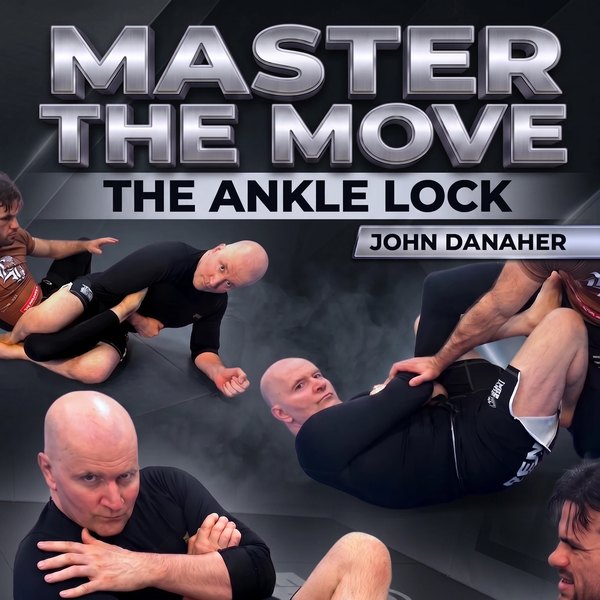 Owns Danaher’s ankle lock courseSame problem, other answers. Rau’s Y guard and butterfly hook are not Danaher’s way of keeping the foot off the mat.
 Wants the Aoki lockIt is here as a switch, in three short chapters. Rau says he likes it less than the straight ankle lock.
- Can’t get to the legs yetNo entries. Rau says so at the end of volume 1.
- Trains only in the giFilmed no-gi, and the reap and the heel hooks of volumes 2 and 3 are banned in the gi under IBJJF rules.
- Wants heel hooks or a whole leg lock gameThe heel hook gets two chapters, and Rau says it is not what this course is about.
What buyers and other grapplers say about it
Luke S., a buyer on BJJ Fanatics (May 2025), says it took his sloppy straight ankle lock to one he can reliably finish with.
A question people ask before they buy: Szczecinski’s course or Rau’s? Someone who owns both would go with Rau’s. The short version, as we heard it put: Szczecinski came up with it, Rau is the better teacher.
The report we like best comes from someone a few weeks into studying it: the advanced leg lockers at his gym used to stay calm when he went for their legs, and now they react quickly once he gets the position and starts the pressure. When a more experienced partner spins out to the inside, he spins with him into a belly down ankle lock. Volume 1 has the belly down finishes, in both directions.
Thomas G., a buyer on BJJ Fanatics (August 2025), found nothing in it that drastically improved his ankle locks, only subtle details he had not seen before. He reads it as a course for no-gi brown and black belt or ADCC rules, because some finishes reap or turn toward the free foot.
Matt M., a buyer on BJJ Fanatics (November 2024), says Rau sometimes talks a little too fast and the camera does not always catch the technique.
One fair point for the other course, from someone who would still buy Rau’s: Szczecinski is the one who made these locks popular and is probably still the best in the world at them, so watch some of his teaching too.
One more. Asked for a favourite moment in any instructional, someone picked this course: Rau seems to pop his partner’s ankle and carries on teaching while the partner shakes it off, laughing.
Worth it? The pros and cons
- One lock, a grip that stays on, and a next move for each thing he does: stand, kneel, sit, turn his knee. What he does to save the ankle sets up your next attack (details 01 to 05)
- The standing man comes first, the case Rau finds people struggle with most: get under him, tip him onto his hands (the clip at the top), roll belly down (detail 01)
- A miss costs little: the grip that holds the leg is nearly the grip that finishes it, so you go back and try again
- A plan for when it fails: the heel hook (detail 04, detail 05), two ways to his back, the bear trap
- No entries: every chapter starts with the foot already held, though the BJJ Fanatics text promises advanced entries. Danaher’s Master The Move: The Ankle Lock gives entries 29 minutes
- No live rounds and no match clips. The chapter that BJJ Fanatics lists as Putting It All Together Against Resistance is a walk through with a partner who goes along
- Volume 3’s extras are thin by Rau’s own account: the bear trap is not a submission, the short Achilles is not a main option, and heel hooks are not his subject here
- No-gi rule sets only: under IBJJF rules the reap and the heel hooks are banned in the gi, and in no-gi below brown belt (see the FAQ)
- $54 per hour at the $79 list price, more per hour than Danaher’s $197 course ($40 per hour). With the code, $25 per hour
- Fast talk and mostly one camera angle; volume 1 is 25 minutes of grips and mechanics before the first situation
What’s inside the three volumes
24 chapters over three volumes, all no-gi, no live rounds. Tap a volume for what’s in it.
Vol 1 · 25:01The lock before anyone moveswhy this lock, two grips, leg positions, three finishes
Why the ankle lock: the grip that holds the leg is nearly the grip that finishes it, so a miss does not cost you the position the way a missed heel hook, toe hold or knee bar often does. Then two figure four grips, a shallow one that twists and a deep one that pulls the foot straight back. Then what the legs are for, which is taking his weight off the foot. Then three places to finish: chest up, belly down turning in, belly down turning out. It ends on outside ashi, the position he goes back to when anything goes wrong, and on the remark that there are no entries.
Vol 2 · 43:07Standing, kneeling, seatedY guard, butterfly hook, the knee push, the Aoki switch, the heel hook
The standing man gets 16 minutes: Y guard to win the second leg, the tip forward onto his hands (the clip at the top), then a belly up finish, the roll to belly down (detail 01), or knocking him back onto his seat when he will not tip forward. The man on one knee gets 12: the butterfly hook first (the turn onto your side in detail 02), Y guard when he crowds you. The seated man gets 12: push the knee out (detail 03), go belly down when he drives into you, take the heel when he turns his knee up (detail 04). Three short chapters, eight and a half minutes in all, say when to switch to the Aoki lock. The last three minutes string it all together, with Rau keeping the same grip while his partner rolls.
Vol 3 · 19:36When the ankle lock failsreap to heel hook, two back takes, bear trap, short Achilles
His knee turns in and his laces end up behind your back: reap into the outside heel hook (detail 05), reap into a back take, or the matrix back take, which Rau likes a little better. His knee turns out and he walks around the corner: the bear trap, to win his second leg back and start again. He spins away before your legs are set: follow him to his back. Last, a short Achilles lock for when your legs will not connect, which Rau does not count as a main option.
Compare to
- Master The Move: The Ankle Lock (John Danaher, $197 list): the long course on the same lock, 4 h 56 over six volumes. Its second volume answers the same reactions, a man up on a knee, on his feet or spinning out, and the answers differ: on a knee Danaher stays flat on his back with a foot over the man’s calf, where Rau puts a hook under the leg. It also has what Rau leaves out: 29 minutes of entries, counters to the other man’s leg attacks and a volume of cross ankle locks. See it on BJJ Fanatics. Or read our review.
- Shotgun Aoki Locks (Mateusz Szczecinski, $79 list): Rau names Szczecinski as a big influence on this system. Szczecinski’s own course is built on the Aoki lock, the finish Rau gives three short chapters and likes less than the straight ankle lock. Five volumes, 1 h 48. The pick if the Aoki is the lock you want. See it on BJJ Fanatics. Or read our review.
- Woj Lock The World (Chris Wojcik, $79 list): a different lock, not more of this one. It is built around Wojcik’s own finish, the Woj Lock. Rau has one lock and a next move for each way the man saves his foot, and stays on it. See it on BJJ Fanatics. Or read our review.

Can’t get to the legs yet, or you train in the gi? Our best ankle lock instructionals has the courses with a part on the way in, and three picks for the gi. Prices are BJJ Fanatics list prices, November 2026.
Get the next review like this one
New reviews in this format land in your inbox, with the timestamps and clips. You also get the free BJJMore email course and the instructional-platform discounts (worth $46).

BJJMore earns a commission if you buy through these links, at no extra cost to you. Released by BJJ Fanatics in June 2024; reviewed on all three volumes.
FAQ
Is Dynamic Ankle Locks worth it?
Yes, if you already get to the foot in no-gi and the ankle lock does not tap. It gives you a next move for each thing he does: stand, drop to a knee, sit, or turn his knee. It is $79 list for 1 h 27 ($35.55 with the Black Friday code we tested on November 23, 2026). Skip it if you cannot get to the legs yet: there are no entries.
How long is Dynamic Ankle Locks?
1 hour 27 minutes over three volumes: 25:01, 43:07 and 19:36, in 24 chapters. There are no live rounds.
Is it good for beginners?
BJJ Fanatics lists it for all levels; Rau himself never names one. The grips and the finishes are explained from zero. But every chapter starts with the foot already held, and Rau warns that keeping your own heel out of danger in these positions takes practice. It suits someone who already plays single leg X or outside ashi. Start here without that and it goes the way you would expect. One person who did was getting ankle locks on less experienced partners halfway through, and then had to go and learn how to get to outside ashi. We have seen a white belt sent to this course too, because it covers basic entanglement details as well. Expect it to be fast: someone who owns most of Rau’s courses calls them clear and concise, and for that reason dense. Most people do better with some background in the topic and will watch them more than once.
Is it gi or no-gi, and is it legal under IBJJF rules?
It is filmed no-gi, and Rau does not sort it by rule set. His one remark on rules: the reap may not be allowed where you compete, which is why he also shows a back take without it. Heel hooks and reaping are banned in the gi under IBJJF rules, and in IBJJF no-gi only brown and black belts may use them. Check the rules of your event before you use the heel hook of volume 2 or anything in volume 3.
Can he take your back while you attack the ankle?
It is the worry people bring from heel hooks, and it comes up for the ankle lock grip in outside ashi too. Rau’s answer is the Achilles grip: keep it, and almost never switch to a scoop grip, because that invites the man to take your back, most of all when he is standing (Vol 1 · 23:36). He comes back to it against the standing man in stop 1 and the seated man in stop 3: “as long as you maintain that Achilles grip, your back should be pretty safe” (Vol 2 · 32:12). Others who hold it that way say the same: the grip makes the back hard to take. Two cautions are worth keeping. Outside ashi is a risky spot if you do not specialize in it or do not off-balance the man first. And once he is most of the way to your back, holding only his ankle will not get you much.
Does it teach the Aoki lock?
As a switch, not as the main lock. The Aoki is the ankle lock taken deeper, with his heel on your stomach, so it twists the heel as well. Three short chapters, eight and a half minutes in all: when the heel slips onto your stomach belly down, and when he turns his knee out on a knee or seated. Rau says he likes it less than the straight ankle lock, because a missed Aoki often loses you the leg. For a whole course on it, see Szczecinski’s Shotgun Aoki Locks.
Does it cover heel hooks?
A little. One chapter in volume 2 turns the ankle lock into a heel hook when a seated man turns his knee up (detail 04), and volume 3 opens with the reap into the outside heel hook (detail 05). In volume 3 Rau says heel hooks are not his subject here, and he keeps both chapters short.
Rau or Danaher’s ankle lock course?
Rau if you want the short one and already get to the foot: 1 h 27, $79, a grip that stays on, the standing, kneeling and seated man in that order. Danaher’s Master The Move: The Ankle Lock if you want the long version: other answers to the same reactions, plus entries, counters and cross ankle locks. 4 h 56, $197 list. Our ankle lock ranking puts Danaher first and Rau second. When Danaher’s course came out in June 2026, Rau’s was the one people brought up as the cheaper option, and we have heard it called just as detailed. On the finish, maybe. Danaher’s is more than three times as long and has the entries Rau leaves out. What its fans like is how well he explains why the mechanics work, despite the repetition. More on his course in our Danaher review.
Can I watch any of it for free?
BJJ Fanatics has a free sample on the product page. On YouTube we found none from Rau himself: his free videos on the Aoki lock, the Woj Lock and the heel hook are other material, and the ankle lock videos he made with other channels come from a later course, not this one.
Is there a discount code?
On November 23, 2026 the Black Friday code BLACKFRIDAY2026 took 55% off at checkout: $35.55 instead of $79. BJJ Fanatics rotates its codes and sales, so check the price on the day you buy.
Finish the ankle lock you already get to
You get the foot and he stands, kneels or turns his knee? This is the plan for each: keep the grip, take his weight off the foot, and turn his defence into your next attack. No-gi, no entries.
Black Friday code BLACKFRIDAY2026, tested at checkout on November 23, 2026: $35.55 instead of $79. BJJ Fanatics rotates these codes.