
Home / Reviews / John Danaher / Kimura: Enter The System Review
Kimura: Enter The System by John Danaher, Reviewed
Buy it if you get the kimura grip and then nothing happens: you learn when to finish it and when to use it to sweep him or take his back.
See Kimura: Enter The System on BJJ Fanatics →No-gi course. Who should buy it ↓
- Filmed no-gi
- 8 volumes, 8 h 30 min
- Released November 2018
- No live rounds
A kimura is a twisting lock on a bent arm: one hand holds his wrist still, the other pulls his elbow. Kimura: Enter The System is John Danaher’s eight and a half hours on that one grip: how to finish it, and what to do with it when it won’t finish.
Yes, if your kimura turns into an arm-wrestling match
You lock the grip and nothing happens. He grabs his own hand, his thigh or his shorts, and it is your two arms against his. Danaher: “You want to make a strong man weak? Put his hand behind his back.” (Vol 2 · 2:03) If the hand goes there, you finish with your whole body. If it won’t, your legs come in, or the grip becomes a sweep or his back.
$197, or $88.65 with code BLACKFRIDAY2026 (55% off, checked November 23, 2026). Released in 2018, filmed no-gi, eight and a half hours, no live rounds, and a lot of it is Danaher talking.
See Kimura: Enter The System on BJJ Fanatics →How to grip a kimura
Everything in this course starts from one grip, the figure four: one hand on his wrist, your other hand on your own wrist. Danaher lists seven kinds of kimura and calls this one “the king of them all” (Vol 1 · 2:54).
You have his wrist
Where you hold decides how much strength you need. Hold too far down his forearm and your lever is short. Hold his hand and you are holding something that bends at the wrist. Danaher’s spot is in between: your middle finger round the bend of his wrist. Your other hand slides up until your wrist touches his, then takes your own wrist. Your elbow goes to his elbow and never past it.
Thumb or no thumb?
“Don’t obsess over whether the thumb is involved or not.” (Vol 1 · 24:11) Danaher has seen arms broken both ways. He does use the thumb while his hands are not yet locked together, so the wrist can’t slip out.
01 Slide your hand up until your wrist touches his
One hand holds his wrist on the mat while your other hand slides up until your wrist touches his and grips your own wrist, with no gap between the hands.
Vol 1 · 35:09How to finish a kimura
With the grip on, Danaher asks one question: can his hand go behind his back? In front of his body the arm is strong. Behind his back it is weak, whoever he is. If the hand will go there, you go straight for the finish, and the power comes from where you put your body, not from your arms. The course itself runs in a different order.
You have the grip in side control
Danaher starts here because the mechanics are easiest to see. While his back is flat on the mat you can’t pull his hand behind it. So put one foot up and point your elbow at the ceiling, and his back comes off the floor. Roll your wrist over the top of his and the hand goes in behind him. Detail 02 shows your elbow going up and his hand going in behind him.
Now stop lying square across him.
Line up along him instead, your hips at his near shoulder and your head toward his far hip, and step over his head so he can’t sit up. That is the line you finish on, and detail 03. From there your wrist hand only holds, and you pull his elbow toward you. Pushing the wrist moves his whole arm at the shoulder and nothing gives. Pull, and Danaher’s words are “a break in a matter of millimeters” (Vol 1 · 51:28). So go slowly on your training partners.
02 Lift your elbow, then draw his hand in behind his back
From side control with a kimura grip, lift your elbow up; he is turned up onto his side, and you draw the gripped hand in behind his back.
Vol 1 · 42:2403 Step one leg over his head
Lying across him from the side with a figure four grip on his arm, step one leg over his head and bring your head down toward his hips.
Vol 1 · 45:42He is lying on his side
Often you catch the grip on a man who is on his side with his arm sticking up. Danaher calls it the dorsal kimura, after a shark’s fin, and apologises for the name. You can finish from there, but you end up pushing, and he can push off your knees and turn out. Danaher’s advice is to move to the finish from side control: bring his knuckles up to his shoulder blade, go over the top of him, and land on your elbow. Lead with your hands and your face meets the mat when he turns.
04 Stay up on your elbow, then take a big step out
Wrong: on top of a man on his side with the kimura grip, you lean over the top and your head ends up on the mat. Right: you stay over the top on your elbow with your head up, then take a big step out with your legs spread wide.
Vol 2 · 6:59He sits up
To get his hand behind his back you lift his back off the mat, and one day he sits all the way up with you.
The pin is gone. Most people let go and scramble back to square one. Danaher’s rule is the opposite: “The hand behind the back takes precedence over the pin.” (Vol 1 · 1:06:17) Keep the hand where it is, let him come up, and roll him over into the same finish. Danaher says he will even go underneath on purpose, because a man with his hand behind his back can’t do anything with the top position.
Against someone who is fighting, the roll has a timing. Danaher wants your thigh on his stomach all the way through it. Lose that contact and he comes up facing you. Detail 06 shows him lost, then kept.
05 Drop your head down past him and roll him over
He has sat up with his arm held behind his back; drop your head down past him, roll him over and come back on top, lying across him.
Vol 1 · 1:09:1506 Follow him through the roll
Wrong: you take him over but lose him: he lands beside you, turns in and comes up to his knees over you, with you underneath. Right: from the same start you follow him through the roll and end on top, curled across him.
Vol 8 · 50:33Why most kimuras fail
Because he knows what you want.
Against someone your own size and level, Danaher says, it is hard work to get the hand behind the back. He keeps it in front, where it is strong, and ties it to something. Now you are pushing with two arms against his two arms. That is the fight that gives the kimura its reputation as a strong man’s move, and Danaher agrees with the complaint for as long as you stay in that fight.
He locks his hands or grabs his own thigh
First try to free the hand, and Danaher has a trick for each grip. His hands are locked and his elbow is away from his ribs: put your knee over his biceps. His hand is tucked inside his own thigh: you may not pull on fingers, but you may take all four knuckles and slide the hand out. He holds his own shorts: pull the wrong way first, away from the cloth, then take his elbow up above his shoulders.
When none of that works, stop using your arms.
Your legs are stronger than almost anyone’s arms. The kimura plata swaps your pushing hand for a leg. The trimura traps his head and arm in a triangle first. And in the cross kimura, detail 07, you keep the figure four, step a leg over him and sit back with both legs across his back, so your legs do what your arms could not.
07 Step one leg over his head and sit back
With a kimura grip on a man lying on his side, step one leg over his head and sit back onto your back, both legs across his back with your feet crossed.
Vol 2 · 22:00Kimura to the back and the kimura sweep
Sometimes the hand stays in front whatever you do. Danaher’s point is that the grip is still worth having: “Kimura has two faces.” (Vol 2 · 34:58) One breaks the arm. The other holds a man in place while you go somewhere else. So you stop trying to break it and use it as a handle.
He turns in and tries to get up
Hold on to the grip and most fights for it end in the same place. He is on the mat, your body and his make a T, and both your chests face the same way. Danaher calls it the T kimura. You can’t finish from there. But he can’t turn away, because the grip stops him, and if he lies still you come up on top of him. All he has left is to turn in toward you and get up.
Whether he can is decided by his elbow.
To come up he has to get it to the mat. Keep it lifted and, in Danaher’s words, “he looks like a 90 year old man” (Vol 3 · 5:54). As he comes up, Danaher puts a knee in under him and goes to his back. Detail 08 is the elbow folding, then the holding. Detail 09 is what you do when he comes up anyway.
08 Keep his elbow lifted off the mat
Wrong: in a T kimura, let your elbow fold and he gets his elbow down and comes up over you. Right: keep his elbow lifted off the mat and he stays on his side however hard he turns in and kicks.
Vol 3 · 6:4109 As he comes up, turn him over across your body
In a T kimura, as he comes up to get on top you turn him over across your body and end up behind him, his back on your chest.
Vol 3 · 16:46You are underneath in half guard
From underneath, both answers to the question end in a sweep.
Danaher finds the kimura easier to get from half guard than from closed guard: you already have an angle on his arm, and a man who is halfway past your legs reaches for your head. Lock the grip and bring your hips to his hand rather than falling straight back, so it is hard for him to tuck it inside his thigh. If the hand goes behind his back, pull. Danaher says the only way out for him is to roll forward over that shoulder, and you go over with him and land on top. That is detail 10.
If he does get the hand to his thigh, Danaher lets him pass: “I’m going to willingly give up my half guard.” (Vol 7 · 1:19) You take your legs out, swing them round him and throw him onto his back with the grip. That is detail 11, and Danaher says it lands in the T kimura, the position in details 08 and 09.
10 Fall to your side under his arm
From underneath, you lock a kimura on his arm and fall to your side under it; he has to roll over that shoulder and you come up on top of him, still holding the arm.
Vol 6 · 1:01:1711 Swing both legs up and over
You lie on your side under him as he kneels, holding his arm; you swing both legs up and over and throw him onto his back.
Vol 7 · 3:24Where the kimura works from
Danaher splits the uses of the kimura into three: on top, underneath and standing. Side control and half guard are above. Butterfly guard, which he calls probably the most famous way his students use it, opens Volume 5 and ends in the T kimura. Four more are below, and the same question decides each: where the hand will go behind his back you finish, where it won’t the grip puts him down. There is no kimura from mount in this course.
He turtles
On top of a turtled man the hand does go behind his back, and you put it there before you turn him over. Danaher thinks Kimura himself, the judo player the lock is named after, mostly set it up this way, though he says he is not 100 percent certain.
From behind, you take one hand, then lay your forearm like a bar across his back so the hand can’t come home. Then the figure four, with his hand at his spine, and you drive him over and finish on the same line as in side control. Danaher is surprised how little you see it today.
12 Drive him over onto the mat with the trapped arm
He is in turtle with one arm trapped behind his back; you drive him over onto the mat with that arm and end lying across his chest, still holding it.
Vol 5 · 28:21He is in your closed guard
Underneath it is harder. This is the kimura everyone learns in their first week, and Danaher opens with a puzzle. It is the one beginner’s move you almost never see at the top: “I can count on one hand” the times he has seen it work at world championship level, he says (Vol 6 · 18:19). His answer: “It’s not the kimura which is not working, it’s the setup which is failing.” (Vol 6 · 24:06) You sit up, and you run into his hands, his biceps and his head.
So don’t sit up.
Take one of his wrists with both hands and pin it at your hip. Pull him forward over one shoulder with your legs, so his other hand has to post on the mat and his head is out of your way. Come up on your elbow and lock the grip. Then it is the same question again: he hides the hand under his stomach or in his thigh, and you tip him off balance to get it out. Then turn out to the side, and Danaher’s detail is the knee: the one you would point at the ceiling points down at the mat instead, so your feet cross over his back. Detail 13 is that turn. Then pull his elbow.
Not shown here, but in Volume 8 (16:09): Danaher calls starting with a triangle round his head and one arm one of the highest percentage ways to make the kimura work from underneath, because the head can’t rise. That is the trimura.
13 Turn your hips out and cross your legs over his back
From the bottom, while he kneels over you with a hand posted, you turn your hips out to the side and cross your legs over his back, with his arm bent behind him in your grip and his face on the mat.
Vol 6 · 34:00He is behind you with his arms round your waist
Even with a man on your back there is a kimura, and Danaher points to Kazushi Sakuraba, who he says was famous for it. The condition comes first. It works when both his arms are under yours, locked round your waist. If he has a seat belt, one arm over your shoulder, Danaher says that is not the time for a kimura. Against the waist lock the grip is what turns him over: you hold his wrist, post your free hand, and throw him forward, where he has little to hold him up.
14 Post one hand and throw forward
With him behind you and his arms locked around your waist, you post one hand, swing your outside leg out wide and throw forward, rolling him over and landing on top across his body.
Vol 7 · 28:55He shoots on your leg
Danaher calls this probably one of the most common uses his students make of the kimura. The man is on his knees on your leg and working round behind you. Your first job is still to square up to him and sprawl. When you are losing that fight for the angle, get your second knee off the mat, take his wrist, lock the kimura, sit through and pull.
This is the other face of the grip. His hand is in front of him the whole time.
You are not breaking anything. You are using the grip to put him on his back. The roll at the top of this page comes from this chapter. Standing, Danaher uses the kimura against the single leg too, and against the double leg, where you turn toward his long arm and sit down.
One question the whole way: can his hand go behind his back?
How many of these do you do?
Count the ones you do in a roll, not just in drilling. If most are new to you, this course will change what you do with the grip you already get.
Who should buy it
Which one are you?
- Your kimura stalls when he grabs his own handOne question covers it. Hand behind his back: finish. Hand in front: your legs, or use the grip to sweep him or take his back.
- You get the grip a lot and finish it rarelyVolume 1 is where to hold, where to lie and which hand does the work.
- You want the kimura as a way to his backThe T kimura gets about 45 minutes of its own.
- People shoot on your legsVolume 5 has the kimura against a single leg on the mat, and Volume 7 takes it standing, against single and double legs.
- You are a white beltVolume 1 will fix your finish from side control. The rest assumes you can already pin a man, scramble and play half guard.
- You train in the giIt is filmed no-gi and nothing is shown in a gi.
 The Cobrinha Kimura Trap System is the gi course.
- You want it short
 Tom DeBlass’s Kimura Domination is four parts and starts with the entries.
- You learn from watching rolls
 Gordon Ryan’s Systematically Attacking The Kimura ends with four rolls and his commentary.
 Lachlan Giles’s The Kimura Anthology has six narrated rolls.
- You want to stop getting kimura’dDefence and escapes are not in this course.
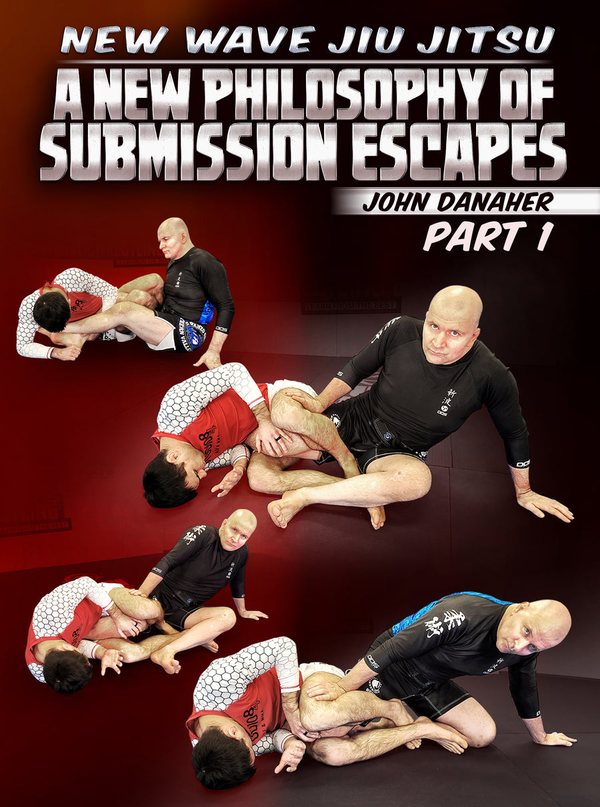 Danaher’s New Wave Jiu Jitsu: A New Philosophy Of Submissions Escapes has chapters on both.
Other kimura courses to consider
- The Kimura Anthology (Lachlan Giles, 8 parts, gi and no-gi, 2022, $149 list)
For you if: you learn more from troubleshooting than from theory. It is at least as long as this course, with troubleshooting chapters, six narrated rolls, and whole parts on the north-south kimura and the tarikoplata (Danaher’s kimura plata). Danaher has no north-south finish and gives the kimura plata about seven minutes. See it on BJJ Fanatics. - Systematically Attacking The Kimura (Gordon Ryan, 8 parts, no-gi, 2024, $349 list)
For you if: you want the newer no-gi version, and want to see it done against people who fight back. Six parts of teaching, with mount and the back, then four rolls and his commentary on each. Much shorter than this course (at least 3 h 38 by its chapter list). See it on BJJ Fanatics. - Kimura Domination (Tom DeBlass, 4 parts, no-gi, 2020, $79 list)
For you if: you want the grip working this month, not the theory. Entries from closed guard, half guard, butterfly guard and against the single leg, in a little over two hours. See it on BJJ Fanatics. - The Filthy Kimura (Neil Melanson, 4 parts, no-gi, 2018, $79 list)
For you if: you want the finish above all. Catch wrestling: arm cranks, the power kimura, a hammer lock and an americana, which Danaher does not teach. People who know both put it simply: Melanson for cranking the finish, Danaher for using the grip to get somewhere. See it on BJJ Fanatics. - The Cobrinha Kimura Trap System (Rubens “Cobrinha” Charles, 4 parts, gi, 2021, $127 list)
For you if: you train in the gi. Most technique chapters come with a chapter on the mistakes people make with it. See it on BJJ Fanatics.
List prices checked on BJJ Fanatics on November 23, 2026.
Want the whole field? See our best kimura instructionals.
Worth it? The pros and cons
- One question sits under the whole course: can his hand go behind his back? You always know what to try next
- The finish is taught as mechanics, not strength: where to hold, where to lie, which hand pulls
- It deals with the hand he hides, in his own hands, his thigh or his shorts, which is where most kimuras die
- The grip is also taught as a handle: the T kimura, the way to his back, two sweeps from half guard
- It covers standing and takedowns as well as top and bottom, and Danaher tells you plainly what does not work, starting with the closed guard kimura everyone learns first
- It is eight and a half hours and much of it is talk: the first demonstration comes after 16 minutes, most moves are shown two or three times, and about 27 minutes are scenes from his group class with his voice over them. People who own it tell you to watch it at one and a half or double speed. Tom DeBlass’s Kimura Domination is four parts
- No live rounds and no matches, and the partner lets most of it happen. Gordon Ryan’s Systematically Attacking The Kimura ends with four rolls and his commentary on each
- Released in 2018 and filmed no-gi, and nothing is shown in a gi, though Danaher says the kimura works with one. The Cobrinha Kimura Trap System is filmed in the gi
 No mount, no kimura defence and no americana. Gordon Ryan’s course has a mount and back part; Neil Melanson’s The Filthy Kimura teaches an americana and a hammer lock
- The depth is uneven: about seven minutes on the kimura plata and no finish from north-south. Lachlan Giles’s The Kimura Anthology gives each a whole part
What’s inside the eight volumes
Eight volumes, all filmed no-gi. Volumes 1 to 3 are the method. Volumes 4 to 7 are where you get the grip. Volume 8 is the rest of the kit. Tap a volume for what’s in it.
This route is about 35 minutes and gives you the method:
- Volume 1 from 43:12, 6 minutes. The line you finish on, and a no-hands test for it.
- Volume 1 from 49:18, 3 minutes. Pull his elbow, don’t push his wrist.
- Volume 1 from 1:04:04, 4 minutes. What to do when he sits up.
- Volume 2 from 9:28, 7 minutes. Freeing a hand he has locked to something.
- Volume 3 from 5:19, 5 minutes. The fight for his elbow in the T kimura.
- Volume 6 from 24:20, 11 minutes. The closed guard kimura, repaired.
Want a free look first? BJJ Fanatics has two short excerpts from this course on YouTube: getting under his elbow from side control (Volume 4) and lifting his elbow level with his shoulders (Volume 1), about seven minutes together. Bernardo Faria also has a ten minute video with Danaher on the finish from side control, the same ideas in other words.
Vol 1 · 1:11:54The method and the finishthe one question, the grip, the line, pull not push, the roll
If you watch one volume, watch this one. The first 16 minutes are a voice-over that lays out the whole method: the kinds of kimura, the one question, and the ideas behind it. Then the studio work, all from side control: where to grip (detail 01), thumb or no thumb, bending a straight arm (detail 02), the line you finish on (detail 03), pulling instead of pushing, and trapping his head. Danaher adds one more thing that tightens every kimura: his elbow lifted level with his shoulders. At 48:03 there is a test, a kimura with no hands, that tells you whether you are lined up. The last eight minutes are the roll for when he sits up (detail 05).
Vol 2 · 48:56When he won’t give you the armthe man on his side, freeing his hand, your legs, switching
The tightest volume. It opens with the man on his side (detail 04), then the tricks for freeing a hand he has locked to his other hand, his thigh or his shorts. Then the three ways to bring your legs in: the cross kimura (detail 07), the kimura plata, also known as the tarikoplata, and the trimura. It ends with the two ways out when even your legs fail: switch to an armbar or a triangle, or wrap his head and arm together and go to his back.
Vol 3 · 54:03The T kimurawhat it is, the fight for his elbow, the back, triangles, the armbar
About 45 minutes on one position. What it is and why you can’t finish from it, then the fight for his elbow (detail 08). Then what you attack with your bottom knee when he turns in: his back (detail 09), a triangle from behind, an armbar, a triangle from the side and what Danaher calls the Russian arm. Then the attacks with the top knee. The same entry is shown into five finishes, so it repeats. The last eight minutes pair the kimura with a bicep slicer.
Vol 4 · 52:38Getting the grip on topside control, the top of half guard
Now the entries. A man you have pinned keeps his elbows in, so Danaher shows three ways into the grip from side control: under his elbow from north-south, and at his wrist with your palm up or your palm down. Then the top of half guard, where a one-handed kimura holds his arm while you free your leg, and a roll into the T kimura. The last eight and a half minutes are Danaher’s voice over scenes from his group class.
Vol 5 · 1:02:43Butterfly guard, the turtle, the single legagainst a seated guard, on top of turtle, on the mat
Against a seated butterfly guard: get your armpit higher than the top of his head, roll over your shoulder, and you land in the T kimura. Against the turtle, with the story of Kimura the man and the setup Danaher thinks he used (detail 12). And against a single leg on the mat, with a drill. The roll at the top of this page is from that chapter.
Vol 6 · 1:12:39Closed guard and half guard from underneaththe mystery, the repair, the half guard roll
It starts with two short ones: what to do when he pulls his head out of your single leg counter, and a kimura from the scarf hold. Then the best lecture in the course, nine minutes on why the closed guard kimura fails at the top, and the repair (detail 13), with two more ways in after it. The half guard part is where Danaher starts beginners: the knee shield, your hips to his hand, and the roll that puts you on top (detail 10). It ends with a move from half guard to full guard and a sacrifice throw, the sumi gaeshi.
Vol 7 · 1:21:18Half guard chains, a man on your back, standingthe half guard throw, the bottom of turtle, takedowns
The longest volume. First the half guard throw for when he hides his hand (detail 11), and the risk Danaher names from there: with the hand in front and his legs free, he can step over your head and armbar the arm you are holding with. Danaher’s answer is to move with him and put him on his back. Then thirty minutes from the bottom of turtle (detail 14), with one version Danaher says he would never teach in a beginners’ class, because both of you are moving fast with the arm locked. Then standing: the kimura against a single leg with his head inside and outside, a kneeling single leg, and the double leg.
Vol 8 · 1:05:39The rest of the kitlegs kimura, trimura, the roll, the elbow, the back
Loose ends, and good ones. The legs kimura from the top of turtle, which many people know as the reverse omoplata. The trimura from a seated guard: trap his head and one arm with crossed ankles, then lock the kimura. A run through all the kinds of kimura in one place. Then two details that belong with Volume 1: how to time the roll when he sits up (detail 06), and why you land on your elbow, not your hands. Last, the head and arm kimura, the road to his back.

BJJMore earns a commission if you buy through these links, at no extra cost to you. Reviewed on all eight volumes.
Get the next review like this one
New reviews in this format land in your inbox, with the details on video. You also get the free BJJMore email course and the instructional-platform discounts I use myself (worth $46).
Kimura FAQ
Why can’t I finish my kimura?
Danaher’s list is short. You push his wrist, so his whole arm moves at the shoulder: hold the wrist still and pull his elbow. You lie square across him: line up from his near shoulder to his far hip. His head is free, so he sits up with you: step over it. Or his hand never went behind his back, and then you need your legs, or the grip as a handle to sweep him or take his back, not more effort.
How do you do a kimura from closed guard?
Not by sitting up fast. That is the version Danaher says almost never works at the top level. Pin one of his wrists at your hip with both hands, pull him forward so his other hand posts, come up on your elbow to lock the grip, then turn your hips out and pull his elbow.
What is the difference between a kimura and an americana?
In a kimura his hand points down toward his hips; in an americana it points up toward his head. That much is from us. From Danaher: both are twisting locks, and the Japanese call both ude garami, with a longer name for each. This course teaches only the kimura: he mentions the americana twice and moves on.
What is the kimura trap?
What people mean by it: holding the kimura grip to control a man instead of breaking his arm. Danaher never uses the words in this course. He calls it the second face of the kimura, the one that holds a man in place. Its home is the T kimura: your body and his make a T with the grip on, he can’t turn away, and you take his back when he tries to get up.
How do you escape a kimura?
Keep your hand in front of your body and tie it to something: your other hand, your thigh or your shorts. And keep your head free, so you can sit up. Those are the things that make a kimura hard to finish in this course, which shows it from the attacker’s side only: it has no part on defending or escaping. Danaher’s New Wave Jiu Jitsu: A New Philosophy Of Submissions Escapes lists chapters on kimura defence and on escaping the T kimura.
Why is it called the kimura?
After a man. Danaher tells it in Volume 5: Kimura was “one of the greatest judo players of all time”, and the Japanese name for the lock is ude garami. He used it in Brazil in the 1950s, “most famously” against Helio Gracie, and the Brazilians named it after him. The match itself, from us and not from the course: Rio de Janeiro, the Maracanã stadium, October 1951.
Is Kimura: Enter The System worth it?
Yes, if you already get the grip and it keeps stalling, and you have the patience for eight and a half hours of slow, exact talk. Volume 1 on the finish and Volume 2 on the hidden hand are what you will use first. One early buyer, in a review posted on r/bjj in November 2018 that also lists where it falls short, wrote that “on virtually every disc, you’ll learn some eye opening thing”. If you want it short, or in the gi, or with live rolling, buy one of the others above.
Danaher or Gordon Ryan for the kimura?
Different jobs. Danaher’s course is older and far longer, explains why each detail works, and has parts on the turtle and on takedowns that Gordon Ryan’s chapter list does not. Gordon Ryan’s Systematically Attacking The Kimura is from 2024, adds mount and the back, and ends with four rolls. As one r/bjj member who owns courses by both put it in June 2024: “Gordon shows more set ups and actual technique.” Want to understand the lock: Danaher. Want to see it done against people who fight back: Gordon Ryan.
Stop arm-wrestling for the kimura
If you get the grip and it keeps stalling, this course gives you one question to ask and an answer for each side of it. Filmed no-gi, and it takes patience.