
Home / John Danaher / Free instructionals / Self Mastery: Solo BJJ Training Drills Review
John Danaher’s Self Mastery: Solo BJJ Training Drills Review
No one to train with today? John Danaher shows what each warm-up drill is for, so it is there when someone is on top of you. Here, the hip heist: chest to the ceiling and one push knocks you over. Chest to the floor and it holds.
Get it free on BJJ Fanatics →No-gi, no partner needed. Who should do it ↓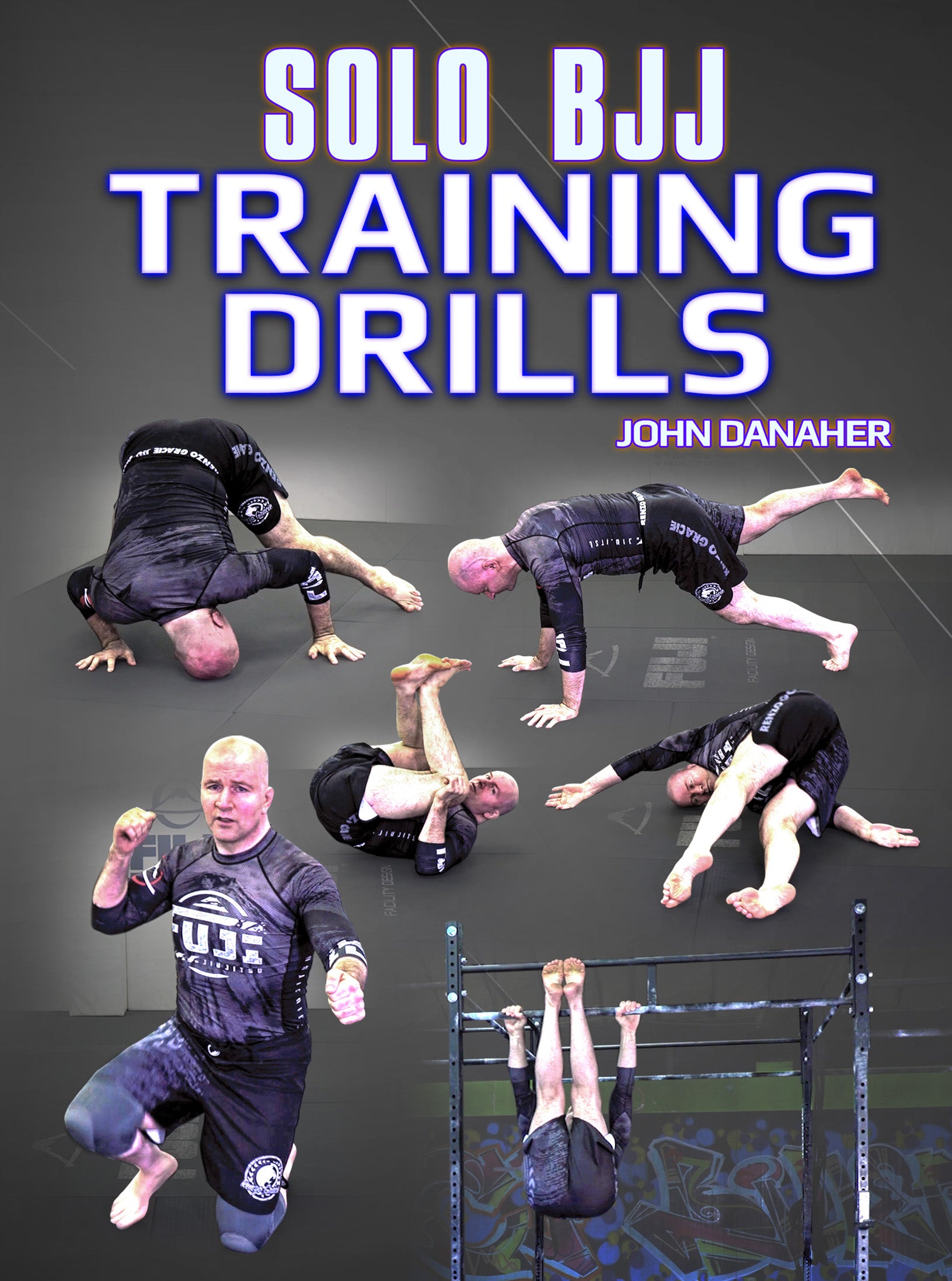
- 4 volumes, 2 h 34
- No-gi
- Released March 2020
Affiliate links: BJJMore earns a commission on paid courses bought through them, at no extra cost to you.
Self Mastery: Solo BJJ Training Drills is John Danaher’s course of solo drills: the body movements under jiu-jitsu’s escapes, guard retention and stand-ups. It has been free on BJJ Fanatics since the gyms closed in 2020 and nobody had a partner.
Yes, if you do the drills his way
You already do these drills in every warm-up. Danaher: “I know many, many people who can shrimp up and down the mats all day, but they can’t shrimp their way out of the mounted position.” (Vol 1 · 7:48) So he shows what each movement does on a partner. It is for days you cannot train, and for anyone whose warm-up never shows up in a roll.
It costs $0, a free BJJ Fanatics account and 2 h 34. You get movements, not full escapes.
The drills and what they are for
Every movement is taught the same way: alone first, then on a partner. Below they run from the worst spot up: flat under mount, guard, on your knees, on your feet. The last two stops are not a spot on the mat but a workout: his five-minute round, and the one exercise he makes all his athletes do.
- He is mounted on youbridge to a side (Vol 1)
- You shrimp and he stays on tophips up, knee down (Vol 1)
- He is getting past your legsfoot inside, reverse shrimp, high leg spin (Vol 1, Vol 2)
- You want to get up from under himthe supine heist (Vol 2)
- You are on your knees under himsit back to guard (Vol 2)
- He is on your back and you stand uplean forward (Vol 2)
- He shoots for your legthe down block (Vol 3)
- Five minutes against a man who isn’t therethe shadow round (Vol 4)
- All you have is a pull-up bartoes to bar (Vol 4)
Danaher starts with the bridge, and with what is wrong with the usual one. Bridge straight up and nothing changes: “no matter how high my bridge goes, no matter how flexible my spine, my opponent’s still on top of me.” (Vol 1 · 15:54) In jiu-jitsu a bridge has one job, to take you from your back to your knees. So it goes to a side, over one shoulder.
01 Bridge out of the mount: keep driving to the side until his base runs out
First trap an arm: “It’s no good bridging if my opponent can base out and resist.” (Vol 1 · 19:20) Your opponent still has the other hand and posts it further and further out. Keep driving the same way until that base “just runs out”.
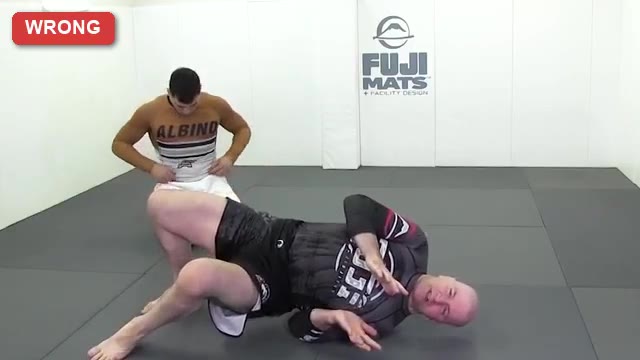
Vol 1 · 20:02The other way out from under mount is the shrimp. It is the drill everyone has done, and the one Danaher is hardest on: “what passes for a shrimp for most people, it’s kinda like a lazy sliding movement” (Vol 1 · 23:15). His version, the power shrimp, begins with a small bridge like the one in detail 01: hips off the mat, up on one shoulder and your feet. Only then can the knee turn.
02 Power shrimp: turn the knee to the floor, not the ceiling
“The key element behind the idea of a power shrimp is the inversion of my knee.” (Vol 1 · 27:58) The hips come off the floor first. That is what lets the knee turn down.
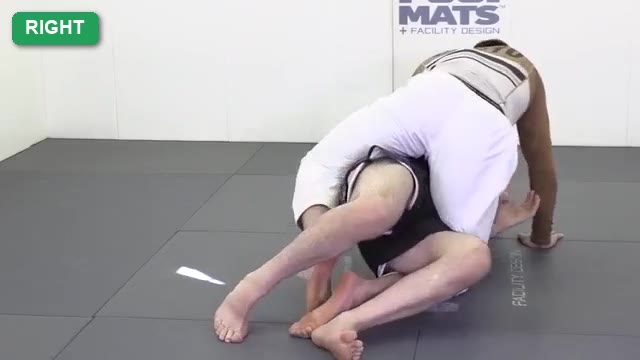
Vol 1 · 27:5603 Mount escape: a flat slide stays stuck, hips up and the turned-in knee gets inside
The same knee, now with someone on top. Sliding flat, “he stays locked to my body” (Vol 1 · 26:57). With the hips up and the knee turned in, Danaher says, it goes inside even when your opponent locks his feet.
Vol 1 · 26:57Shrimp out and he is back in your guard. Then he starts to pass it. The course has a movement for each stage of the pass. The reverse shrimp, for when he is past your knees, is the one Danaher ranks “a very close second” to the shrimp itself (Vol 1 · 30:18).
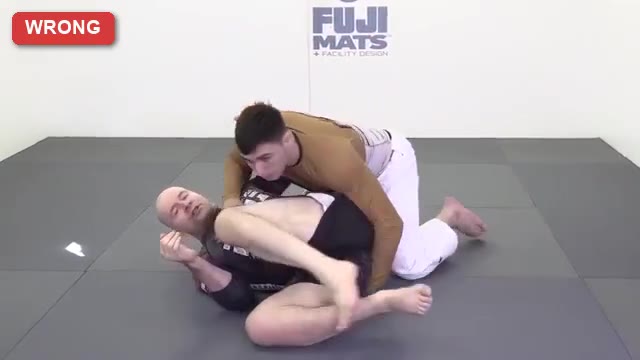
04 Leg pummel: when he gets an arm under your leg, circle the foot back inside
Think of the fight for the underhook when two people stand chest to chest: “He pummels arms in, and we pummel feet out.” (Vol 2 · 13:54) With the foot back inside, Danaher says, lifting your leg is no longer possible, and live you normally pummel one leg, not both.
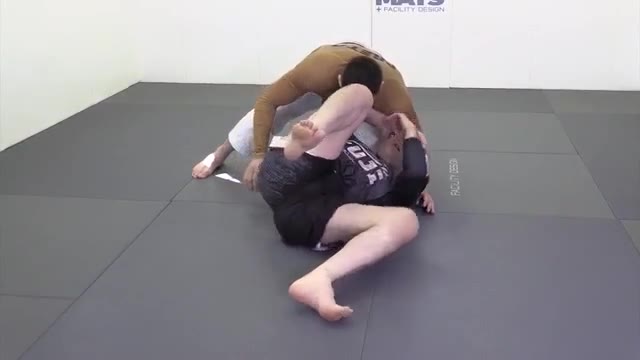
Vol 2 · 12:0605 Reverse shrimp: reach with the foot, pull yourself to it
A normal shrimp plants the heel and pushes. This one plants the toes and pulls: “I pull my ass towards my foot.” (Vol 1 · 33:25) That took him from nearly pinned across the side to almost north-south, he says, and from there the legs can come back in.
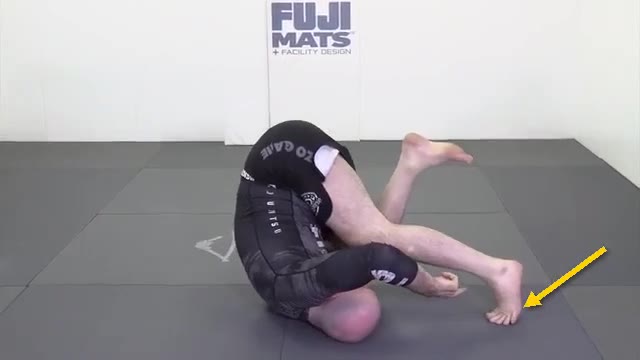
Vol 1 · 34:0006 High leg spin: roll onto your shoulders, touch one foot down, turn 180
For when your opponent has passed “all the way up beyond my shoulder line” (Vol 2 · 18:54). Alone there is nobody to turn on, so one foot touches the mat and you turn on that. With a partner you turn on him, and that, he says, is the easier of the two. Drill both sides: you never know which side the pass comes from.
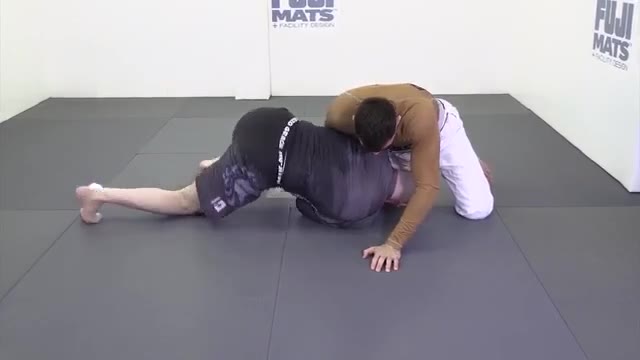
Vol 2 · 20:54Guard is one way out from under him. The other is to come up. The supine heist takes you from flat on your back to your knees with his leg in your arms, and Danaher puts it “right up there with shrimping and bridging” (Vol 2 · 0:13). It starts like a shrimp: foot close to your buttocks, turn onto your side.
07 Supine heist on a partner: on your side under him, scissor your legs and come up on a single leg
The cue: “If the shoulder order is incorrect, you’re always gonna struggle to get up.” (Vol 2 · 2:00) Top shoulder in front of the bottom one, elbows in tight, and push off the mat. Against a real pin you first need the underhook and have to get inside the cross face, he says.
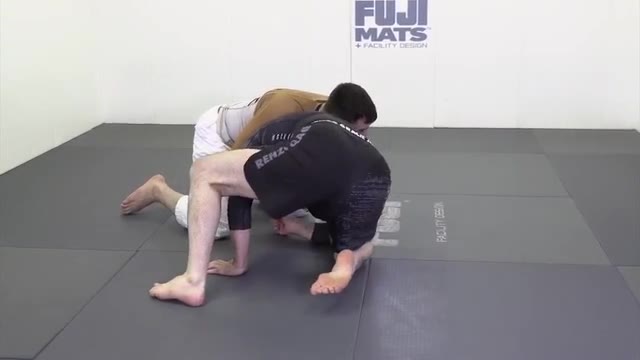
Vol 2 · 3:00Do the same from sitting and it is the hip heist, which you may know as the technical stand-up. That is the clip at the top of this page. The rule there: “when the chest is exposed to the ceiling, a single hand will put him down” (Vol 2 · 8:43).
Come up on his leg as in detail 07, he sprawls, and you are on your knees with someone on top of you. Danaher calls this the second bottom position, with your opponent behind you or in front (Vol 2 · 22:15). Most people would rather be on their back, because on your knees your back is exposed. So the movement he uses most from here takes you back to guard: “It’s the one we use more than any other by a landslide.” (Vol 2 · 46:18)
08 Sit-back from a front headlock: leg up, pivot under him, sit to guard
The hard case is a front headlock, with your opponent sprawled over you. You cannot lift him with your neck: “No one’s that strong.” So one leg comes up, the foot posts, and you turn under him, sit to your hip and end in guard. The cue for doing it alone: “Try to imagine the guy on top of you is three hundred pounds.” (Vol 2 · 44:01)
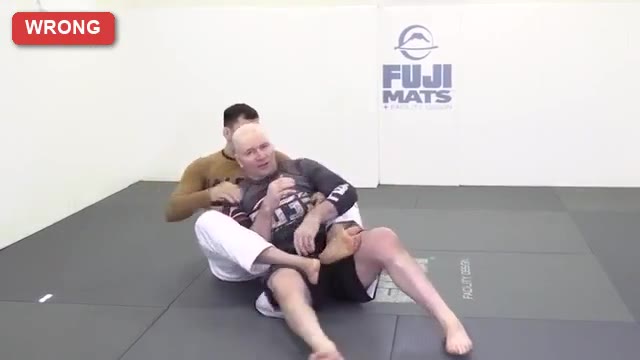
Vol 2 · 44:55The sit-back is one way off your knees. The other is up. Wrestlers, Danaher says, come up with the hips forward. In jiu-jitsu the man behind you then just sits back and takes you with him: “If he pulls you back and put two hooks in, he just scored four points.” (Vol 2 · 39:39) The fix: weight forward.
09 With him on your back: once you are up, bend forward, not tall
Stand up tall and the man behind you sits back and pulls you down into back mount. Lean forward as soon as you are on your feet and you stay up with him hanging on you. After that, Danaher says, you walk away, fight the hands and turn to face him.
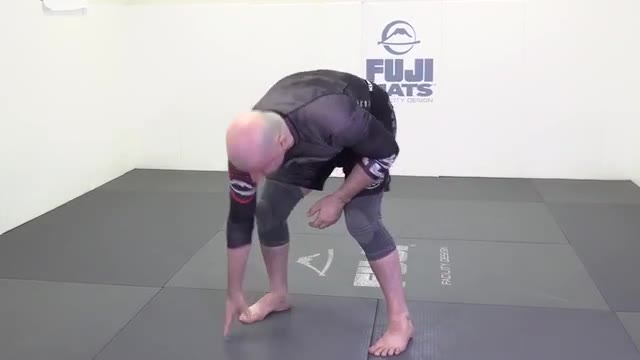
Vol 2 · 41:45Once you are back on your feet the course has less to give. Top and standing get one short volume, and Danaher says at the start of it that there are “far fewer solo drills from top position than there are from bottom” (Vol 3 · 0:16). The part I would take home is his first answer to a shot. It is not the big sprawl. He calls throwing the hips and legs back at once “a form of overreaction” (Vol 3 · 10:32) that leaves you stretched out for the next attack.
10 Down block: hand to the floor, leg back and away
“I’m not sprawling. I just put a defensive hand in front of my opponent so the arm is there as a barrier and he goes onto my arm.” (Vol 3 · 11:32) If the shot was a fake, he says, you are back in your stance; if it was real, the sprawl is still there from here.
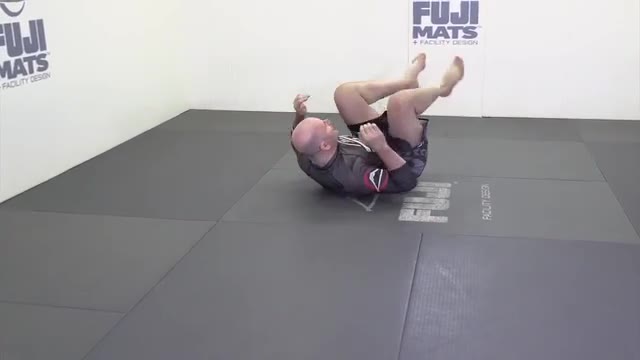
Vol 3 · 11:48Volume 4 puts the movements together, in what Danaher calls “the whole purpose of this video” (Vol 4 · 17:14): three five-minute rounds in which you picture an opponent and answer what he does. No longer than five, because after that “people’s minds tend to wander” (Vol 4 · 18:53). The minute between rounds is work too: crawling, or his crucifix rolls. One round is shown, and he talks through the first two minutes.
11 Shadow grappling: rolled from on top onto his back, legs up, then back up to his knees
Danaher, alone on the mat, says out loud what he is picturing: “as I move my way into the mount, I get bridged up and over and end up in bottom position” (Vol 4 · 21:11). Now someone is trying to pass, he says, so the legs go up, and then he sits up and goes forward again. Two minutes in he stops talking and leaves you to work out what the imagined opponent is doing.
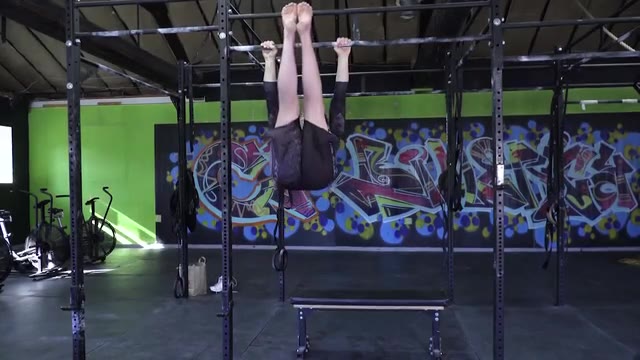
Vol 4 · 21:11The drills are the first of three things Danaher wants from you on days off (Vol 4 · 26:09). The second is a strength program, and he does not mind which one: he has seen world champions use every kind, and none came out ahead. The third is study. On strength he makes one exception, an exercise all his athletes do almost daily. He picks it because beginners run out of forearms and stomach first, and because it trains the shape he wants everywhere in jiu-jitsu, elbows close to knees: “90% of the failures are going to come from failure to maintain integrity of knee and elbow position” (Vol 4 · 37:33).
12 Toes to bar: from a dead hang, straight legs up to the bar, no swing
Between five and twelve clean reps: “Anything less than five, then you won’t be working the endurance of your forearms enough. If you can go more than 12, you should be doing a more difficult variation of the exercise.” (Vol 4 · 39:01) Too hard today? Bring your knees to your chest or go up halfway until you can go all the way.
Vol 4 · 38:22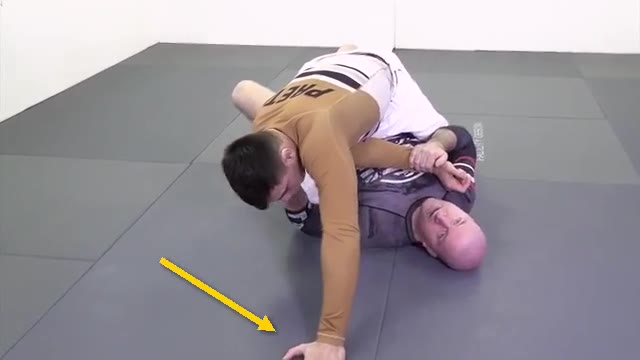 01
 02
 03
 04
 05
 06
 07
 08
 09
 10
 11
 12
Who should do it
Which one are you?
- Does the drills in every warm-up, never in a rollThis is who the course is for. Each movement on your back and knees is shown on a partner, so it shows up when someone is on top of you.
- New, or about to startThese are the movements under the first escapes you will be shown. Learn them first and the techniques come faster.
- Injured, travelling or between gymsThe course was made for this. His plan for time off is three things: these drills, a strength program you enjoy, and study.
- Good athlete, clumsy on the groundBeing athletic in one sport does not carry over to the next. Jiu-jitsu happens on the ground, half of it on your back, and these drills train that.
- Purple belt and upYou know most of these. The reverse shrimp never gets any attention, Danaher says, and the high leg spin is rarely taught. Those and the five-minute round are what is left for you.
- Wants takedowns and passingTop and standing share one volume of 19 minutes. The other three are about the bottom, the workout and strength.
- Wants techniques, not movementsThere is no submission in it. Sweeps, passes and escapes are shown only as far as the movement takes them, without the grips, counters and follow-ups. See the paid next step further down.
What people who did it say
Start with the bridge. As I heard someone put it: “If you can execute that bridge correctly in bottom kesa gatame, you’re like 70% escaped.” It is in volume 1 (detail 01).
A coach went through all of it the week it came out and planned to bring it into classes once everyone was training again. Someone else called the detail on basic movements truly impressive, and that detail is what you come for: the drills themselves are ones most people already do in warm-ups.
Not everyone finished happy. The round that strings it all together struck one person as odd: “i don’t know if i’ll ever be able to string things together like that.” That is fair on day one. One round is shown, and Danaher stops talking two minutes in (detail 11), so expect to replay it.
And the usual case against solo drills, “Shrimping without context is like shooting a basketball without a hoop”, is one Danaher makes himself: he has you drill every movement against an opponent you imagine.
Pros and cons
- Every drill comes with what it is for: the movements on your back and on your knees are all shown on a partner, often the wrong way first
- It fixes the drills you already do: the knee that turns down in the shrimp, the chest that turns to the floor in the stand-up
- It ends in something you can use the same day: three five-minute rounds against an opponent you imagine, and toes to bar, the one exercise he makes all his athletes do
- No partner, no gi, a pull-up bar at most
- A slow start: the first drill comes at 15:19 of volume 1, after 13 minutes of talk to the camera. Sit through it once; it is where he says how to do the rest
- Top and standing get 19 minutes together, against about 80 minutes for the bottom. I have heard the standing movements called sub par, and 19 minutes does not leave room for much more.
- It teaches the movement, not the full escape or guard built on it. Danaher’s paid courses on those run 5 to 11 hours (more on those below)
- Nobody corrects you. The wrong and right versions on screen help, but alone you cannot feel which one you are doing, and the five-minute round is shown once
Drills you can do alone, tonight.
What’s inside the four volumes
Two volumes on the bottom with a partner, one short volume for top and standing, and a fourth that turns it all into a workout. Tap a volume for what’s in it.
Vol 1 · 44:44Why train alone, then four movements on your backThe talk first, then bridge, shrimp, reverse shrimp, scoot
The first 13 minutes are the case for training alone: every move rides on a body movement, athleticism belongs to one sport, and a drill only counts when you picture an opponent. Then come bridging, shrimping, reverse shrimping and scooting. Each is shown alone and then on a partner: under mount, under side control, or seated in front of a standing passer.
Vol 2 · 47:44Getting up, keeping guard, getting out of turtleNine movements, each one also on a partner
The supine heist and the hip heist for getting up. Leg pummeling, leg scissoring and the high leg spin for keeping your guard. Then turtle, which he calls the second bottom position: the sit-out, three rolls (shoulder, Granby, forward), the inside leg stand-up and the sit-back. Every one is then shown on a partner, often the wrong way first. This is the volume with the most in it.
Vol 3 · 19:03Top and standingThe short one
Standing up in closed guard and stepping out of an ankle grip, two footwork patterns for passing, stance and motion, the down block and the sprawl, and how to keep your head up when you are in on a leg and he sprawls. He says at the start that there are far fewer solo drills from top than from bottom. It is the thinnest volume, and it feels like it.
Vol 4 · 42:51Spine, core, the workout, toes to barNo partner. The five-minute rounds are here
Drills for rounding and arching the spine, then crawling and crucifix rolls for the elbow-to-knee strength he keeps coming back to. At 17:14 comes what he calls the whole purpose of the video: three five-minute rounds against an opponent you imagine, with one round shown. Then nine and a half minutes of talk on what else to do with time off (a strength program you enjoy, and study), and the last seven minutes are toes to bar.
The paid next step: what this course does not teach
A movement is not an escape, and Danaher does not sell it as one. In the second minute he says that training with a partner who resists stays the most important part of your training (Vol 1 · 1:53). Here he shows the bridge, the shrimp and the leg pummel on a partner and stops there, because the subject is what you can do alone.
What to do when your opponent answers, switches pins or beats your first move takes a partner and a longer course. He has made those too, and they are not free. Do this one first. If the movements are in and you still get passed or held down, these are the two I would look at.
- The Fastest Way To Develop An Unpassable Guard (John Danaher, $197 list): For keeping your guard. It opens with twelve solo movements of its own, pummeling, shrimping and scooting among them, so that part will feel familiar. Then a volume on how passing works, and six on the passes you meet in no-gi: the toreando and north-south, the body lock and the knee cut, half guard and sit-outs. No-gi, 5 h 13 over eight volumes. See it on BJJ Fanatics. Or read our review.
- Pin Escapes & Turtle Escapes: Go Further Faster (John Danaher, $197 list): For the escapes. The bridge and the shrimp from this page become full escapes from mount, side control, knee on belly, north-south, the back and turtle. Filmed in the gi, 10 h 52 over eight volumes. See it on BJJ Fanatics. Or read our review.


Get the next review like this one
New reviews in this format land in your inbox, with the details on video. You also get the free BJJMore email course and the instructional-platform discounts I use myself (worth $46).

BJJMore earns a commission if you buy a paid course through these links, at no extra cost to you. This course is free. Released by BJJ Fanatics in March 2020; reviewed on all four volumes.
FAQ
Is Self Mastery: Solo BJJ Training Drills really free?
Yes: $0 with a free BJJ Fanatics account. It was filmed when gyms closed for COVID, and it was free on BJJ Fanatics by March 17, 2020. It has stayed free since: people were still passing it around as a free course in 2025.
Do solo drills actually work for BJJ?
Not the way most people do them, and Danaher says so himself. Done as a warm-up for numbers, “the movements become thoughtless, and as a result, they don’t really have much benefit” (Vol 1 · 7:43). They work when you drill each movement against an opponent you imagine, the way a boxer shadow boxes. He still puts training with a partner who resists first (Vol 1 · 1:53).
Do I need a partner or any equipment?
No partner. Danaher uses one on screen; in volume 4 he works alone. You need enough mat or soft floor to roll over on, and a pull-up bar for toes to bar. It is filmed without the gi.
Is it good for beginners?
Yes. These are the movements under the first escapes a beginner is taught, and Danaher says people who have them progress faster (Vol 1 · 12:31). No gym yet? Start anyway: download it and drill the movements at home, as one newcomer was told. They will help when you start class. It is not only for beginners: he calls the reverse shrimp crucial “especially in the higher levels of the sport” (Vol 1 · 30:37).
What is toes to bar, and why does Danaher insist on it?
A leg raise from a dead hang until your toes touch the bar, with straight legs and no swing (detail 12). It is the one exercise outside the gym he makes all his athletes do, almost daily (Vol 4 · 36:10), because it builds the grip and the elbow-to-knee strength jiu-jitsu asks for all the time. He wants five to twelve clean reps.
Is it enough on its own?
No, and Danaher does not say it is. It teaches movements like the bridge and the shrimp and stops there; when your opponent answers, you need a partner. His paid courses on the escapes and on keeping guard are further up this page, under The paid next step.
A day off the mat does not have to be a day off
Free, done alone, no-gi. Do every drill the way he shows it on a partner, and finish with the round in volume 4.