
Top position is king in Brazilian Jiu-Jitsu. Solid top control scores points under IBJJF and ADCC rules, funnels opponents into predictable escapes you can counter for submissions, and saves your energy while they burn theirs bridging and shrimping.
Yet many grapplers float instead of pinning. A real pin forces the bottom player to carry your weight and stay there: think classic cross-face side control or Khabib-style chest-to-back rides. This guide breaks down the principles, positions, and drills that separate a heavy top game from just “being on top.”
Foundational Principles of Pinning in BJJ
- Connection before pressure. Glue your hips and shoulders to theirs before you crush. A gap of even two inches lets them re-frame and start escaping.
- Wedges and posts. Knees, elbows, and cross-faces that block hip rotation. The cross-face turns their nose away from you, which kills their bridge power on that side.
- Weight distribution. Drive your weight through their solar plexus line, not into the mat. Experienced pinners feel heavier at 160 lbs than beginners at 220 lbs because of this.
- Head position = steering wheel. Where your head points, your pin follows. Dropping your head to the mat-side hip in side control makes you nearly impossible to bench press off.
- Transitions, not hesitation. Float only to settle in a better pin (side control to north-south, mount to technical mount) as escapes begin. Staying static in one pin against a good grappler is a losing strategy.
- Take their feet off the mat. Every bridge and every shrimp starts with the feet on the floor. Pin the legs (sit on them, split them, hook an ankle with yours) and those escapes lose their power. This is the core idea of Craig Jones’ Power Ride.
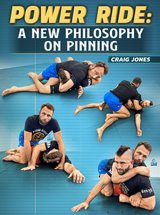 Craig Jones’ rule in Power Ride: “He can bridge if his feet are on the floor. He can hip escape if his feet are on the floor.” Take the feet away and both escapes are gone. Vol 1 · 19:02 Our Power Ride review →
Core Pinning Positions and Transitions
1. Side Control Variations
Side control is where most top games start, and small details separate a pin your partner can escape in 10 seconds from one that drains them for minutes. The three main flavors:
- Traditional cross-face side control: Chest-to-chest, underhook on the far arm, cross-face driving their jaw away. Your hip-side knee wedges tight against their hip to block shrimping. It is the first pin most people learn.
- Kesa gatame (scarf hold): Head-and-arm control with your hip dropped to the mat. Generates enormous shoulder pressure but leaves your back exposed, so use it when you have a strong head clamp, not as a lazy rest position. Wrestlers will recognize the head-and-arm grip from the wrestling headlock.
- Tight-waist ride (wrestling crossover): Far-side underhook combined with a near-side hip wedge. It works especially well in no-gi where traditional grips slip.
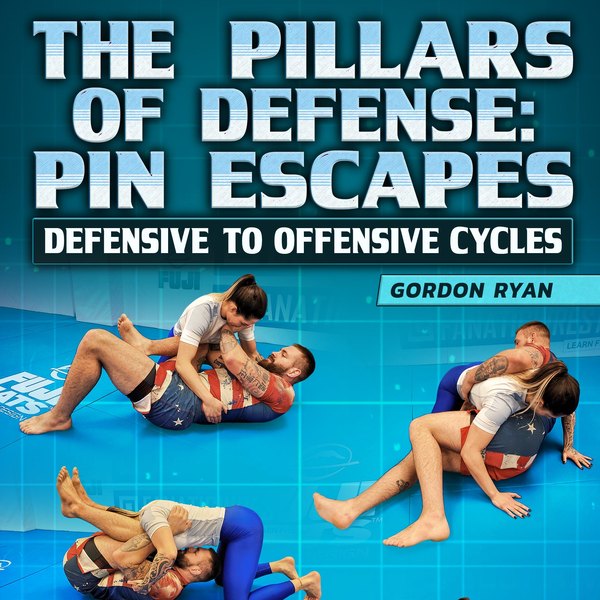 Kesa gatame’s weak spot, seen from underneath: in his Pin Escapes course, Gordon Ryan bumps her onto her hand, ducks his head behind her back and drives her to her knees. He comes up on her back, not back to guard. Vol 4 · 32:38 Our Pin Escapes review →
For a deep breakdown of side control submissions, retention, and escapes, check out our guide to the best side control instructionals.
2. North-South
A 180-degree pin that flattens your opponent’s hips and opens arm exposure for kimuras and the north-south choke. The key detail most people miss: your hips need to drop onto their chest/face area, not hover above it. Marcelo Garcia made the north-south choke famous by combining heavy hip pressure with a deep D’Arce-style arm wrap.
North-south also works as a transition hub. When your opponent starts framing hard in side control, switching to north-south resets their frames and lets you circle back to side control on the other side or drop into a kimura trap.
 Straight from the pass into the pin, from John Danaher’s Fastest Way guard passing course: camp with your head on him, run your feet around his legs and drop your knees into a north-south pin. Vol 2 · 10:07 Our Fastest Way review →
3. Mount and Technical Mount
Mount scores 4 points in IBJJF, as much as back control, and it is one of the hardest positions to hold against a skilled bottom player. The two phases of mount control:
- Low mount with grapevines: Hook your feet inside their legs to flatten their hips and kill the upa (bridge escape). Your forehead drives into the mat beside their head for base. This is your stabilization phase right after achieving mount.
- High mount with knees under armpits: Walk your knees up as they settle, trapping their arms. From here you can attack cross-collar chokes (gi), arm triangles, or s-mount armbars.
Technical mount (one knee up, one foot posted) is your bail-out when they start escaping: it keeps back-take access while maintaining top control. Craig Jones adds a second bail-out in Power Ride: when a fresh, explosive opponent starts a knee-elbow escape, he steps back onto the legs, staples the bottom leg with one foot and puts his weight on the top leg. On his side with both legs pinned, the bottom player has a hard time exploding. For instructionals focused specifically on mount attacks and retention, see our best mount instructional guide.
4. Knee-on-Belly and Smash Pass Pins
Knee-on-belly scores 2 points in IBJJF and creates immediate submission threats: near-side armbar, paper-cutter choke, baseball bat choke, and collar drags to the back. The pin works because your shin drives diagonally across their belly (not straight down on the sternum), and you grip their far collar or far hip to anchor. Your posting leg stays wide for base.
The catch with knee on belly: it pins his chest, not his legs. Craig Jones in Power Ride: “There’s nothing about knee ride that controls Tyler’s lower half.” That is why his course starts with the legs. Vol 1 · 14:52 Our Power Ride review →Smash-pass pins blend guard passing with top control. Pressure passers like Bernardo Faria and Lucas Lepri use the over-under pass position as a pin itself: the underhook side shoulder drives into their diaphragm while you slowly work your hips past their legs. The pass is the pin, and the pin is the pass.
 Land in top half guard? Don’t race to pass. Craig Jones’ Power Ride 2.0 treats half guard as a pin: elbow on the mat first, then the head slides by and posts low beside his arm, so the elbow can’t come back home. Vol 3 · 9:36 Our Power Ride 2.0 review →
5. The Ride Family (Wrestling Meets BJJ)
Wrestling rides are the most underused pinning tools in BJJ. They work from turtle and back-exposure positions where traditional BJJ pins don’t apply:
- Spiral ride: From the side of their turtle, pry one thigh up with an open hand, palm in, while your other arm pulls their head the other way. With the spine twisted and a leg off the mat, a Granby roll or an underhook gets much harder.
- Claw: A shallow grip around the front of their neck, your shoulder on their head and your elbow flared. Their elbow can’t come back to their body, and without tight elbows they can’t build height to get up. It pairs with the spiral ride on the turtle.
- Far-wrist and two-on-one rides: Control their posting wrist from the top and use it as a lever to collapse them or tip them onto their back. Without that post they can’t base out. Craig Jones calls the wrist ride the Dagestani handcuff, “the Khabib special”, and keeps two hands on it: hold the wrist with one hand and they swim the arm free.
Power Ride’s claw: keep the neck grip shallow and put your shoulder on his head, then flare your elbow so his elbow can’t come back in. Vol 3 · 10:03 Our Power Ride review →Power Ride’s wrist ride needs both hands: hold it with one and he swims his arm out, because it is only a pulling grip. Vol 3 · 19:02 Our Power Ride review →These rides work without the gi and let you chain from one ride to the next as they try to get up. Most of them score nothing on their own under IBJJF or ADCC rules: they are for control that ends in a submission. If your wrestling fundamentals need work, our best wrestling instructionals for BJJ page covers the top resources for building that base.
Essential Drills to Sharpen Top Control
| Drill | Goal | Rounds |
|---|---|---|
| Heavy hips side-to-side | Learn weight transfer across torso | 3×1 min |
| North-south windshield wiper | Smooth hip switch vs. frames | 3×1 min |
| Ride retention vs. turtle | Keep harness while partner granbys | 5×30 sec |
| Mount to tech-mount ladder | Flow between pins as opponent bridges | 4×1 min |
Add positional sparring (start in mount or side control, only score escape or submission) to pressure-test your retention under resistance.
Common Mistakes to Avoid
- Floating knees. If your knees hover above the mat, your weight leaks into your own legs instead of your opponent’s torso. Keep your knees wedged tight against their body.
- Losing the underhook battle. When the bottom player gets an underhook in side control, they’re halfway to their knees. Re-pummel or switch to north-south immediately.
- Rushed transitions. Settle for three full seconds before moving to the next position. Rushing from side control to mount before you’ve stabilized just gives them a free escape window.
- Ignoring cross-faces. The cross-face turns their nose, which turns their hips. Without it, they can bridge into you and create the space to reguard. Gordon Ryan’s pin escapes say the same thing from underneath: the head and the elbows decide the pin.
Take It Further: Craig Jones’ Power Ride (and Which One to Buy)
Craig Jones, a two-time ADCC silver medalist, put his whole pinning system in Power Ride: A New Philosophy on Pinning (2022, six volumes, no-gi). It covers:
- Leg pins first (split, ride, Turk, shelf) so his feet can’t reach the mat, then the upper body grips: crossface, claw, Dagestani handcuff, half nelson
- Turtle rides (kosoto hook, cradle, diagonal and spiral ride) chained so that each escape lands in the next ride
- Entries from the positions you already reach (side control, mount, knee ride, leg drag, smash pass, body lock) so you can go straight from passing into a ride without losing position
- Finishes off the rides: arm triangle, D’Arce, belly-down rear naked choke, rear Ezekiel and gift wrap
One of Power Ride’s leg pins, the Turk: hook his Achilles with your own and push your hips in, and he can’t plant that foot or pull the leg back. Vol 2 · 17:34 Our Power Ride review →Power Ride or Power Ride 2.0?
Craig released Power Ride 2.0 in October 2026. Same idea, different position: it is all top half guard, and it skips the leg rides, turtle rides and entries above. If you own neither, buy the original first.
Comparing Craig’s other sets? Our Craig Jones instructionals ranking puts them side by side.
Conclusion
Top control is not just about staying on top. It is about pinning with purpose. Learn the six principles, drill the positions until the transitions feel automatic, and study a full system like Craig Jones’ Power Ride to fill in the gaps your gym rolling might miss. A heavy, methodical top game makes everything else in BJJ easier: your passes land harder, your submissions open up faster, and your gas tank lasts longer.