
Home / Best Craig Jones instructionals / Power Top Review
Craig Jones Power Top Review: Pass Without Stepping Into His Guard
Buy it if you keep getting stuck in good guards in no-gi: you learn to pass without stepping into them. Skip it if you train mostly in the gi.
See Power Top on BJJ Fanatics →Power Bottom or Power Ride instead? Which one first ↓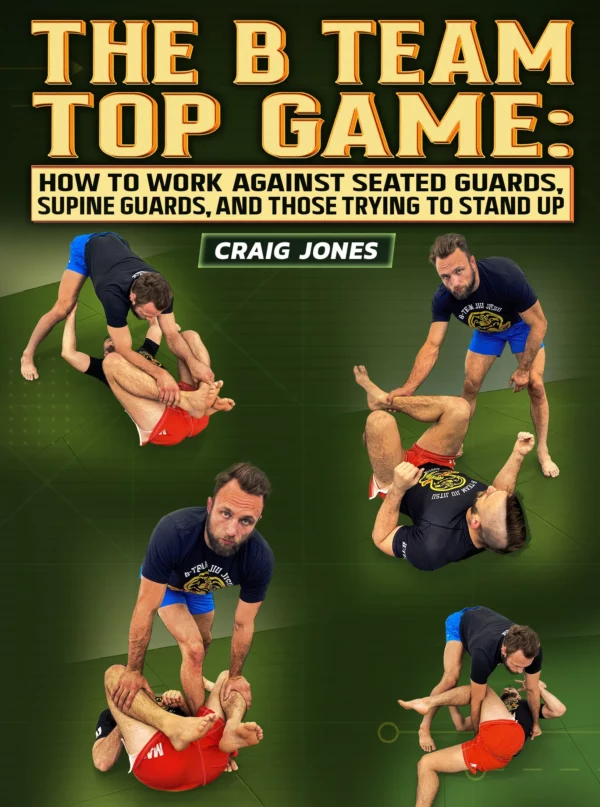
Power Top is Craig Jones’ no-gi passing course, six volumes, now sold as The B Team Top Game. It answers one question: how do you pass a guard that is better than your passing?
It works, if you can wait for the pass
You step in to pass and he has your leg. Craig’s answer is never to step in: “We pass prior to him establishing a guard. We don’t pass his guards.” You stay where you can touch his feet and he cannot touch yours, lean on him until he is tired, and take the pass when he sits up or tries to stand.
What it costs: time. The first hour is talk, Craig calls a five minute match difficult for it, and it is built for no-gi.
By Max, black belt. First written February 2023, updated November 2026. In 2023 this course did not really land with me: my four reasons ↓
14 details, from his back to his feet
The course follows one man getting tired. He lies back and waits. You give him nothing, so he sits up. You put him on his back again and again, so he wants to stand. Craig’s point is that he is easiest to pass at the two moments he changes: “every time they change their minds and they go from supine to seated, there’s a moment of risk.” Supine is his word for flat on your back.
- 1He lies on his backstay out of reach, make him work (vols 2-3)
- 2He sits upput him back down, pass as he comes up (vols 4-5)
- 3He wants to stand upget on top of him before he is up (vol 6)
From my 2023 review · Craig Jones’ Power Top approach
The power top mentality that Craig pushes on you is to never give the bottom guy anything.
So this instructional is not about how to pass guards, like de la riva, closed guard, and so forth. The point is to prevent the bottom guy from ever getting a guard in the first place.
In Craig’s words, you learn how to penetrate and pull out (sigh) before your opponent gets a guard, so you’re always putting pressure but you never get stuck.
Craig Jones distinguishes 3 different types of guard players: people who are on their back, seated and trying to get up. He says we need to pass very differently depending on which type we face.
From my 2023 review
To pass guard against people on their back we need to use side to side passing. So we keep stepping around them to then put pressure from north south style positions while we’re still standing. (Craig shares some great details for where exactly you should step to put maximum pressure with minimum effort.)
The goal is to fatigue the opponent very fast. By going to north south style positions we force the opponent to continually do crunches to pummel their legs back inside, which is exhausting. We don’t fully commit to passes before the opponent is tired because we could get countered.
What’s super interesting is that this is exactly the strategy that Kade Ruotolo used to beat Lachlan Giles in ADCC 2022. Lachlan Giles is arguably one of the best guard players from his back in no gi, so this is very impressive.
He lies back and waits for you
This is where most of us step in, and where a good guard starts. Craig stops one step short: close enough to touch his feet, too far for him to touch yours.
01 Stand out of his reach, grip both Achilles just above the ankles and press his feet toward his butt
“I’m pressing his feet to his butt.” He pushes back, and that is the point: his legs are now working against your body weight. From there, walk round them. Grip a little above the ankle: “Not too close to the ankles here, because I find they kick out very easy.”
Vol 2 · 14:05He pulls his knees to his chest to keep you off
Walk far enough round his legs and you are standing at his shoulders. He has very little to attack with from there. Mostly he can only keep his knees in and hold your weight off with his legs.
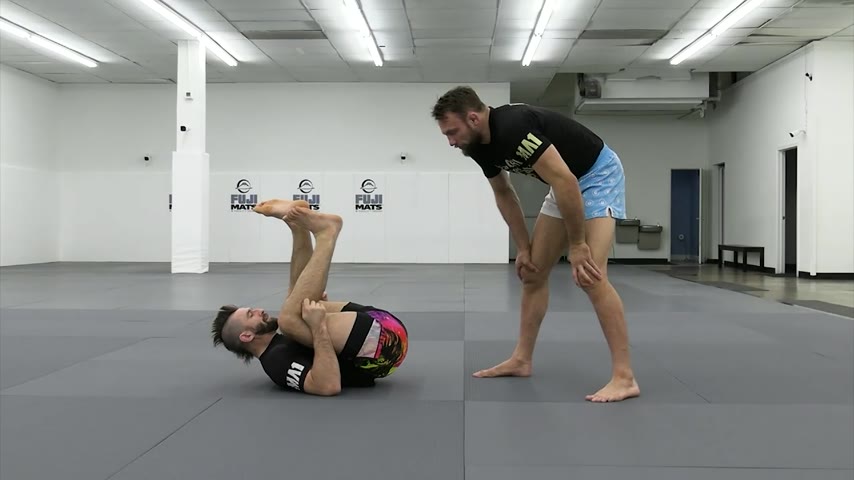
02 Slide your elbows inside his knees, lean your weight forward and his legs drop to the mat
While your arms stay straight, he can hold you off for a while. “But watch what happens when we get those elbows inside. That means we can lean forward and open his legs.” Later in the volume, with the elbows also pushing his knees apart, Craig’s partner lasts 15 to 20 seconds.
Vol 3 · 18:46He lifts his feet high
Back at his feet, he has one more defence: he lifts them high, and there is nothing to push or throw aside. Craig calls the answer “super simple”: feet low, go over the top; feet high, come underneath.
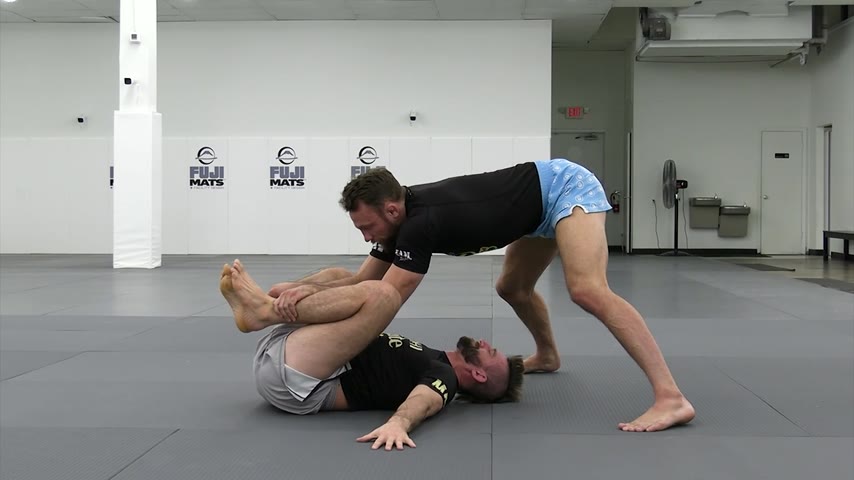
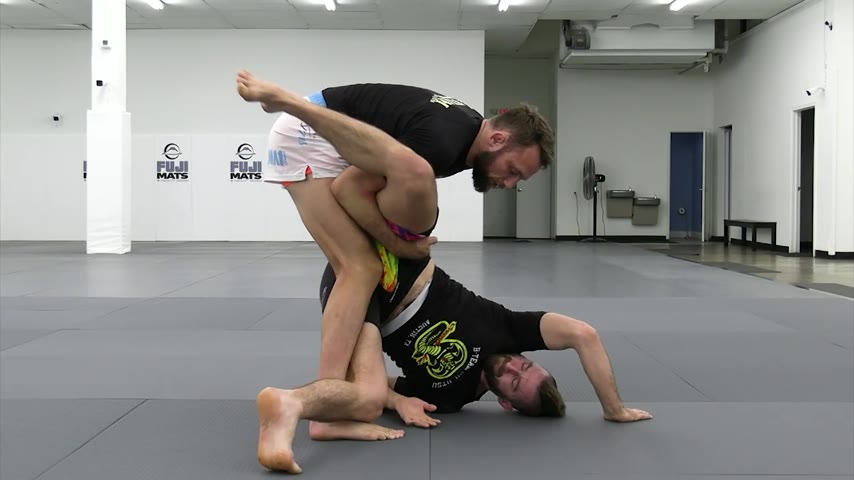
03 Come under both Achilles and walk forward until his toes touch the mat behind his head, then hold him there
The clip from the top of the page. “We just come under the Achilles and we just walk them forward until their toes touch the ground.” Nobody wants to stay here: “I find in the gym when I stack someone here, they volunteer the pass.” On a training partner Craig says to hold it for a couple of seconds, no longer, because of the neck.
Vol 2 · 27:25He is stacked on his shoulders
The stack is not a pass yet. Craig turns it into one in three ways; this one is the hip drag.
04 Keep his hips up, then pull them down to the mat and finish chest to chest across his upper body
“I keep his hips elevated here”, and when it is time: “get our head back inside, and pull those hips to the floor.” Craig sets up the grip before this clip starts, by threatening a leg drag: “As they rip it back, they over-commit.”
Vol 2 · 48:54He gets his legs round your leg anyway
Sooner or later you misjudge the distance and he has a leg. This is the “dangerous entanglements” half of the old title, and it is a small part of the course.
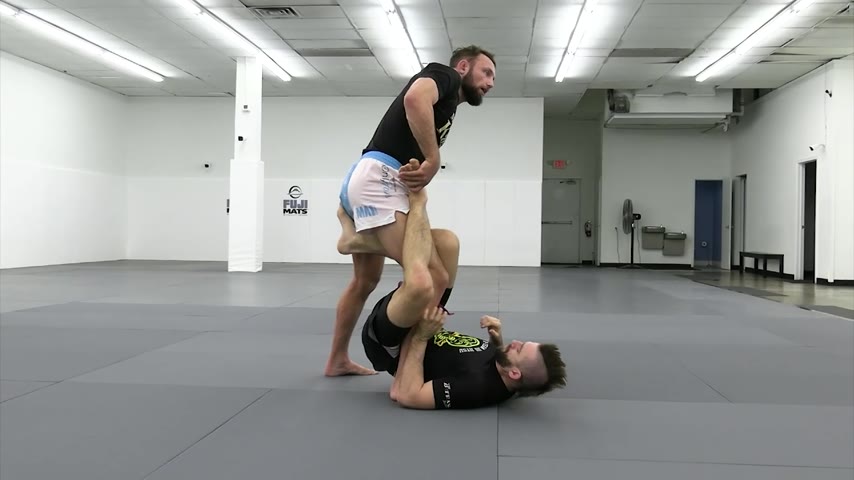
05 Step your leg out high over the top, plant your foot by his hip and hold his legs. He stays flat on his back
“My foot is basically in his left pocket here.” From that spot, lean in with your knee forward. Lean away because you are scared for your leg, and he can lift his hips and attack it again.
Vol 1 · 52:30From my 2023 review
To pass guard against seated players Craig pushes them to their back and forces them to get back up, which is tiring. He also threatens body lock passes as they get back up. He also stays aware of the threat of shin on shin guard, which he tries to prevent in a few different ways.
He sits up and faces you
A tired man on his back does one of two things: he lets you pass, or he sits up. On his seat he can come after you, so the safe distance from part 1 is gone. Now your posture has to keep you safe.
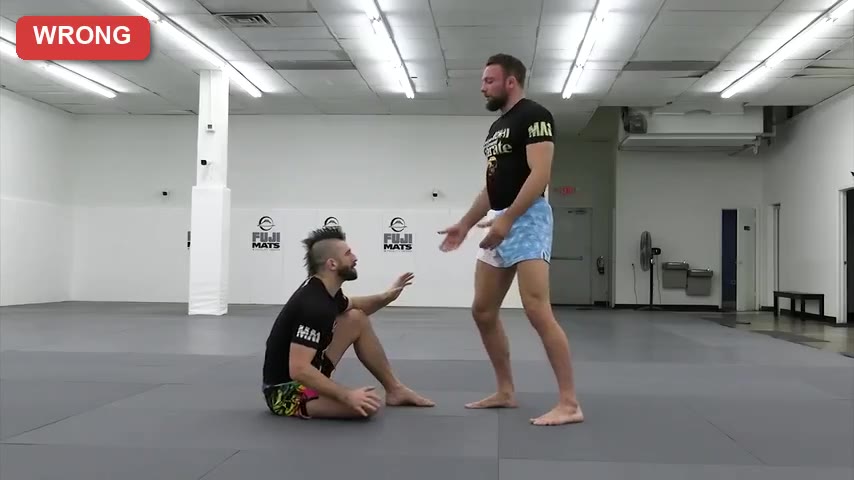
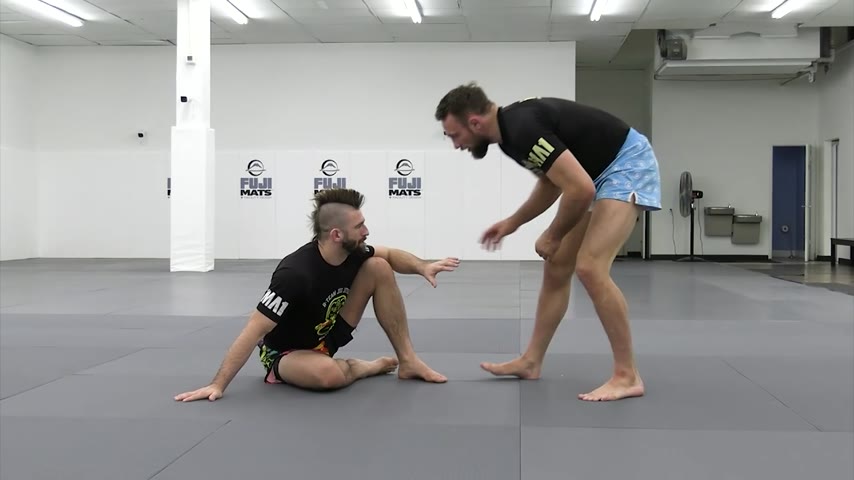
06 Wrong: stand tall in front of him and he shoots in on your legs. Right: bend until your head is level with his and fight for his hands
“I’m matching head height here because if I was postured up, he could take a shot.” The rest is a hand fight, and Craig’s test for it, in volume 4, is simple: “If I’m covering [his] hands I’m winning the hand fight here.”
Vol 1 · 21:47He props himself on one hand
You do not try to pass him here. You put him back where he came from: “try to return them to the position they don’t want to be in.” A push on his hips or a pull on both legs is enough, until he props a hand behind him, which makes him much harder to push over.
07 Reach through to his inside ankle, lift the leg, and his shoulders go to the mat
“We cover that hand, reach through, and I pull that leg and we get into the shoulders immediately.” Then he has to sit up again, and Craig counts every one: “we gas them every time they do a sit up.”
Vol 4 · 12:26You lock your arms round him and he stays sitting
He comes back up, and this is the moment the course is built for. To sit up fast he has to reach with his arms and his legs, and that leaves the gaps where Craig shoots his arms round his waist. The standard pass from there is in volume 4 and needs him flat on his back. Some men refuse: they stay sitting and push you away with straight legs.
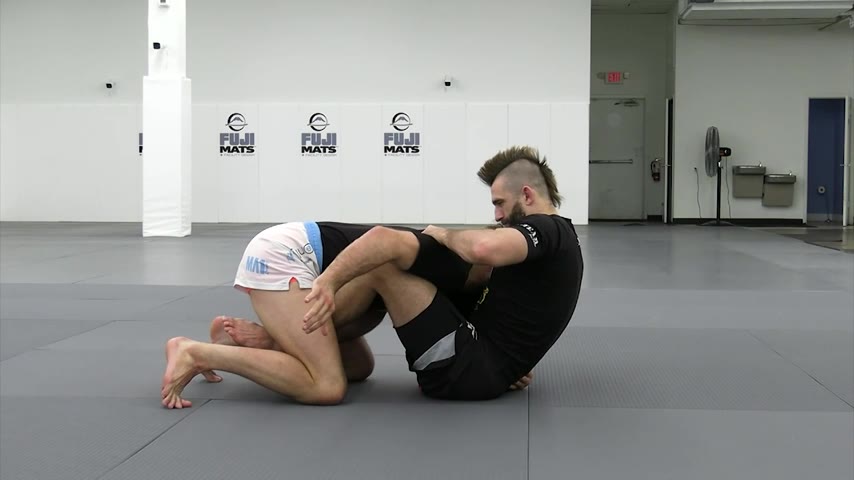
08 Let go with one arm, swing your leg out and back in, land in a body lock at his side and pull him flat
“I take my arm back, I lift my hips, and I sit my left leg out and back in. And we basically enter the side body lock.” It works because he is pushing with straight legs, which Craig admits is “hard to see” on camera. His rule here goes for the whole course: “if something isn’t working, the answer isn’t just to do it harder and more aggressively.”
Vol 4 · 33:56One knee stays up between you
Your arms are locked, and you still cannot get over the knee he keeps up. You are allowed to let go: “don’t be afraid to open your hands.” Where the free hand goes decides if you pass or get triangled.
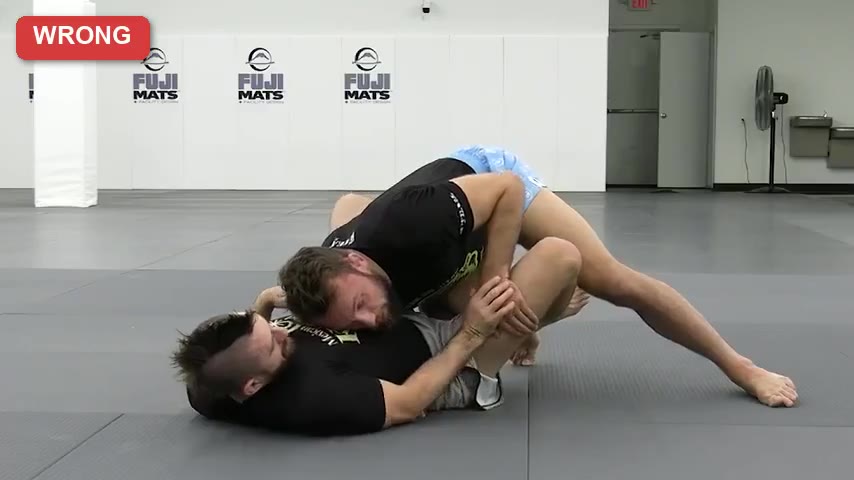
09 Wrong: push his knee down with your hand over the top; he strips the grip and his legs come up for a triangle. Right: elbow outside, wrist inside his knee; he cannot strip it, and you step over and land on top
“The bottom guy will strip that grip and they’ll shoot a triangle here.” With the wrist inside: “[He] tries to strip this grip. Very, very difficult. And it allows us to step over.” A hand on top is only for when your head is high, up by his.
Vol 5 · 1:51From my 2023 review
Craig Jones is on a crusade to make jiu jitsu more effective in MMA. I quote from this instructional:
“There’s nothing more embarrassing, right, than a pure jiu-jitsu guy that cannot hold down an MMA fighter. Those guys spend a third of their time training pure jiu-jitsu. […] So we should know how to hold that guy down. If we get a sweep, we keep him down.” Craig Jones, Power Top, volume 6
I myself often have trouble with holding down big, explosive, MMA type people, and he’s right: it’s embarrassing.
The Khabib pinning system that Craig explains in his Power Ride dvd helps a lot with holding MMA guys down after you pass, but in this dvd you also learn how to hold them down during the pass. Craig explains how to prevent getups with the underhook, and how to break people down from a 4 point position to a turtle, to a hip and then to a pin.
In the course: the underhook shows up twice. In volume 6 it is his: sprawl back when he shoots from his seat and he climbs up on it, so Craig drives his hips forward. In volume 4 it is yours, for the knee cut as he sits up. And once he turns to his knees, Craig does not jump on his back. He brings him down a stage at a time: “from four point to the knees”, then “from the knees and elbows to a hip”.
He is on his way up and you still have his feet
Put him back down often enough and he stops playing guard: he just wants up. Wrestlers and MMA fighters are like that from the first second. Craig calls it breaking the unspoken rule of jiu-jitsu, and one of his answers he calls “so obvious in retrospect”.
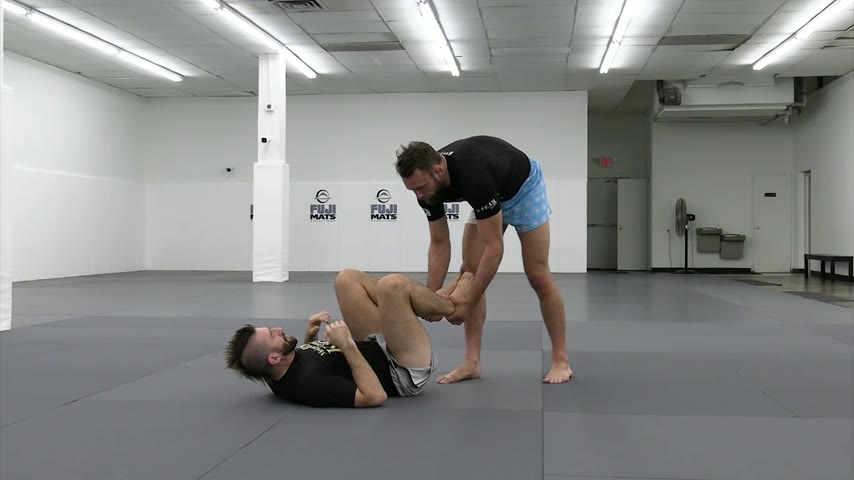
10 Lift his heels above his knees and he falls back flat on his back
“Every time you feel resistance, lift their heels above their knees.” Craig adds: “Can even work with one foot too”, as long as that heel stays above the knee.
Vol 6 · 18:52He starts to get up and you are a step away
The safe distance from part 1 is now the mistake: give this man room and he stands up. So the distance flips. “If someone tries to get up, we’ve got to be a short range.”
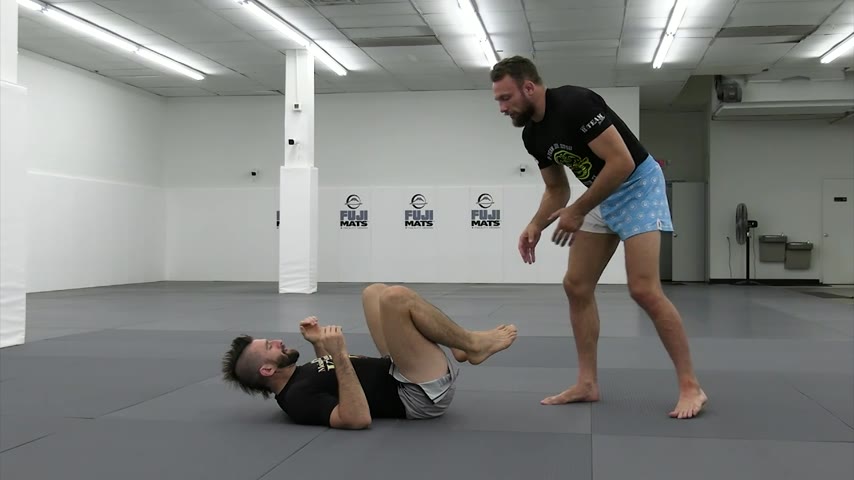
11 Rush in over his head, and he ends on hands and feet with his back to you
Craig is honest about this one: “there’s no technique there. That’s literally just me rushing him.” The skill is reading him. Rush a man who wanted to play guard, and you have stepped into it.
Vol 6 · 9:48He gets a hand on you first
Be late, and his hand is on your shoulder before you are over his head. Now rushing in helps him: “the frame is pushing him up.”
12 Drag that arm, circle behind him as he rises and finish with your arms round his waist
“He starts to get up, we hit that drag, and we circle to the back, securing the rear body lock.” Craig’s other answer to the same hand needs no grip: let that shoulder go soft, so he has nothing to push off.
Vol 6 · 14:502 more details: spinning him on his back, and the leg ride
13 He is balled up, knees to his chest: take one grip near his knee and one on the other leg, and spin him on his upper back right away
Knees to his chest means less of his back on the mat, so he turns easily. “The second we touch it, we go.” One of the best moments for it, Craig says, is right after you strip a grip.
Vol 2 · 19:1314 He lies on his side: hop over his legs, spread them wide and ride him flat on his stomach
A position that scores nothing, and that Craig puts level with the ones that do: “If when we leg ride, we can split the legs, ultimately, I could keep [him] here as long as I wanted.” This is where Power Top touches Power Ride.
Vol 1 · 48:52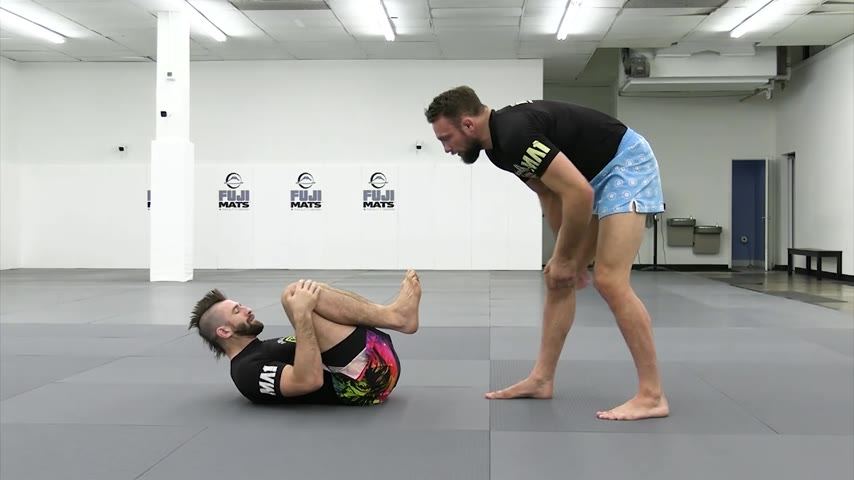 01
 02
 03
 04
 05
 06
 07
 08
 09
 10
 11
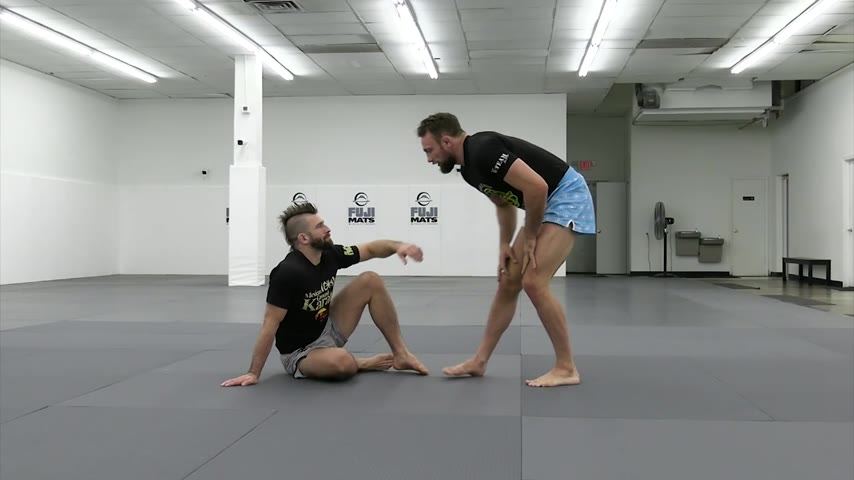 12
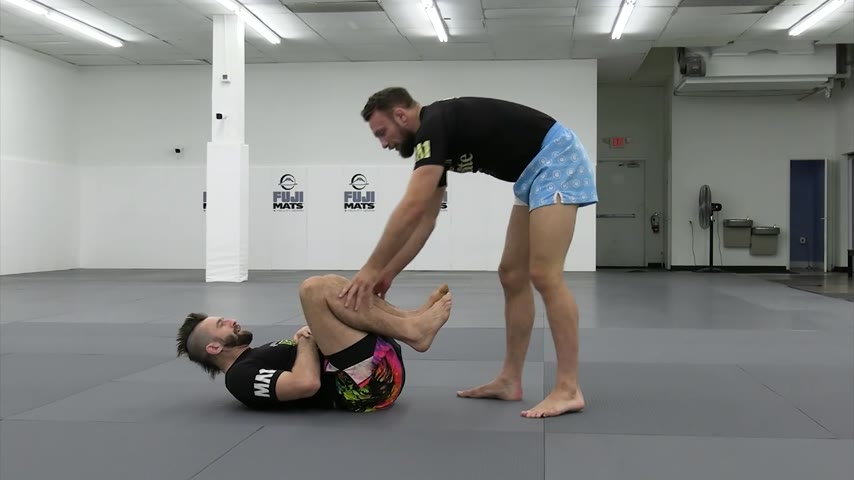 13
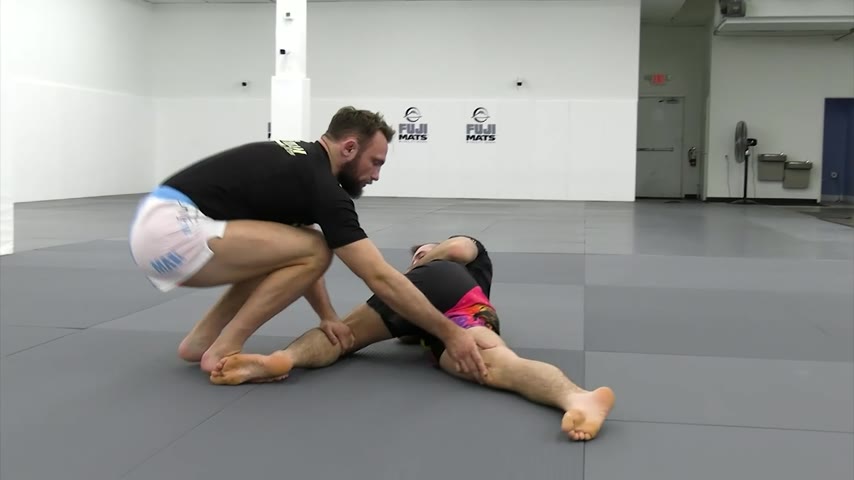 14
How many of these details do you do?
Count the ones you already do in a roll. If most are new to you, this course will change how you walk up to a good guard.
- No-gi
- 6 volumes, 5 h 09
- 44 chapters
- From the man on his back to the man who stands up
- No live rounds
- Released March 2022 as Power Top
My take: why it didn’t really land with me
My review from February 2023, as I wrote it (spelling fixed). Three of my four reasons are about how I train: read them as reasons it may suit you better than it suited me.
Somehow this instructional didn’t really land with me. There’s a few reasons for that:
- I like the concepts for passing people on their back, but not a lot of my training partners play this style of guard. I play this style of guard a lot, so it’s interesting to see how people should pass me. But I can’t practice on other people.
- It’s very no gi specific, especially the part about passing people on their back. I train in the gi half the time, and Craig says this style doesn’t work as well in the gi because people can get spider guard…
- This instructional is quite broad, it covers 3 styles of passing, but not so broad that it covers everything. It doesn’t cover how to pass specific guards, how to force half guard, things like that. Personally I would rather have either a very big and broad instructional that covers absolutely everything, or a more specific dvd that covers 1 area in more detail.
- I don’t enjoy pulling out: I understand that it’s very effective to pull out before your opponent gets a guard. But I feel like I learn slower if I spend half the time pulling out. I think I learn quickest if I keep the action going the whole time, rather than trying to tire out my opponent before I engage. (So I think pulling out is great for competitions but not for training.)
But I should add that I really enjoyed watching the instructional, even though I can’t implement too much of it. Craig is funny, interesting and to the point, as always.
My verdict
In this review I tried to give you a lot of objective information about Power Top by Craig Jones. Because I personally didn’t love this instructional, but I can see how other people can love it.
I think that if you focus more on no gi and on winning competitions than I do, this is a great instructional. It gives an overview of modern guard passing, exactly how you saw it a lot in ADCC 2022. And Craig’s a great teacher as always, with great details, jokes here and there and not too much repetition.
The rest of my 2023 review: how it opened and how it ended
The only reason Craig Jones filmed Power Top was so he could let his inner 14 year old make as many sex jokes as he could, at least that’s the sense you get from watching it.
I happen to share Craig’s terribly childish sense of humor. If you do too, that’s great. But even if you don’t, you might want to watch this instructional to learn how to pass guard in no gi. In this review I’ll tell you what Craig Jones covers in Power Top and my experience with it.
Power top is about passing guard in no gi. The subtitle suggests it’s also about pulling out of leg entanglements, but there’s only 1 very short section about getting out of single x guard.
In the course: no chapter is called single X. Single X is the position Craig starts from when he shows the step out (detail 05), and the last chapter of volume 5, “Clearing Ashi Garami”, is about 7 minutes on the same step.
Learn from Craig Jones how to be a safe and gentle top passer
Power Top, Power Bottom or Power Ride: which one first?
One argument, three courses. Jiu-jitsu has an unspoken rule: the man who ends up underneath plays guard, and the man on top steps into it. Power Bottom breaks the rule from below: you get back up. Power Top breaks it from above: you do not step in. Power Ride is what comes after either one: holding him down.
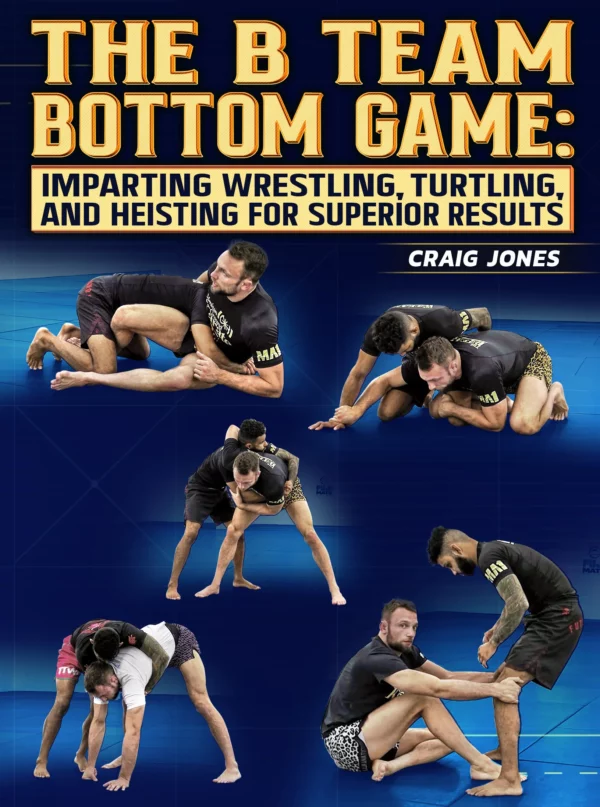 Power Top or Power Bottom? They are one fight seen from both sides: the last volume here is about holding down the man Power Bottom teaches you to be. So pick by where you are stuck. Underneath, with a guard that goes nowhere: Power Bottom. In front of his legs, with good guards catching you: Power Top. My own 2023 verdicts were not equal. About Power Bottom I wrote “Yes, buy this instructional.” About this one: “I personally didn’t love this instructional, but I can see how other people can love it.” Read our Power Bottom review.
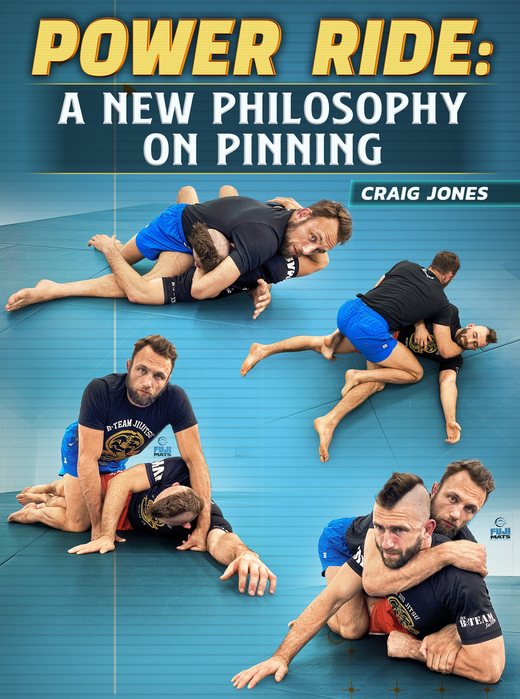 Power Top or Power Ride? Different jobs. Power Top gets you past his legs. Power Ride holds him down once you are past. If people get away while you pass, by sitting up, standing up or tying up your leg, Power Top. If they escape after you pass, Power Ride. The two meet at the leg ride (detail 14). Read our Power Ride review.
 Its follow-up, Power Ride 2.0, is one position, top half guard: read our Power Ride 2.0 review.
 Want both? The Down Under Top Game Bundle has Power Top, Power Ride and a third Craig passing course: $369 (list $469) on November 13, 2026. That day the two bought apart cost $394, more than the bundle.
Who should buy it
Which one are you?
- No-gi player who gets stuck in good guardsYou learn to pass without stepping in: stay out of reach, wear him down, pass when he moves.
- Rolls with wrestlers or MMA peopleVolume 6 is about the man who will not stay down.
- Competes in longer no-gi matchesThe plan needs time, and there you have it.
- Already owns Power RideThis is the half before it: getting past his legs. The leg ride is where they meet.
- Blue beltThe idea is simple. The first hour is talk, so start with volume 2: after a three minute intro it is three drills.
- Trains mostly in the giCraig says so himself: grab his legs in the gi and he takes spider guard grips.
- Wants passing one guard at a timeNo De La Riva or half guard chapters. The plan is that the guard never starts.
What buyers and BJJ Reddit say about it
“This instructional is very concept oriented instead of technique oriented, but has the potential to revolutionize how you play the top position, particularly in no gi.” Jason C., a buyer on BJJ Fanatics (2024).
“Give them nothing, tire them out, pass and submit.” Matt M., a buyer on BJJ Fanatics (2023), on the plan for a competition.
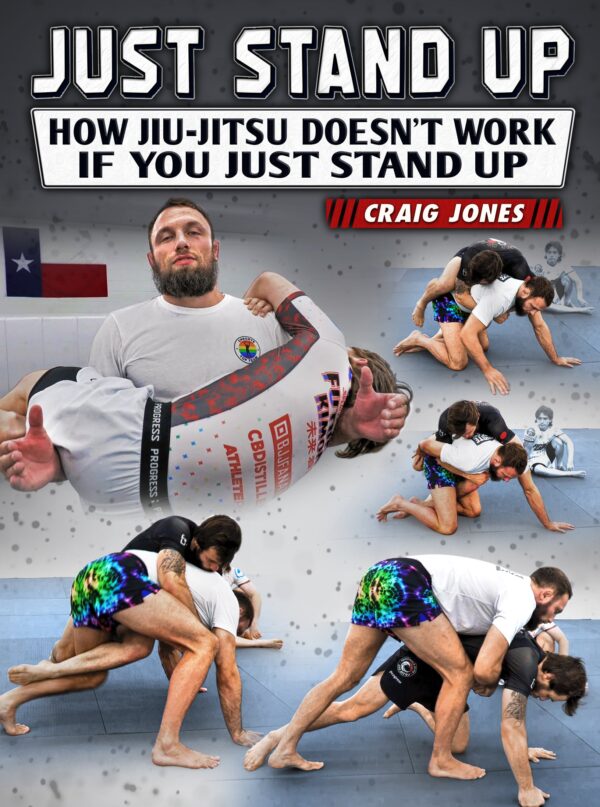 “Just stand up and power ride are more foundational than power top and power bottom. I would do those two first.” From a thread on the order of Craig’s courses (2024).
A fair point: if people escape after you pass, Power Ride comes first. Read our Just Stand Up review.
Where it ranks depends on what you bring. A grappler who came from wrestling and MMA got more out of this course than out of Power Ride, and liked how Craig explains passing. That makes sense: a wrestler already knows how to ride, and passing a guard is the new part. Not everyone ranks it that high. I have seen Power Bottom and Power Ride both put above it, with good things still in this one, and it did not really land with me either, for reasons that are mostly about how I train. The two courses do fit together: as I heard someone put it, Power Top leads into many of the Power Ride pins, and together they let him move a lot less and play a slower game.
Worth it? The pros and cons
- One idea from the first minute to the last: do not step into his guard, and pass when he changes position
- Safe by design. You stay out of reach, and for the times he does catch your leg, the way out is part of the plan (detail 05)
- It is aimed at guards that are better than your passing. You tire him out first: “He is getting fatigued and all I am doing is walking”
- A whole volume on the man who will not stay down: the wrestler, the MMA fighter, anyone who is tired
- Small body lock details that decide things, like where your wrist goes when you open your hands (detail 09)
- Craig is funny, interesting and to the point, as I wrote in 2023
- Slow on purpose. Craig: “for a five minute match, no matter how good I am at this passing system, it’s gonna be difficult to really considerably fatigue my opponent”
- The first hour is talk. Volume 1 is 57 minutes of ideas and goes over the three types three times. John S., a buyer on BJJ Fanatics (2023): “the first hour is all conceptual”
- Ideas over mechanics: no De La Riva or half guard chapters, and few passes taught step by step. Craig says so himself: “It’s going to be more of a conceptual approach”. For the mechanics, see Compare to
- Built for no-gi. In the gi, Craig says, grabbing his legs hands him spider guard grips, so there he goes to headquarters first
- The “dangerous entanglements” of the old title are a small part: one chapter of about 7 minutes at the end of volume 5, plus the step out in volume 1 (detail 05)
- No live rounds: you never see the plan run for ten minutes against a man who fights back
One plan for all of them: stay out, wear him down, pass when he moves. Black Friday code BLACKFRIDAY2026
What’s inside the six volumes
44 chapters over six volumes, all no-gi, Craig teaching with one partner. No live rounds. After the first volume they run in the order of the details above: the man on his back, the man on his seat, the man who wants to stand.
Vol 1 · 57:26The ideagive him nothing, tire him out
Why Craig does not step into a guard to pass it, the three kinds of man underneath you and the distance for each, and why a tired man makes mistakes a fresh one does not. Two things you can use at once: positions that score nothing but wear him out, with the leg ride as the example (detail 14), and the hip pocket, the spot beside his hip where your foot is safe (detail 05). How to stand in front of a seated man is explained here too (detail 06).
Vol 2 · 50:29On his back, from out of reachgrips, toreando, the stack
The distance, a drill for stripping every grip he gets, and two drills for keeping his feet pointed away from you. Then three versions of the toreando, the pass where you move his legs aside and walk round them (detail 01, detail 13), the stack for when he lifts his feet (detail 03), and three passes from the stack: the leg drag, one Craig took from Frank Rosenthal, and the hip drag (detail 04).
Vol 3 · 47:01On his back, leaning on himthe hip pocket, pressure from standing
Stepping a foot in beside his hip, with either leg, when you cannot get round his legs. Standing at his shoulders and leaning on his folded legs (detail 02). Mixing all of it so that he never gets a rest. And the weave, where Craig says he will “break the rule” and pass between the legs.
Vol 4 · 52:14He sits upput him flat, body lock him as he comes up
Four ways to put a seated man on his back (detail 07), and the two passes Craig takes as he comes back up: the knee cut and the body lock. The body lock gets most of the volume: the standard pass, the side body lock for the man who stays sitting (detail 08), a version where you hold his foot, and a wrestling hook on his leg that wrestlers call the Turk.
Vol 5 · 35:57The seated man’s answersopen hands, shin on shin, his legs round yours
When to open your hands in the body lock without getting triangled (detail 09). What to do when he hooks his shin on yours, before and after he has it. Stepping between his legs so that he lies back or gives you a Kimura grip. And seven minutes on stepping out when he has your leg.
Vol 6 · 1:05:39He wants to stand uprush him, hold him, bring him down
Getting over his head before he is up (detail 11), beating the hand he pushes with (detail 12), holding his feet (detail 10), and a sprawl that goes forward, not back, when he shoots from his seat. Then the man who turns to his knees or comes up on hands and feet: the knee ride, keeping your weight over his shoulders, a front headlock, and bringing him down one stage at a time.
 Free chapter
One chapter is free. BJJ Fanatics put the volume 4 chapter “Body Lock Foot Post” on YouTube in 2022: 3 minutes 12 of the 5 h 09. It shows you how Craig teaches before you pay.
Compare to
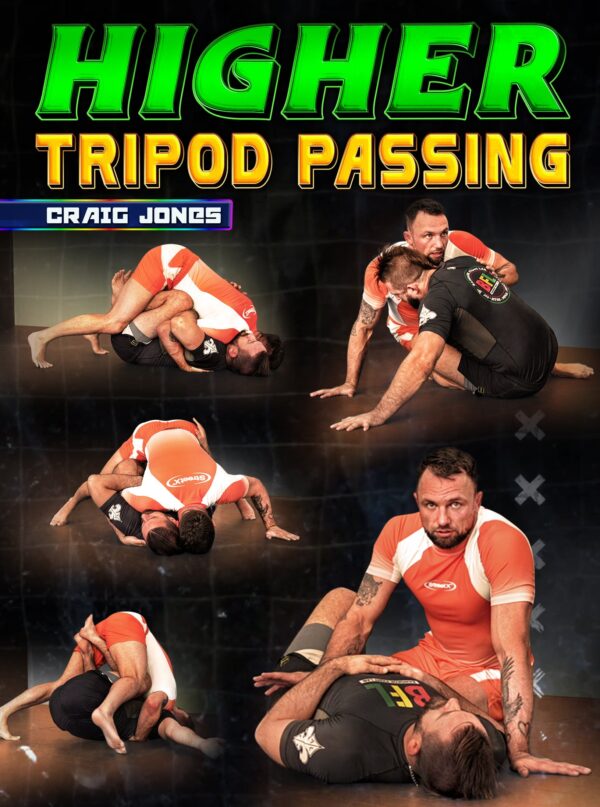
- Higher Tripod Passing by Craig Jones: For the man who sits in front of you with butterfly hooks. Craig’s 2025 course on one pass, the high tripod: four volumes, 1 h 54. Power Top puts that man on his back first; this one pins his upper body and beats one leg at a time. $197. See it on BJJ Fanatics. Or read our review.
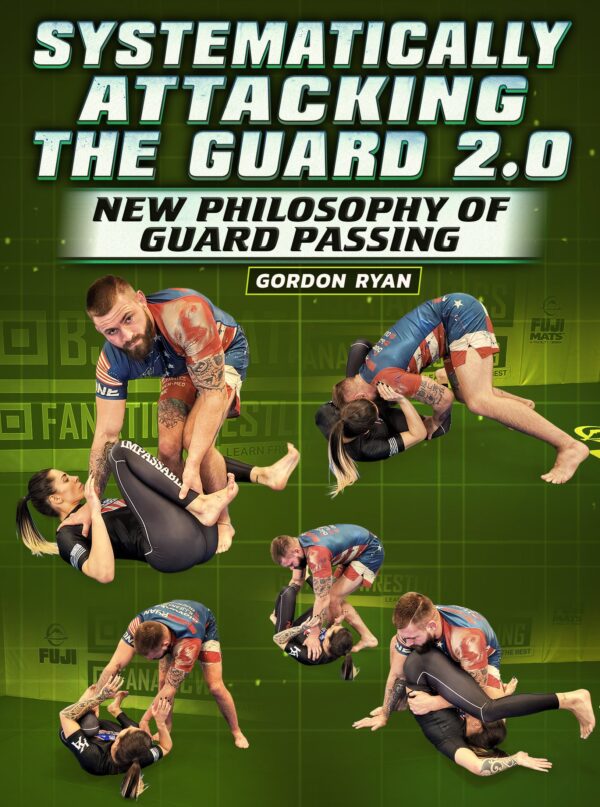
- Systematically Attacking The Guard 2.0 by Gordon Ryan: For when you want the mechanics Power Top leaves to you: eight volumes of toreandos, high steps and passing round the side. $349. See it on BJJ Fanatics.
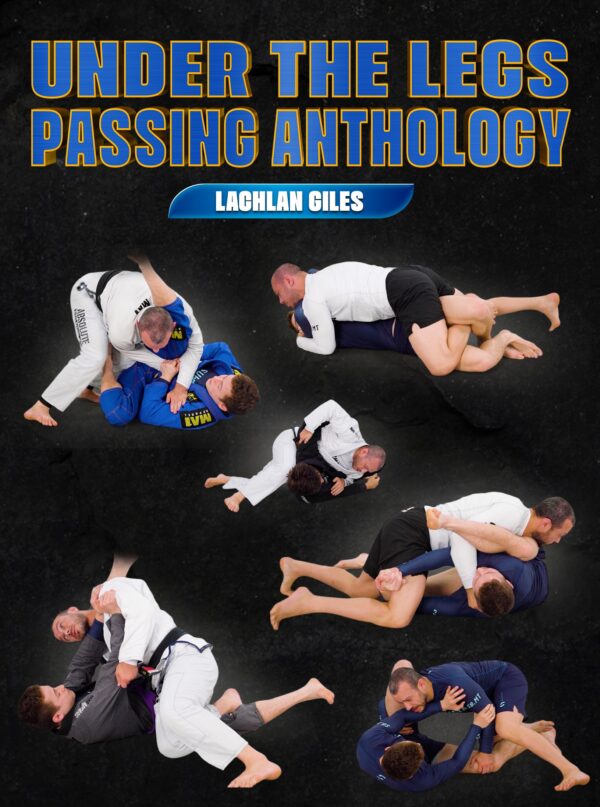
- Under The Legs Passing Anthology by Lachlan Giles: Passing under the legs, by the man whose ADCC run, Craig says in this course, a lot of people copied. $197. See it on BJJ Fanatics.
Prices checked November 13, 2026. More options in every Craig Jones instructional ranked, the best guard passing instructionals and the best pressure passing instructionals.
Get the next review like this one
New reviews in this format land in your inbox, with the timestamps and clips. You also get the free BJJMore email course and the instructional-platform discounts (worth $46).

BJJMore earns a commission if you buy through these links, at no extra cost to you. This review covers the whole course: all six volumes (released March 2022 as Power Top, now sold as The B Team Top Game).
FAQ
Is Power Top worth it?
Yes, if you pass in no-gi and keep getting stuck in good guards. It teaches one plan: stay out of his guard, make him work until he is tired, and pass when he sits up or tries to stand. Skip it if you train mostly in the gi or want passing one guard at a time.
Is Power Top the same as The B Team Top Game?
Yes. BJJ Fanatics released it in March 2022 as Power Top: Penetrate and Pull Out of Dangerous Entanglements, and sells the same six volumes today as The B Team Top Game: How to Work Against Seated Guards, Supine Guards, and Those Trying to Stand Up. Same product page, same chapters. On the video Craig still opens with the old name.
Is Power Top a guard passing course?
Yes, but not the usual kind. Craig’s plan is to pass before a guard is set, so there are no chapters on beating De La Riva or half guard. Volumes 2 and 3 are the man on his back: the toreando and the stack, then pressure from standing. Volumes 4 and 5 are the man who sits up: you put him back down (detail 07) and pass with the knee cut or the body lock as he comes up again. Volume 6 is the man who wants to stand. Next to Power Ride the split is simple: this is the passing course, Power Ride is about control once you are on top. One reader of this review held back because of all the disengaging and the focus on men flat on their back. The best answer I saw to that: you put people on their back before you pass anyway, as most systems do. That is the plan here too.
What’s the difference between Power Top and Power Bottom?
They are one fight seen from both sides. Power Bottom is the man underneath who refuses to stay there. Power Top is the man on top who refuses to step into the guard, and its last volume is about holding down the man Power Bottom teaches you to be. Stuck underneath: Power Bottom. Stuck in front of his legs: Power Top.
Power Top or Power Ride: which should I buy first?
Power Top if people get away while you pass. Power Ride if they escape after you pass. Power Top gets you past his legs, Power Ride holds him down.
Does Power Top work in a five minute match?
That is the hard case, and Craig says so: “for a five minute match, no matter how good I am at this passing system, it’s gonna be difficult to really considerably fatigue my opponent.” He judges the plan over ten or fifteen minutes and over long rolls in the gym. He adds one exception: from the best spot, standing at his shoulders with your elbows inside his knees, a man’s legs can give out in seconds (detail 02).
Does Power Top work in the gi?
Less well, and Craig says so. Against a man on his back the plan depends on him having nothing to hold. In the gi he can take spider guard grips the moment you grab his legs, so there Craig goes to headquarters first. It is one of the four reasons the course did not really land with me. When it came out in March 2022, someone asked Craig whether it helps if you train mostly in the gi. Craig answered yes, from a conceptual point of view: it is a low risk way to pass, with fatigue as the main goal. So the ideas carry over; the grips are what change. Another gi player, an over/under passer, found the same: the passing suits no-gi and passing on your feet, and he had not yet put much of it into practice. When people ask for a gi system like this one, the name I have seen come up is Matt Darcy’s Art of Death Passing.
How long is Power Top?
5 hours 9 minutes over six volumes: 57:26, 50:29, 47:01, 52:14, 35:57 and 1:05:39, in 44 chapters. There are no live rounds.
Is Power Top good for beginners?
The idea is simple enough for a white belt: stay out of his reach and strip every grip he gets. The first hour is talk, so start with volume 2 if you want something to drill tonight. After a three minute intro it is three drills. Owners differ on how fast it works. Some use it in sparring the next day. One saw his passing improve within two weeks, and his warning is the useful part: Craig teaches a general strategy and shows advanced versions of the moves, so if the basics still give you trouble, you may struggle. My read: the strategy is what people use at once, the moves take longer. If you are still building your passing, the advice I heard is to go with Danaher’s passing course instead, as the more complete one.
Does it cover leg entanglements?
A little. The last chapter of volume 5, “Clearing Ashi Garami”, is about 7 minutes, and volume 1 shows the step out to the spot beside his hip (detail 05). It is not a leg lock defence course.
Can I watch Power Top for free?
One chapter. BJJ Fanatics put “Body Lock Foot Post” from volume 4 on YouTube in 2022: 3 minutes 12 of the 5 h 09. Everything else is in the paid volumes.
Is there a discount code?
Yes. The Black Friday code BLACKFRIDAY2026 takes 55% off at checkout (tested November 23, 2026). That week Power Top was also on a Craig Jones deal: $98.50 instead of $197 on November 23, and the code comes off on top. BJJ Fanatics rotates these codes and the daily deal, so check the price on the day you buy.
Stop stepping into good guards
If good guards keep catching you in no-gi, this is the course that keeps you out of them. Stay out of reach, make him tired, and pass when he sits up or tries to stand.
Black Friday code BLACKFRIDAY2026: 55% off at checkout, on top of the $98.50 Craig Jones deal (both checked November 23, 2026)