
Home / Craig Jones / Escapes / Submission Escapes Review
Craig Jones Submission Escapes Review: Edging Your Way Out Of Danger
Buy it if you panic the moment you get caught. Craig shows you the one thing your partner still needs to finish you, and how to take it away.
See Submission Escapes on BJJ Fanatics →No-gi course for white and blue belts. Who should buy it ↓
Wrap your arm around that leg, stand up so his hips lift off the mat, and step back until your head and arm come out. Vol 4 · 17:36
Affiliate links: BJJMore earns a commission, at no extra cost to you.
- No-gi
- 4 volumes, 2 h 53
- 11 submissions
- No live rounds
- Released October 2023
Edging Your Way Out Of Danger: Submission Escapes is Craig Jones’s no-gi course on getting out of eleven submissions. The full title ends in “BDSM Jitsu”, and the jokes come with it.
Yes, if you are a white or blue belt who panics when caught
Your arm is stretched across his hips, or his legs are closing round your head, and you panic. Craig’s point: you are caught, not finished. Whoever has you still needs one more thing. “If we know what they need next, we can understand how to take that away from them.” (Vol 4 · 27:24) The armbar gets 52 minutes. Five of the other ten get eight or less.
$98.50 on November 23, 2026 ($197 list). The straight ankle lock is the only leg lock.
He still needs one more thing
Craig starts with the armbar at its worst moment, the grip already broken, “because that’s the most fun”, and works back from there. That is about 52 minutes, more than anything else in the course. Then the same question moves on to the other submissions, and the answers get shorter.
The late armbar: your grip is gone.
Most people know the answer as the hitchhiker, and Craig says the name leads them to do it wrong. They hold on as long as they can and only turn the thumb once the arm is at full stretch. Turning the thumb is not the point. The hip is: he needs your elbow over the hip on the side of the arm he holds.
So you do not wait for him to break your grip. You let go yourself and throw the arm at his other hip, and you keep it loose. A loose arm takes him longer to line up, and he tends to drag it too far.
Before you throw the arm, your legs go. Lying in line with his body, Craig says, the tap is on at once. With your hips moved away it is harder for him to break. Harder, not safe.
01 Caught in an armbar: don’t stay flat
Wrong: you stay flat on your back and he just leans back on the arm. Right: swing your legs up and over to his other side, so you end turned around on your side next to him. He leans back on the arm here too: this is not the escape yet.
Vol 1 · 19:52-20:10Then the roll. From where you land, Craig says, he has a bad angle on the arm, and if you keep turning it will likely come out.
02 Roll back over your shoulder
He sits up holding your arm. You roll back over your shoulder and land face down across his hips, with him flat on his back and his leg over your back.
Vol 1 · 21:37Sometimes the roll is not enough. You are turned over, he still has the arm, and you can feel it coming on.
Craig’s idea here: a failed escape is what makes the next one possible. “You’ll never grab it flat on your back,” he says of the foot. Now that you have turned, it is within reach, so the first escape has to be a real attempt, not half of one.
Take the ankle nearest your legs, lift it, swing your legs over and sit up fast until your head is in front of his leg. Come up slowly and he breaks through. Craig thinks you may hit this more often than the roll itself.
03 Grab his ankle and sit up
When the hitchhiker does not free your arm: grab his ankle, swing your legs up and over, then sit up and drive forward into him until he is flat on his back.
Vol 1 · 26:51Sometimes he is too quick for any of that. He breaks the grip and falls back toward your legs before you can throw the arm anywhere.
Rolling the usual way would now take your arm past full stretch. So Craig turns the other way: whip the hips, thumb down, shoulder as high off the mat as it will go, top hip in front of the bottom one, all your weight leaning away. He calls it the reverse hitchhiker, and rates it a little higher than the first one.
04 Turn on your side, shoulder up
He has fallen back in the armbar: whip your legs over and turn onto your side, so your top shoulder comes up off the mat.
Vol 1 · 31:07Now he cannot break the arm over the hip he wanted, so he drags it across to the other one. That takes him a while, and on your side you can reach the leg by your head. Craig’s count: 99 times out of 100, the turn needs this second step.
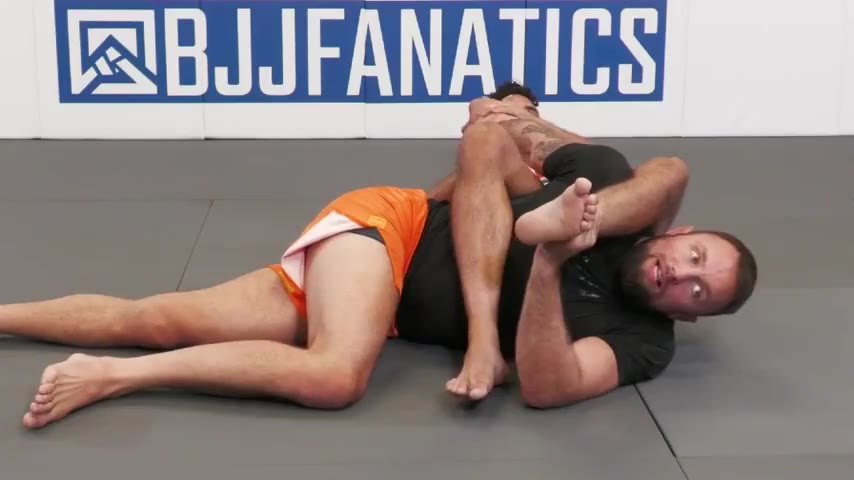
05 Elbow under his leg, back flat
Turned on your side in his armbar: put your elbow under his leg by your head, then walk your back flat to the mat.
Vol 1 · 38:50Go back a step. Everything so far was the late armbar, and Craig works backwards from there to the moments when your hands are still together.
With the strongest grip, your arms locked round the leg that lies across your face, the rule goes against instinct. Do not push that leg away. Curl in and keep everything tight, because pushing is what lets him strip the grip.
One answer from there is to stack him, and Craig names a common mistake with it: drive up off one leg, lean forward, and he spins through underneath and puts you back on the mat. Stand up on both legs and sit back into a squat, knee and elbow together.
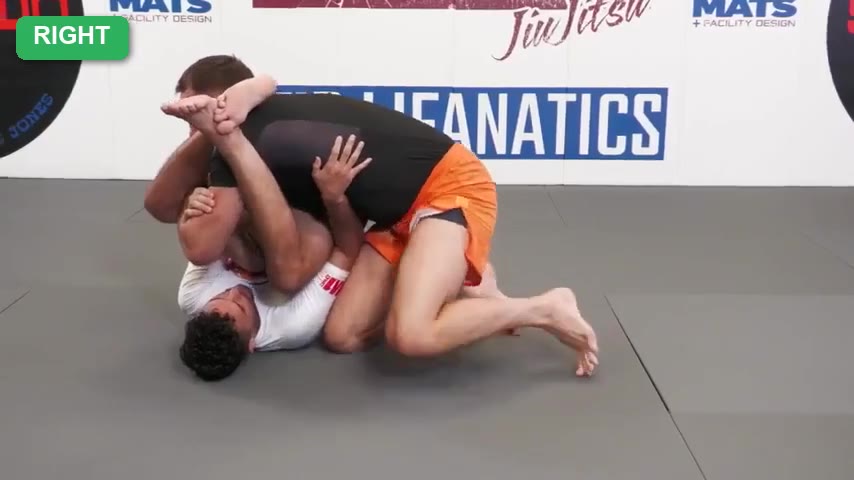
06 Stacking the early armbar
Wrong: lean forward into the stack and he turns and tips you over onto your head. Right: squat on both feet and hug his leg to your chest, and he stays stuck under you.
Vol 2 · 9:22That is the armbar. First of the others is the arm triangle, the way most gyms finish it: step off mount and walk round.
To finish, he needs your shoulder pinned to the mat. So get on your side. Knees to your chest, top hip in front of the bottom one, and the thumb of the trapped arm pointed at his far hip and pushing down, which opens a gap between your shoulder and your neck.
It is the hip position of the reverse hitchhiker above, and Craig says it comes back in most things that involve turning. From there you walk, and if he hangs on too long your head comes out and you drive back in.
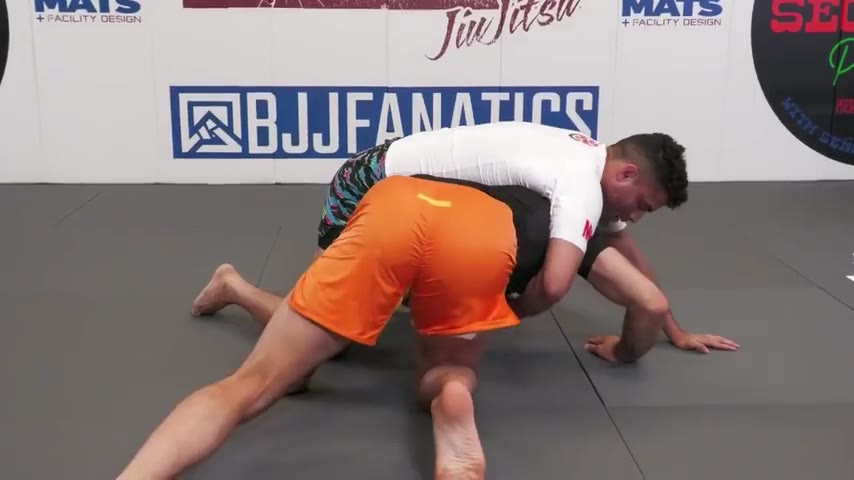
07 Stuck under his arm on your side
Come up to your knees, slide your head out from under his arm, then drive into him and climb onto his back while he is on his hands and knees.
Vol 2 · 20:22Like the armbar, the kimura can come from almost anywhere, Craig says, and it gets the second-longest part of the course. Most of it is about the grip: thumbs out and elbows tight so he never gets it, a knee to strip it when he does.
The clearest one-more-thing of the whole course comes at the end. You are under side control, he has the grip, and your arm is tucked under his shoulder. To finish he still has to step over your head, and without that step you can simply sit up.
Craig: “the last ingredient he needs is this leg”. So your free arm blocks that leg, and you wait. To get past your arm he takes the leg further and further back, his weight comes off you, and that is when you sit up.
Not sooner.
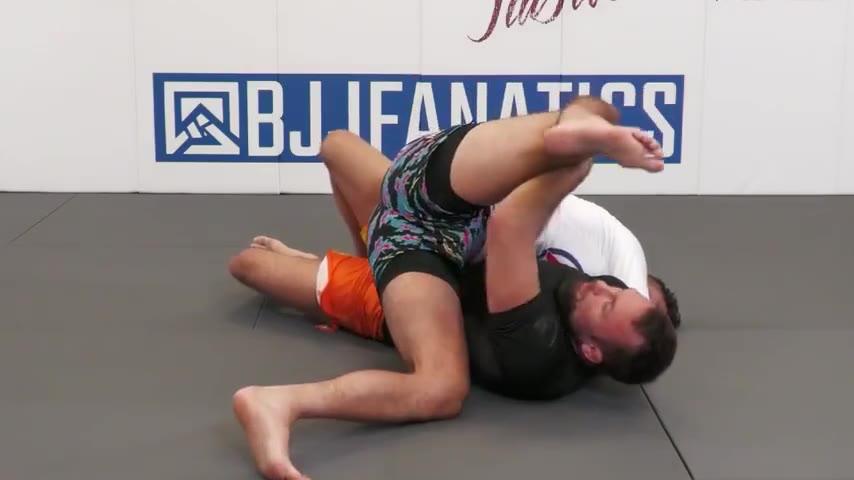
08 Under side control: block his leg
Your free arm blocks his leg so he cannot step over your head. When he swings that leg far back to get past the arm, you sit up.
Vol 2 · 49:57This is the example Craig gives in the first minute of the course: the one training partner who does nothing but foot locks.
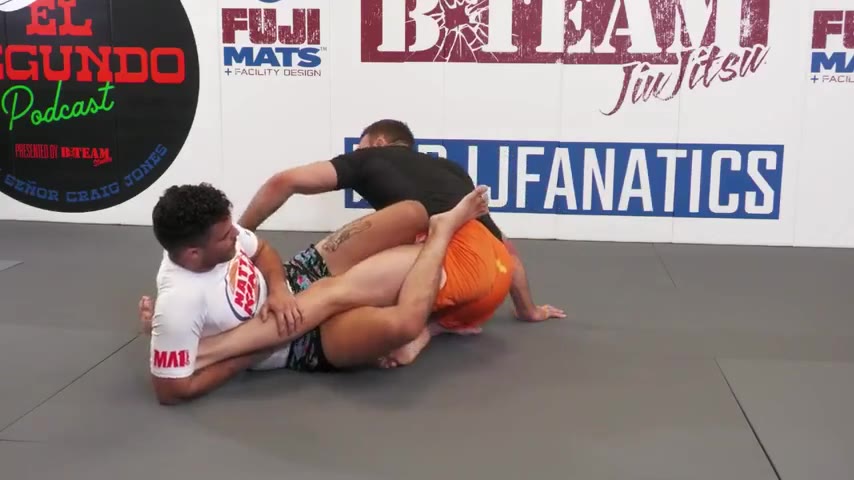
It gets the longest single chapter, twelve minutes, and Craig’s view is that foot locks are “a bit of a paper tiger”. The lock stretches your toes away from your ankle, with your toes behind his armpit. First, flex the foot as if you were pushing it into a boot, which buys time and no more.
Then turn your knee in and move into his leg, so your toes come out from behind his armpit. Then stand up. With your whole weight on that heel he cannot stretch the foot.
He may still be holding it. That is fine for now: standing takes the pressure off the ankle, and from there you deal with his legs.
09 He holds your foot for a straight ankle lock
Post a hand behind you and stand up over him, while he still holds the foot.
Vol 3 · 13:37From here on it is chokes, and every guillotine starts the same way: a hand under your chin.
Craig says that is where your time is best spent. Chin tucked under your shoulder, no space between shoulder and neck, and the first grip stays weak. When it gets deep anyway, his answer is to give up the top on purpose: roll to your back.
He will follow and try to come up on top, and two things now work for you. From on top he has to arch his hips in to finish, with the mat in his way. And your hands, which were busy with his grip, are free for his hips.
No hips, no finish, Craig says. So as he comes over, you hold his hips and push away the leg that is in your way. His rule: on top, fight the hands. On the bottom, the hips.
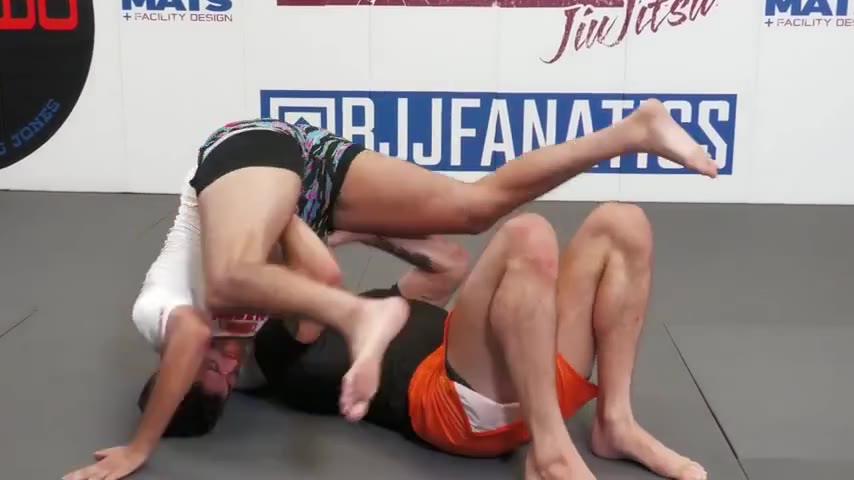
10 Push his leg back up
Deep guillotine and you are on your back: when he kicks his legs up over you, push his leg up with your forearm until he drops back down onto his back beside you.
Vol 4 · 2:34Rolling is no use when his legs are locked round you. Craig calls this the most common version, and one of the hardest to get out of at first.
What holds you now is those legs round your hips. So put your forehead on the mat and come up on your feet, wide at first for balance. Then walk your feet together, so his locked legs can slide down past your knees, and bounce.
Your hips are free. In the clip Craig stays there for a moment, legs in the air and all his weight on his partner, then comes down on top of him. From there, he says, you drop into side control. His own warning: this one takes a lot of practice before it works under pressure.
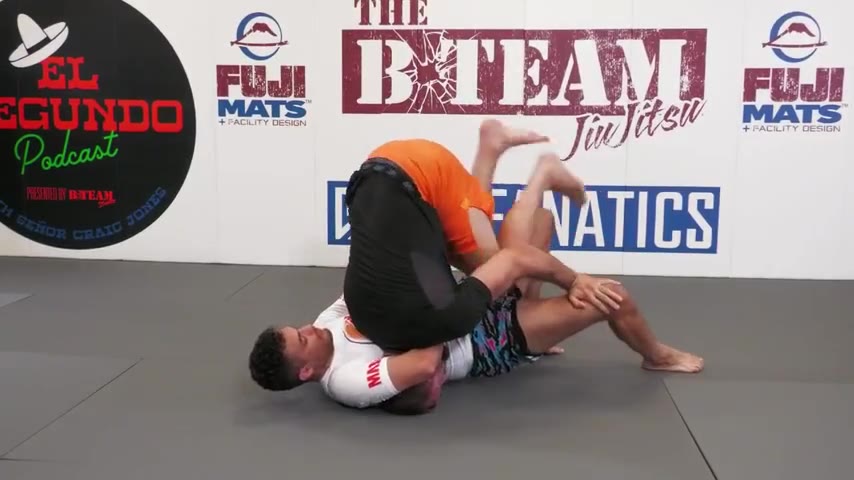
11 Legs in, then down on top of him
Upside down on him with your head at his chest: bring your legs in until his legs are down on the mat. Both legs go straight up, then down past his head, and you land on top of him, chest to chest.
Vol 4 · 8:41Craig compares this moment to the hand under your chin: with only his ankles crossed you are caught, but the triangle is not locked and you have time.
His answer is a thumb. As your partner switches from crossed ankles to the real lock, your thumb goes inside his leg, which gives you something to push against while your arm and head come out. The detail that matters is when: “Don’t try to insert the thumb post a second before you have to tap.”
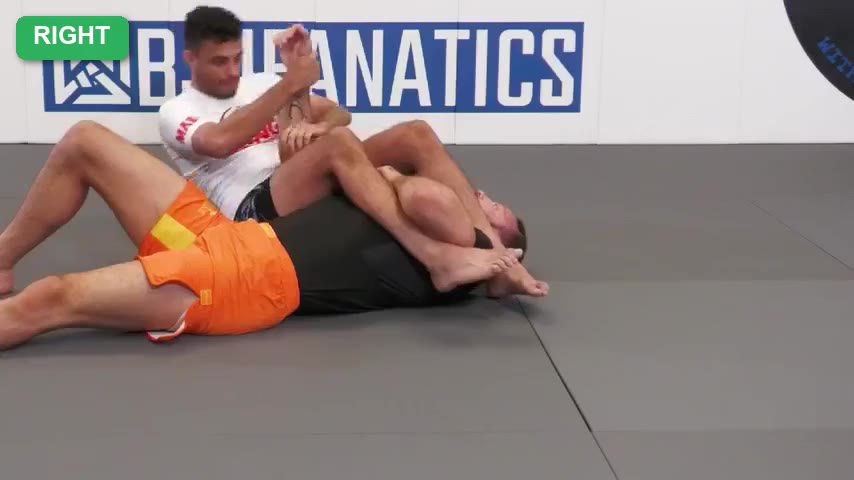
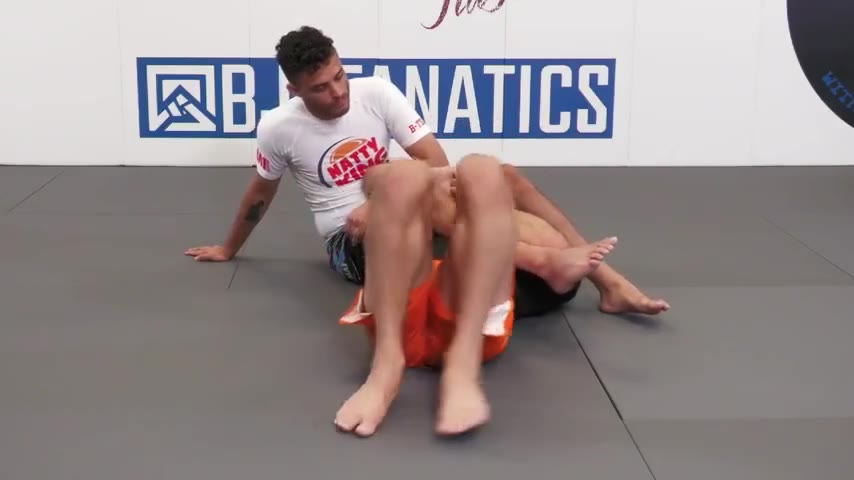
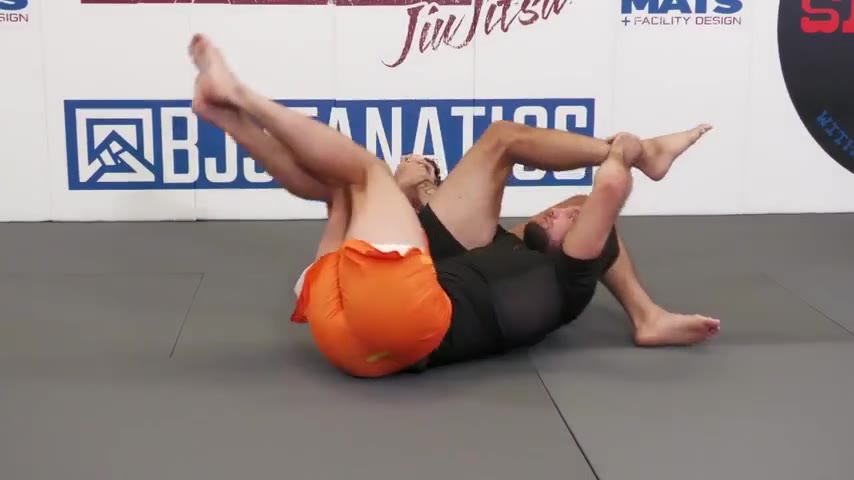
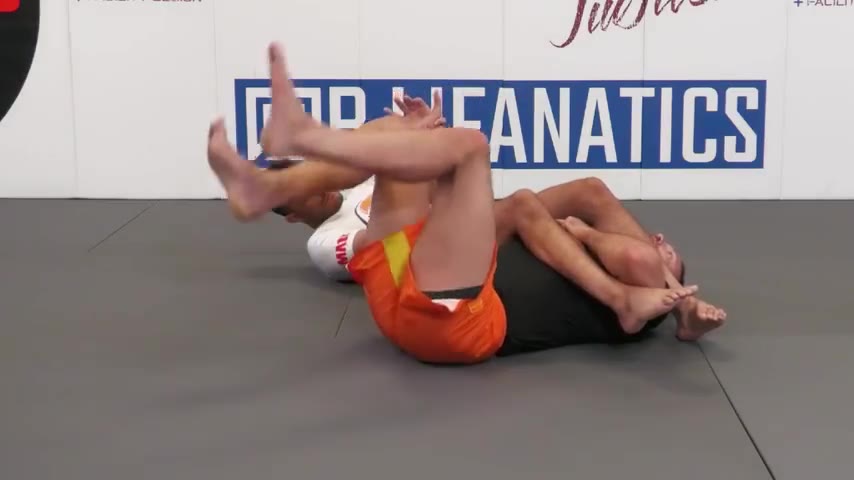
The clip at the top of this page is Craig’s drill for it. His partner dives straight for the triangle, Craig wraps the leg as it comes up, stands, and steps back out. Do not look for the thumb there, it is too small to see.
Miss that moment and it is locked, and Craig counts on one escape. A locked triangle is finished by straightening the leg like a stomp, so both hands go above his knee and your whole weight drags it to the floor. The clip picks it up there: you stretch out flat until his legs come apart. Craig says to expect a scramble.
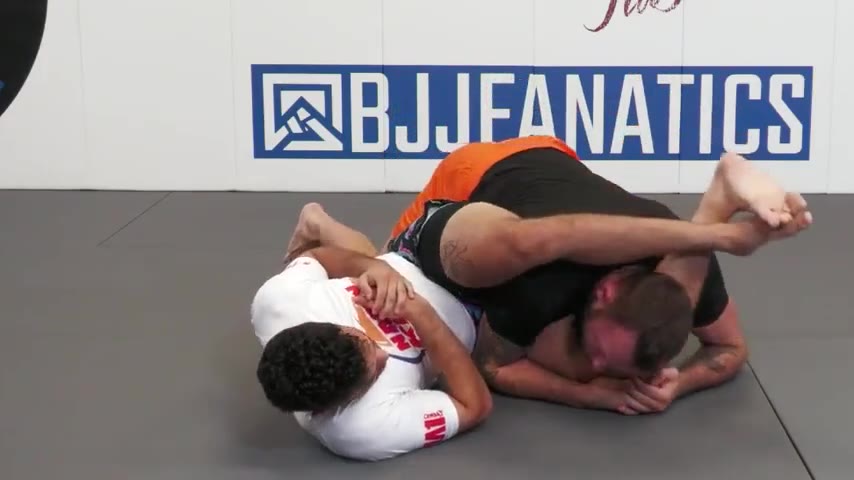
12 Caught in a triangle
Drive down until his legs drop across your back, lie out flat on your stomach while he ends on his side, and when his legs come apart you come up on top of him.
Vol 4 · 20:36The last full chapter, and the one place where Craig points back to the rule from the first minutes by name: know what he needs next, and you know what to take away.
What a darce needs is you bent: on your side, spine curled, and then a leg or your body held so you stay that way. Early, keep your elbow outside his body and frame on his knee. Late, come up to turtle (the clip shows it from a front headlock), hook the arm that is choking you so it cannot go deeper, then sprawl out wide and flat.
Flat, he can squeeze as hard as he likes. Craig would sooner stay in a choke that is not working than rush out of it: whoever is squeezing burns his arms out.
13 A front headlock on you in turtle
Come up onto your hands first. Then drop your head and chest, shoot your legs back and sprawl out flat under him.
Vol 4 · 24:29Eleven submissions, one question: what does he still need?
 01
 02
 03
 04
 05
 06
 07
 08
 09
 10
 11
 12
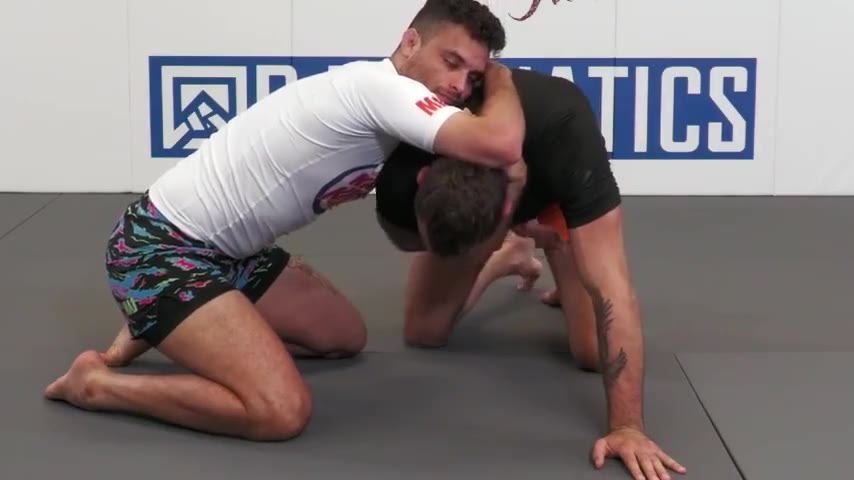 13
How many of these do you do?
Count the ones you already do when you are caught, not just in drilling. If most are new to you, this course will change what you do first.
House code BLACKFRIDAY2026, tested at checkout on November 23, 2026: $44.33 instead of the day’s $98.50 ($197 list). BJJ Fanatics rotates these codes.
Who should buy it
Which one are you?
- You panic when you are caughtThe whole course is one question you can ask in the middle of a round: what does he still need?
- You are a white or blue beltCraig made it for you, and says so in the first minute.
- One training partner taps you with the same thing every weekThat is the buyer Craig describes. The armbar and the kimura get the most time, the foot lock the longest single chapter.
- You tap to armbarsAbout 52 minutes on that one submission, from grip broken back to hands still locked.
- You are a purple belt or higherThe reverse hitchhiker and the kimura counters are the least basic parts. Craig calls the course a beginner instructional himself.
- You are stiffCraig gives the stiff options. Tight ankles defend the foot lock sooner, your shoulders may suit one armbar turn better than the other, and one triangle escape has a version for the less flexible.
- You train in the giEvery demonstration is no-gi, and there is not one collar choke.
- Heel hooks are your problemNone here.
 See Exit The System below.
- You are stuck under mount or side control
 See Don’t Be Finished below, Craig’s other escape course.
- You want one submission at full length
 See Danaher’s New Wave Submission Escapes below.
- Crude jokes put you offThey are in nearly every chapter.
Which escape course for whom
- New Wave Jiu Jitsu: A New Philosophy Of Submission Escapes (John Danaher, $197 list, 8 volumes, 12 h 32, no-gi)
For you if: you want the same question at full length, and heel hooks. Danaher also starts from what the finish needs, but for five submissions, with 5 h 11 on heel hooks and leg entanglements alone. He leaves out the back choke, the arm triangle, the darce and the ankle lock, which Craig has. See it on BJJ Fanatics. Or read our review. - Exit The System (Garry Tonon, $197 list, 8 volumes, 5 h 04, no-gi)
For you if: you want leg locks and live rounds in one course. Ten submissions and the back, nearly an hour on heel hooks, ankle locks, toe holds and knee bars, and seven live rounds that start in a bad spot. Craig asks what he still needs. Tonon asks what you can attack on the way out, mostly the legs. On r/bjj, a commenter answering which escape course suits beginners (December 2023) called Tonon’s the more intermediate one for that reason, and named Craig’s for beginners. See it on BJJ Fanatics. Or read our review. - Fundamentals of Brazilian Jiu Jitsu Escapes Gi & No Gi (Lachlan Giles, $127 list, 8 volumes, 7 h 14, mostly no-gi, despite the title)
For you if: you get pinned, not submitted. Its chapters are positions: the back, turtle, the front headlock, side control and mount. It answers the same problem as Craig’s Don’t Be Finished, not the same problem as this course. See it on BJJ Fanatics. Or read our review. - Don’t Be Finished: Edging Yourself Out Of Danger (Craig Jones, $197 list, 4 volumes, July 2023)
For you if: your trouble starts before the submission. It is the first half of the same series: escapes from side control, mount and the back. Craig opens this course by calling it part two. We have not reviewed it. See it on BJJ Fanatics.
Only armbars? Reverse and Regular Hitchhiker Armbar Escape (Priit Mihkelson, 4 volumes, $97 on November 23, 2026) is a whole course on the two turns Craig covers in about half an hour. We have not reviewed it.

Want the whole field? See our best submission escape instructionals. List prices on BJJ Fanatics, checked November 13, 2026.
What buyers and r/bjj say
BJJ Fanatics shows 92 buyer reviews, a few posted more than once by the same person. Most are a line or two about beginners, common submissions and Craig’s humour. A handful say what worked. Oscar G. (June 2024) used the armbar escapes after a little drilling. Cadman C. (September 2024) kept getting caught in one kimura for weeks and says the escapes here worked. Matt M. (November 2024), who already had Exit The System, liked that this course covers the buggy choke and did not like how crass Craig is in it.
On r/bjj the course came up in a December 2023 thread about Craig’s two escape courses, and most answers did not say which one they meant. The most active commenter called them very good but also very fundamental.
The teaching under the jokes is careful: the chapter with the rudest title is a tidy way to hide your hand from a kimura.
Worth it? The pros and cons
- One question for every submission: what does he still need? It is short enough to remember while you are caught
- The armbar is taught as a chain, from grip broken back to hands locked, and each answer starts from the one that just failed
- Made for white and blue belts, and short: 2 h 53, with a quarter-hour route through the core of it under What’s inside
- Honest about its limits: Craig says which escapes are weak, which take a lot of practice, and how to train all of it without getting hurt
- Eleven submissions in 2 h 53 means most get minutes: the arm triangle, the americana, the omoplata and the buggy choke under five each. Danaher’s New Wave Submission Escapes spends 2 h 55 on the guillotine alone
- One leg lock, the straight ankle. No heel hooks, toe holds or knee bars. Garry Tonon’s Exit The System has nearly an hour on all four
- No live rounds and no match shown. Exit The System ends with seven rounds that start in a bad spot
 Once the back choke is locked, Craig says, “there’s not a lot of technique we can do there”, so his 16 minutes are mostly about stopping it before it lands. For getting off the back itself, see Lachlan Giles’s Fundamentals of Escapes or Craig’s own Don’t Be Finished
What’s inside the four volumes
Four volumes, 45 chapters, 2 h 53 in all, every minute no-gi. After twelve minutes of ideas, the armbar takes about 52 minutes, the kimura 27, the guillotine 18, the back choke 16, the foot lock 12 and the triangle 11. The other five get eight minutes or less. Tap a volume for what’s in it.
This route is just over a quarter of an hour and gives you the idea and four of its best answers:
- Volume 1 from 4:47, 4 minutes. Relax, then work out his next step.
- Volume 1 from 14:17, 4 minutes. Why the hitchhiker is about the wrong hip, not about your thumb.
- Volume 2 from 32:41, 2 minutes. The kimura trap: break the grip first, then move.
- Volume 3 from 12:25, 2 minutes. The foot lock: knee in, then stand.
- Volume 4 from 15:58, 5 minutes. The thumb post, then the knee pull for when you are late.
What can wait: the armbar counter to the kimura, Volume 2 from 40:43. Craig calls it high risk himself.
Vol 1 · 46:12The idea, then the late armbarrelax, his next step, the stages, hitchhiker, reverse hitchhiker
The first twelve minutes are the course in small. How to train escapes without getting hurt: drill, then light resistance, then partners who hold a submission for three seconds and do not crank it. Then the three ideas: relax, work out his next step, know what stage you are in. After that it is all armbar, from the worst moment backwards. The roll most people call the hitchhiker (details 01 and 02), with one thing left out above: if he has hooked your leg, kick that grip off first, or you cannot move your legs away. Then the ankle grab for when the roll fails (detail 03), the turn the other way and its second step (details 04 and 05), and a short answer for a weaker grip, elbow under his leg, that Craig says mostly works on someone who is lazy with his legs. He credits the high shoulder to a match he names, Vinny Magalhães against Fabricio Werdum at ADCC, and says your shoulders may decide which of the two turns suits you. Most chapters open with a minute or two of the two men sitting and talking, usually around a joke.
Vol 2 · 51:24The rest of the armbar, the arm triangle and americana, the kimuraearly stage, stack, kimura grips, the leg block
Seventeen minutes finish the armbar: hopping over the leg by your head to come up on top, the early stage where the rule is to curl in and not push, the stack (detail 06), an answer to the choi bar, and how to spar all of it. Go until he holds your arm straight for three seconds or you get out, then scramble for the top. The arm triangle gets four minutes (detail 07), and Craig says on camera, “This is free on YouTube.” The americana gets under five, with his joke that from the top of side control it only works on white belts. The last 25 minutes are the kimura. Thumbs out and elbows tight so the grip never lands. A knee to strip it, from under side control and from top half guard. The kimura trap, where most people sit up and give their back, and his fix is to break the grip first, cover his hand, pull, punch your arm out, and only then move. A way to make a standing opponent let go by lifting his hips. A grip break from turtle that he saw Marcelo Garcia use. Two counters, one of which he calls high risk. And the leg block at the end (detail 08).
Vol 3 · 42:32Omoplata, the foot lock, the back, the chin straphide the hand, boot on, hand fighting, shoulders out of line
It opens with a two-minute bonus whose title we will not print. Under the joke is a tidy detail: when he reaches for a kimura over your underhook, cup the back of his triceps, so he never finds your wrist. Four minutes on the omoplata, which Craig rates as a poor submission without the gi and a good sweep: step on him, pin his hips and pull the arm out, or roll if he sits up and accept that he may get the sweep. Then the longest chapter in the course, twelve minutes on the straight ankle lock (detail 09), including why he no longer jumps over the foot, which invites the belly-down version, and a way to find out how much your ankle can take, with a partner who puts it on slowly. The back choke gets sixteen minutes. It is hand fighting: cover his thumb, look at the hand that is going for the choke, shoulder to ear. Then getting your shoulders and hips out of line with his, which he calls the path to escaping the back. And one late idea, holding his choking elbow up with both hands. The last eight minutes start the guillotine at the chin strap.
Vol 4 · 33:03Guillotine, triangle, darce, the buggy chokeroll to your back, closed guard, thumb post, knee pull, sprawl
Ten minutes finish the guillotine: the roll to your back (detail 10) and the closed guard (detail 11). For more advanced guillotine escapes Craig points to his other courses. The triangle gets eleven minutes and four answers, from early to late: posture up and look up while only his ankles are crossed, sit back and throw your legs across his body, the thumb post (the clip at the top of this page is the drill for it), and the knee pull (detail 12). The darce gets eight (detail 13), with a plain request to train it as a choke and not as a neck crank. The last three minutes are the buggy choke bonus. The chapter title promises a 100% success rate against Jay Rod. On camera Craig says only that he worked it out against him, and no round is shown. It is less an escape than a way to punish the setup: from the top of side control, as he reaches for it, cover his head, pull your elbows back and roll your chest forward over his.

BJJMore earns a commission if you buy through these links, at no extra cost to you. Released by BJJ Fanatics in October 2023; reviewed on all four volumes.
FAQ
Is Edging Your Way Out Of Danger worth it?
Yes, if you are a white or blue belt and you freeze or thrash when you get caught. It gives you one question to ask, what does he still need, and answers it for eleven submissions, the armbar at length. It is short, it has no live rounds, and it has no heel hook defence.
Which submissions does it cover, and which not?
The armbar and the choi bar, the arm triangle, the americana, the kimura, the omoplata, the straight ankle lock, the rear naked choke, the guillotine, the triangle, the darce, and a counter to the buggy choke. Not covered: heel hooks, toe holds, knee bars, and anything with a gi collar.
Is it the same course as Don’t Be Finished?
No. Craig made two escape courses in 2023 with nearly the same subtitle. Don’t Be Finished: Edging Yourself Out Of Danger (July 2023) is about positions: side control, mount and the back. This one, Edging Your Way Out Of Danger: Submission Escapes (October 2023), is about submissions. He calls it part two in its first sentence.
Is it for white belts?
Yes. Craig says in the first minute that it is tailored to beginners, and that most of the time the viewer is a white or blue belt. The one thing to arrange first is a partner you trust, because every escape starts with letting someone put the submission on. His order: drill it, add light resistance, then work with partners who will hold a submission for three seconds and not crank it.
Craig Jones, Garry Tonon’s Exit The System or Danaher’s New Wave Submission Escapes?
All three list at $197 (checked November 13 and 23, 2026). Craig’s is the short one for beginners. Tonon’s is nearly twice as long and adds leg locks and live rounds. Danaher’s is more than four times as long, on five submissions. New to escapes: Craig. Training with leg lockers: Tonon. You want every reason spelled out: Danaher.
Does it cover leg locks?
Only the straight ankle lock, in twelve minutes. Craig says on camera that he is not going into heel hooks, and he flags the trap for later: the foot position that defends an ankle lock makes a heel hook easier.
Does it work in the gi?
Every demonstration is no-gi, and Craig thinks in no-gi: he rates the omoplata as a weak submission without the gi, for example. The same submissions exist in the gi, but you get no collar chokes and nothing on how grips on cloth change these positions.
Is the BDSM Jitsu title just a joke?
Yes, and the joke runs through all four volumes: crude humour and swearing in nearly every chapter, and one chapter title we will not print. The techniques have nothing to do with it. If that tone puts you off, this is not your course.
Is there a discount code?
On November 23, 2026 the house code BLACKFRIDAY2026 took the price at checkout from $98.50, that day’s deal, to $44.33. The list price is $197. BJJ Fanatics rotates its codes and sales, so check the price on the day you buy.
Get the next review like this one
New reviews in this format land in your inbox, with the details on video. You also get the free BJJMore email course and the instructional-platform discounts I use myself (worth $46).
Caught is not finished
Tapping to the same armbar, kimura or foot lock every week? This course gives you one question to ask while it is on, what does he still need, and the answer for eleven submissions.