
Home / John Danaher / Escapes / Danaher Submission Escapes Review
John Danaher Submission Escapes Review: New Wave Jiu Jitsu
Buy it if you get caught and all you can do is grab his wrist and hold on. Danaher shows what each submission needs, and how to take that away first.
See Submission Escapes on BJJ Fanatics →No-gi course. Who should buy it ↓
- No-gi
- 8 volumes, 12 h 32
- 5 submissions
- No live rounds
- Released May 2021
A New Philosophy Of Submission Escapes is John Danaher’s no-gi course on getting out of five submissions: the guillotine, the armbar, the triangle, the kimura and the heel hook. After almost every escape he shows a way to attack back.
Yes, if you get caught and just hold on
He has your neck, your arm or your heel, and you grab his wrist and hope he gets tired first. Danaher starts from the other end: what does the man need to finish? His shortest version is about leg locks: “There is no heel hook without a heel.” (Vol 6 · 35:10) Each of the five gets a short list like that. You take those things away, the earliest first, and then you go after him.
$197 list (checked November 13, 2026), about $16 an hour. No-gi, no live rounds, and five submissions only: no rear naked choke, no arm triangle, no ankle lock.
See Submission Escapes on BJJ Fanatics →Take away what he needs
Five submissions, in the order Danaher teaches them. In the guillotine and the armbar the stops run from early to late, because his first rule is that the early escape is always the easier one. The leg stops go by where the man’s feet are. Every stop starts with what the finish needs at that moment. And there is a second half: a man who goes for a submission has to stretch himself out to do it, and when it fails, that is your turn.
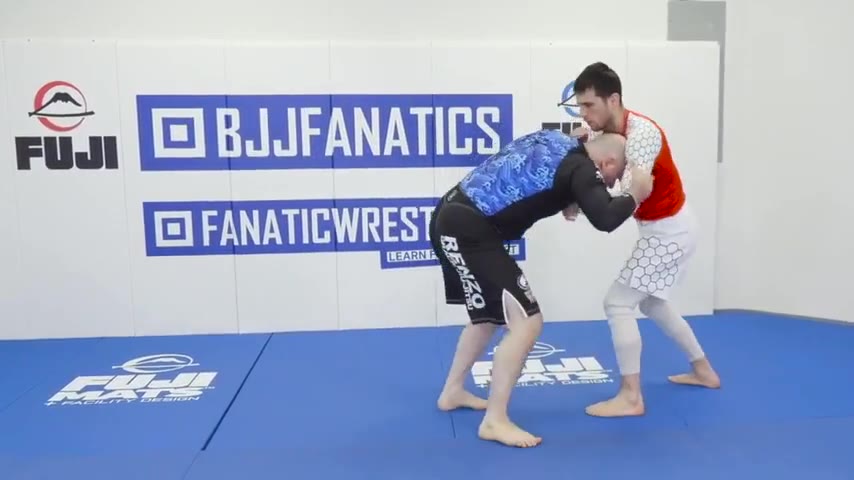
The guillotine, on the feet. Most of us learned to grab the choking wrist. Too slow against someone good, Danaher says: the man jumps guard first, and the jump is what finishes you. A guillotine needs your head off to the side and his leg on the other side holding your hips. So your hands go to his hips, not to his wrist. The clip at the top shows it: both hands on his hips, up, round behind him, his hands on the mat.
The second answer punishes him for trying. Most people call it the arm spin, and Danaher calls it Garry Tonon’s signature. Take the arm that wraps your neck, drop under him to your seat, and he goes over.
01 As you tie up standing he wraps your neck: drop under him to your seat and he flips over you onto his back
You do not have to be fast for this, Danaher says. You just cannot hesitate.
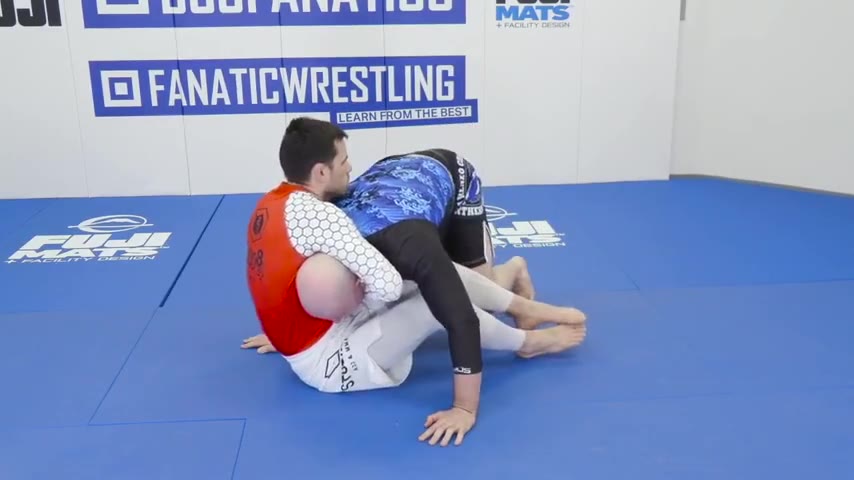
Vol 1 · 23:36Same two needs, in order. First the head: the man wants your temple on his ribs, you want your forehead on the middle of his chest. Lose that, and the next fight is his far knee, before his leg can close round you. Danaher turns the old rule around here: knee first, wrist second. What folds you, he says, is the legs round your hips, not the arm. So you come up over that knee, tip him back, and bring your head back to the middle.
02 His arm is round your head and has pulled it to the side: come up off your knees with your hips above his legs, tip him back onto his elbow and put your head on the middle of his chest
Danaher has seen a lot of good people tap while they were still fumbling for a wrist.
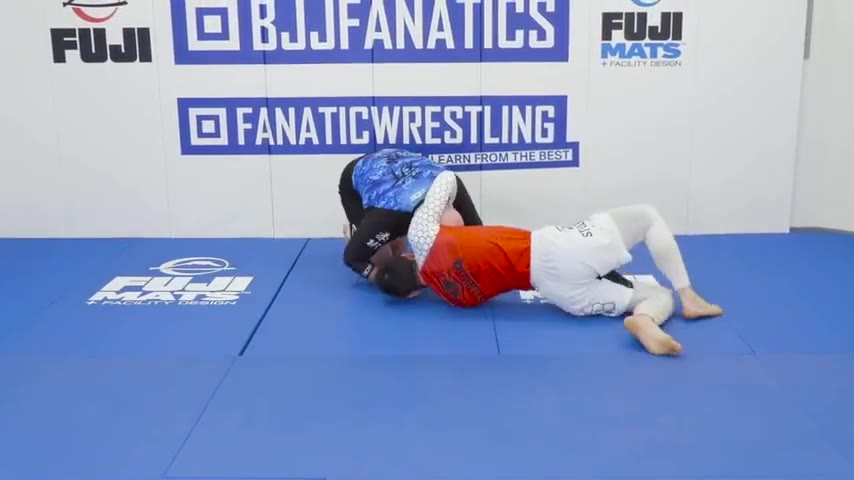
Vol 1 · 42:38Good guillotine players do not wait for you to reach that knee. With a high elbow grip, Danaher says, you can get past the knee and still be strangled, and once his leg is over your back there is no knee left to jump. So he goes with the choke. Roll the way it is already pulling you, as far from his hips as you can. Finish belly down, never on your back, and keep going until you are on top.
03 Your head is trapped under the arm of a seated opponent: roll onto your side and over, come up on top of him, and put him flat on his back with you on top
The least you must reach is your side, Danaher says. If you are looking at the ceiling, you are about to be finished.
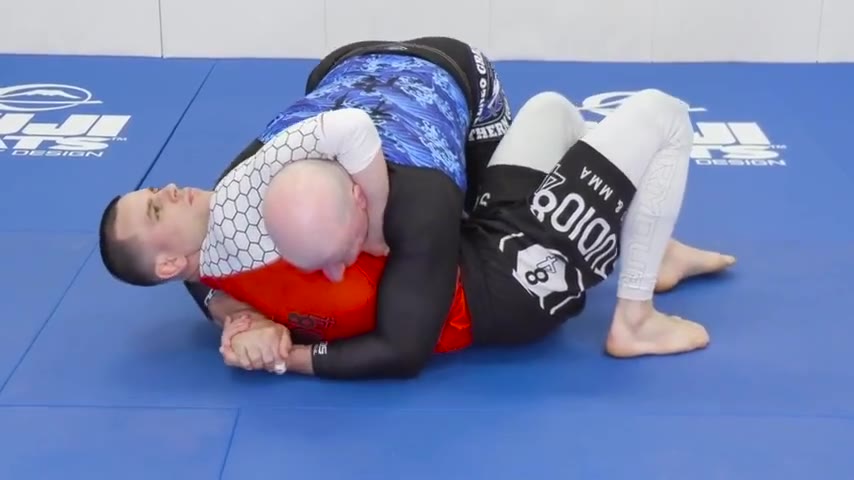
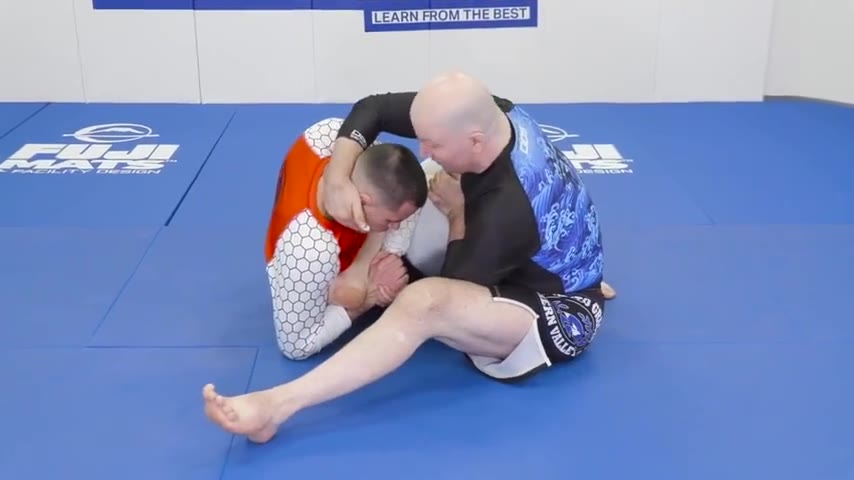
Vol 1 · 59:13One day you are inside a closed guard with the guillotine on: no roll, no knee to step over. Danaher gives three ways out, and one of them is a strangle of your own. With his arm round your head and none of yours inside it, your shoulder and his own shoulder close on his neck. Most people know it as the von flue. The deeper the man’s grip goes round your neck, Danaher says, the better yours gets. The clip shows it from the side, past his knee.
04 When he wraps your head from under side control, lock your hands together at his near shoulder, come up toward his head and drive your shoulder down into his neck
Before you drill this, agree on a tap with the feet: his arm is trapped under your shoulder.
Vol 2 · 33:27The armbar, and a longer list. He has to lie across you, with your elbow over his hip and your thumb up, and if you lock your hands he has to pull them apart. And he needs two legs: one across your face to hold your head, one across your body. So the early answer is the same wherever the armbar starts. The leg never gets across your face. In his guard, your hand goes to your own head before his leg arrives. When he has your back, the tell is his choking arm crossing over to the other side: he wants the arm now, and you know which leg is coming. Catch it.
05 In his guard with your arm trapped: put your hand on your own forehead, so when he swings his leg over for the armbar it runs into your hand and lands across your chest, not across your face
This is the late answer. Earlier, Danaher takes his elbow off the man’s hip the moment the man turns to an angle.
Vol 3 · 1:25:2206 He has your back and falls to the side to switch to the armbar: catch his shin with your arm as his leg swings over, so it ends up held in front of your chest instead of across your face
Danaher’s forearm goes over the shin, right at the end of the man’s leg.
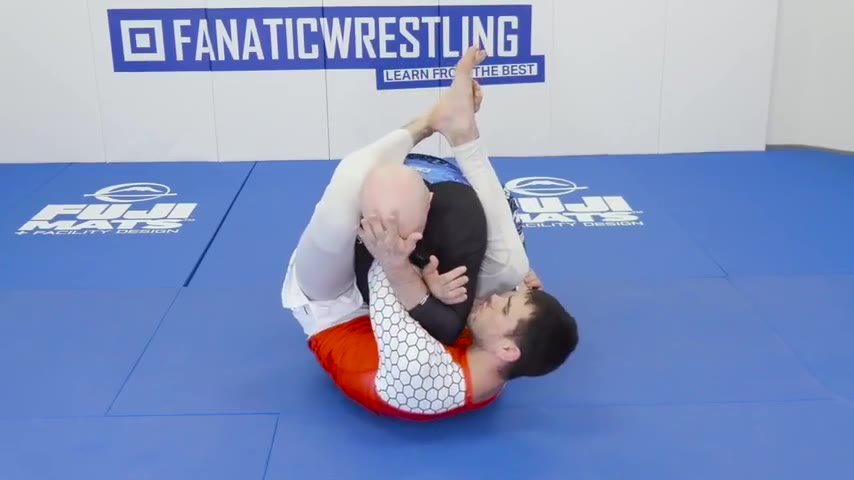
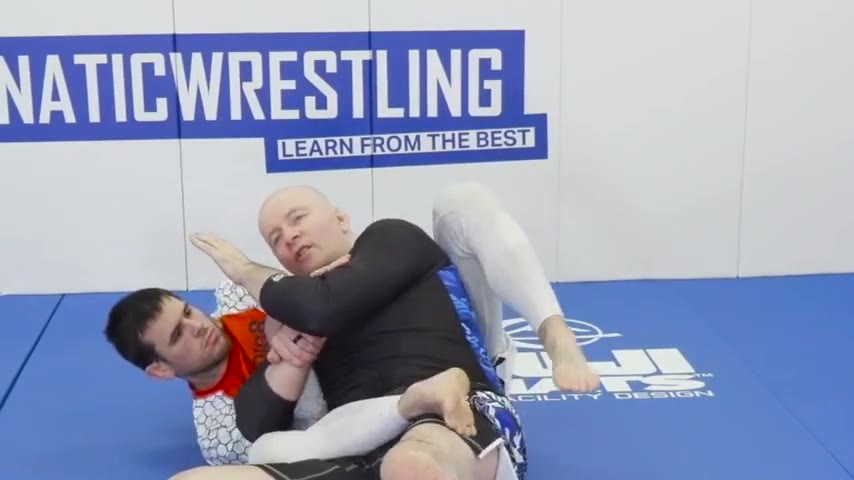
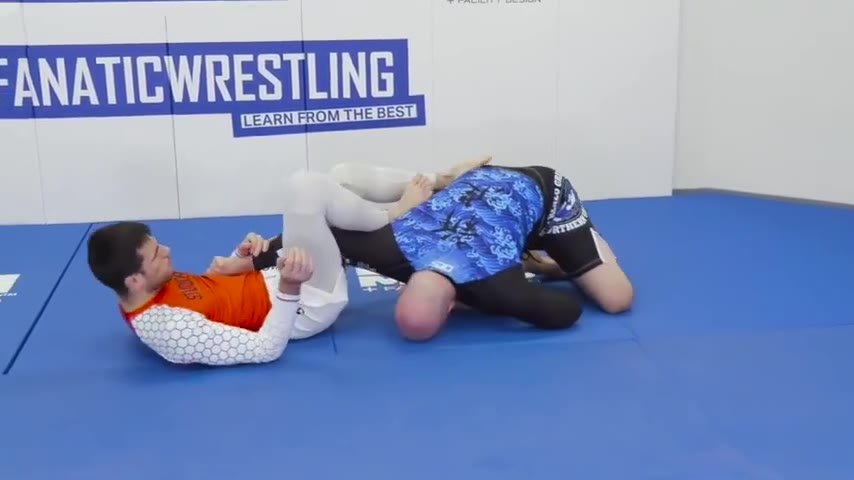
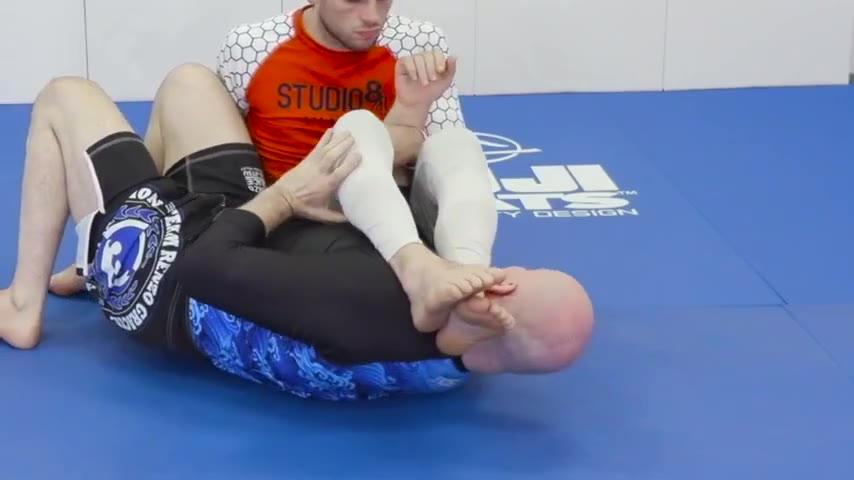
Vol 3 · 1:32:22The leg got across your face anyway. You are flat on your back with your arm over his hips, which is where Danaher starts his armbar escapes and where an EBI overtime begins. Hands locked and close to your chest first. Then comes the part this course is known for. An armbar takes both of the man’s legs, stretched out in front of you, and once you are out, Danaher says, they are yours to attack. The two escapes his students are known for go in opposite directions: turn away from the man and get your head to the mat, or turn toward his head and push his feet off your head.
07 Caught flat on your back in an armbar: turn away from him onto your side while he still holds the arm, and come up to your knees with your head down to the mat
Head down on the mat, eyes away from him. From there, Danaher says, the man’s first attempt will not break the arm.
Vol 3 · 36:5508 Caught in the armbar with his foot at your jaw: turn your chin away from him, post your hand on his foot and push his legs off your head
The second one, at the moment his shin is on your jaw. Look up and his shin hooks under your jaw, Danaher says. Look away and it has nothing to hook.
Vol 3 · 53:22The triangle. Feet crossed behind your head and shoulder is what Danaher calls a trap triangle, and it does not strangle you yet. The strangle comes when the man turns it into a figure four, and once that is on you have four to eight seconds. His favourite escape, the thumb post, is for the man who drags your head down, and it ends like the armbar escapes: two stretched legs in front of you. But the first defence aims at the step in between. To close the figure four the man’s knee has to come forward. Your arm goes back past it.
09 In the trap triangle (his leg over your shoulder, not yet a figure four), reach your arm back past his knee and keep your elbow there, so his knee cannot come forward to close the triangle
Danaher’s cue is to watch that knee. It has to come forward before anything can be locked.
Vol 4 · 6:26The kimura. Four needs this time: your hand behind your back, his elbow above yours, his grip on your wrist, and control of your head. Once the pressure is on you have three or four seconds, so the first need is the one to win: the hand stays in front of you. The later layers, and the counters into his legs that end the volume, come after that. The hand’s safest place is inside your own thigh, and once the man has pinned it to the mat with two arms and his weight, you will not pull it there. So the hand stays where it is and the thigh comes to it.
10 He pins your wrist to the mat with both hands: don’t drag your hand to your leg, bring your thigh to your hand and get your fingers inside your own hamstring
A hand on your knee is not enough, Danaher says. The fingers go all the way in behind the thigh.
Vol 5 · 22:55Five hours of the course start here. Danaher was taught to turn the way the heel hook turns you and pull the knee out, and he explains how he beat people who did that: turning with the heel hook hands the man your heel. His order is the reverse: take the heel out of the man’s hands, hide it, then get your knee out past his legs. Here the man’s feet are on the inside, between your legs. Hiding the heel then means turning your knee and toes away from him, which also keeps your other leg out of his reach.
11 Wrong: you sit with both legs straight at him, and he wraps your leg and clamps it under his arm. Right: bend that leg with the knee turned out, leaning back on your hand. He can hold your foot but cannot get it under his arm
To do anything with a leg, Danaher says, the man has to get your foot into his armpit. Hands on it are not enough.
Vol 6 · 1:25:1112 He is turtled under you: drop to your seat beside his hip, reach over his back to his far shoulder and pull him back onto your lap
When he comes up onto his knees after you, his back is open. Danaher calls it a misdirection, and it ends with the man on your lap, his back to you.
Vol 7 · 9:02In 50/50 his feet are outside your legs, and everything from the last stop turns round. Most people, Danaher says, defend one of the two well and the other badly, because they miss that. With his feet inside, you kept your feet apart and turned your knee and toes away. Here both his legs work together to turn your heel up, so turning away does not save you. But he cannot tie your two legs together, so your feet come together and you move toward him, where his head and his elbows are within reach. The clip shows only the last step, once he is balled up over his hands: his head, then his bottom elbow.
13 He is balled up, bent over his clasped hands: scoot in, wrap his head and pull it to you, then reach your other arm down under him to his bottom elbow
Danaher’s point for this position: the pull goes on the bottom elbow, where it is about twice as strong as on the top one.
Vol 8 · 17:15Last, the straight leg lock, which Danaher calls arguably the more common way into a heel hook. The dangerous moment is when the man turns his knees in across your knee and makes you turn with him. He is steering you toward the position Danaher rates as the strongest finish of all. To get there he needs his feet up on your far hip. That is what you take away. As you turn, push his feet from your hip down to your knee, and your knee can slide out behind his thigh.
14 In his leg lock his foot sits on your hip: as you turn up onto your knees, push his foot down off your hip to your knee
Danaher’s test on camera: if you can see his knee, he is out. If it is hidden in front of the man’s leg, he is in trouble.
Vol 8 · 1:00:45Five submissions, one question each time: what does he need right now, and what can you take away first?
 01
 02
 03
 04
 05
 06
 07
 08
 09
 10
 11
 12
 13
 14
Who should buy it
Which one are you?
- You grab his wrist and hold onEach submission comes with a short list of what it needs, and what to take away first.
- You get guillotined when you shoot or passAlmost three hours on that one choke.
- Leg locks scare youFive hours on heel hooks, with a named position for every stage.
- You do not leg lockMany of the armbar and triangle counters are leg locks. The escapes work without them.
- You are a white beltThe first ideas are simple. The leg volumes assume you know the positions.
- You want every submission coveredFive only. No rear naked choke, arm triangle or ankle lock.
- You want it short12 h 32.
 Exit The System is 5 h 04.
- You get pinned more than submitted
 That is Danaher’s Pin Escapes & Turtle Escapes.
Which escape course for whom
- Exit The System (Garry Tonon, $197 list, 8 volumes, 5 h 04, no-gi)
For you if: you want more submissions in less time. Tonon covers ten submissions and the back, and his stages end the way Danaher’s do: you attack. His last volume ends with seven live rounds that start in a bad spot. See it on BJJ Fanatics. Or read our review. - The Pillars Of Defense: Leg Lock Escapes and Counter Locks (Gordon Ryan, $349 list, 10 volumes, 6 h 57, no-gi)
For you if: leg locks are your only problem. Gordon spends almost seven hours on legs alone, where Danaher spends five and adds four other submissions. It costs $152 more. See it on BJJ Fanatics. Or read our review. - Edging Your Way Out Of Danger: Submission Escapes (Craig Jones, $197 list, 4 volumes, 2 h 53, no-gi)
For you if: you want the short version. Craig’s chapter list includes escapes Danaher leaves out, the rear naked choke and the arm triangle among them, and no heel hook defence. See it on BJJ Fanatics. - Pin Escapes & Turtle Escapes: Go Further Faster (John Danaher, $197 list, 8 volumes, 10 h 52, gi)
For you if: you are stuck under mount or side control long before anyone submits you. It is the other half of defence: where he holds you, not what he attacks. See it on BJJ Fanatics. Or read our review. - Cheaper: Submission Escapes (Tom DeBlass, $79 list, 3 volumes, 28 short lessons).
Want the whole field? This course is one of eleven in our best submission escape instructionals. List prices on BJJ Fanatics, checked between November 13 and 15, 2026.
What other people say about it
182 buyers have reviewed it on BJJ Fanatics. The praise comes back to two things. The first is the counter: Clifford (May 2021) wrote that every escape has a counter attack, unlike the other courses he had seen, and William M. (November 2024) thinks the leg lock counters alone are worth the money. The second is the leg lock half. Aidan F. (May 2022) wrote that he used to be afraid of leg locks and was getting submitted much less before he had finished the course.
The complaints are about what is missing. KP (November 2022) wanted more triangle variations and escapes from kata gatame, the D’Arce and anaconda family. Stefan M. (September 2022) missed straight ankle locks. Matt M. (February 2025) notes there is no buggy choke escape.
Away from the shop this course is not talked about much, and the little you hear matches the buyers. One grappler, a few sections in, liked that the escapes end in counter attacks, mostly into the legs, and noticed how many other submissions are left out. Another found it a pretty good course overall and the triangle and back defence parts nothing special. The reason is probably how little there is of either: the triangle volume is the shortest, 43 minutes and only the triangle from the front, and from the back the course only covers the switch to the armbar, not the choke.
Worth it? The pros and cons
- One method for five submissions: list what the finish needs, take those things away with the earliest first, then counter
- Nearly every escape ends in an attack: a strangle of your own off his guillotine, his legs off a failed armbar or triangle, his back or his feet off a leg lock
- 2 h 55 on the guillotine alone, from standing to a locked guard
- 5 h 11 on heel hooks, with a named position for every stage and two plain exits for people who do not want to leg lock back
 Nearly all of it is talking, and the main rules come back many times: the three steps of heel hook defence six or seven times in Volume 6 alone. Craig Jones’s Edging Your Way Out Of Danger is 2 h 53 in total
- The triangle gets 43 minutes, and only the triangle from the front. Garry Tonon’s triangle volume in Exit The System also has the back, reverse, side and inverted triangles
 No live rounds and no match shown. Gordon Ryan’s Leg Lock Escapes ends with four rounds that start in a leg entanglement, then the same rounds with his commentary
 Some of it is not for your first month: he tells you to build the turning armbar escape slowly with a partner you trust. Tom DeBlass’s Submission Escapes is 28 short lessons for $79 list (checked November 15, 2026)
What’s inside the eight volumes
Eight volumes, all no-gi. The guillotine takes 2 h 55, the armbar 1 h 45, the triangle 43 minutes, the kimura 1 h 58, heel hooks and leg entanglements 5 h 11. Tap a volume for what’s in it.
This route is about 1 h 50 and gives you the method for all five:
- Volume 2 from 55:13, 16 minutes. The whole guillotine in one summary: early, middle, late.
- Volume 1 from 1:21:31, 16 minutes. Knee first, wrist second, and the knee in his hip.
- Volume 3 from 42:55, 7 minutes. The turning armbar escape under stress.
- Volume 4 from 15:12, 10 minutes. The thumb post.
- Volume 5 from 1:30:36, 11 minutes. The kimura in three layers.
- Volume 6 from 24:32, 14 minutes. Slip, hide, slip.
- Volume 7 from 44:42, 7 minutes. Why 50/50 is defended in the opposite direction.
- Volume 8 from 2:13, 20 minutes, then from 57:32, 8 minutes. The three 50/50 positions, and the knee reap.
What can wait: Volume 6 from 15:02 to 24:21 is the history of heel hook defence. Good listening, nothing to drill.
Vol 1 · 1:43:29The guillotine, part onestanding, on the mat, high elbow, arm-in, knee first
The first seven minutes are the idea of the whole course: work out what the submission needs, escape early, and treat a failed attempt as your opening. Then the guillotine. Standing: the block on his hips and the arm spin. Tonon, Danaher says, would offer his neck to guillotine specialists just to hit it. On the mat: head to the middle, then his knee (detail 02), the answer to the high elbow grip, and the roll for when his leg is over your back. The arm-in guillotine gets its own answer: step over the knee on your own side, sit out, and put your forehead on the mat so he cannot fold you. From 1:21:31 he explains why he goes for the knees before the wrist, and shows the knee in the man’s hip, which he calls probably the highest percentage first reaction to any guillotine. He makes the case for old against new three times in this volume. Once would do.
Vol 2 · 1:11:41The guillotine, part twoclosed guard, the counter strangle, the summary
Twenty-two minutes on the guillotine inside a locked guard. Slipping your head out, which leaves his own face bright red. Pressure from a tripod. And slipping your hips down out of the man’s legs, which he keeps for when the room is going dark. Then half an hour on the counter strangle: how it works, why it never works against an arm-in grip, and three places to use it. The mechanics run long. From 55:13 Danaher sums up the whole guillotine in sixteen minutes. Early is the head. The middle is getting away from his hips, over the knee or by rolling. Late is pressure and slipping.
Vol 3 · 1:45:08The armbarwhat it needs, four escapes, chaining them, guard, back, turtle
Twenty minutes of groundwork first: what the armbar needs, why his stretched legs are your target afterwards, and which grip of your own hands suits which escape. Then four escapes from flat on your back. The turning escape is the one most people call the hitchhiker: line up with his legs, elbow over his other hip, thumb down, and go before he pulls your hands apart. Danaher admits it is frightening and tells you to build it slowly with a partner you trust. Twelve minutes on chaining the escapes, left, right, up, down, for five or ten seconds, which he says is what really got his students out of those overtime armbars. The last 25 minutes put the armbar where it happens in a roll: from guard (detail 05), from the back (detail 06) and from turtle. A leg lock entry follows nearly every escape, and those tails are a large part of the volume.
Vol 4 · 42:38The triangletrap or figure four, the thumb post, the crossed ankles
The shortest volume, and only the triangle from the front, which Danaher says is 90 to 95 percent of the triangles you will meet. Fifteen minutes on stopping the trap from becoming a figure four (detail 09). Twelve on the thumb post, the one triangle escape he would keep if he could keep only one: knees off the mat, look into your own armpit, thumb into the back of the man’s thigh, and walk round in small steps until your head comes out. Fourteen on the escape for a triangle that is already locked. About fifteen of the 43 minutes are leg lock follow-ups. Nothing on triangles from mount or from the back.
Vol 5 · 1:58:04The kimurafour needs, hand in front, elbow slip, the trap kimura, three layers
The longest volume. Ten minutes on the four things a kimura needs, then each defence in turn: the hand in front (detail 10), rolling so the hand ends up in front and not still behind you, stripping the wrist grip, slipping the elbow, freeing the head. From 1:02:53 the trap kimura, used to turn you over and not to break the arm, shown from a single leg. Danaher’s favourite answer stops it early: block the man’s ankle so he cannot sit through. At one point he says he is 53 with a hip replacement and will not win a race to the top, so he shows the version that settles for getting back to even. A short part on the standing kimura follows, then the three layers from 1:30:36, with the worst case last: the man steps a leg over your upper arm. The volume ends with counters, mostly into the legs.
Vol 6 · 1:54:16Heel hooks, the ideasboth sides are exposed, old against new, slip hide slip, D1 to D4
No scenarios yet. This volume is the thinking. Any leg entanglement leaves feet and backs open on both sides. Your nerve to attack comes from trusting your defence. And the old habit of turning with the heel hook feeds a good leg locker: ten minutes of that history. Then the three steps, each with its own chapter, and the rule he borrows from soldiers he once taught: you do not run from an ambush, you go into it. Then four numbered positions against the inside heel hook. The first, D1, is the one to know: turned away onto one hip, toes pointing away from the man’s armpit, knee pointing away from his belly. Danaher says nine times out of ten you will use the first two. He repeats the three steps six or seven times.
Vol 7 · 1:57:31Cross ashi and 50/50his feet inside, the leg lace, his feet outside
The scenarios. With his feet inside: against a weaker opponent you slip out and heel hook him back, against a better one you go to his back, and if you want no part of it there is a plain exit that ends with the two of you apart. Fourteen minutes on getting out when he has laced both your legs. From 35:49 the subject is 50/50. Danaher’s example is a match he names himself, Craig Jones against Vinny Magalhaes. In his telling Craig got a strong break with one foot outside and one inside, Vinny took it and went straight for Craig’s foot, and the next time Craig kept his feet inside, so there was nothing to counter, and got a second break. Parts of the last half hour are looser, with restarts and instructions to the partner left in.
Vol 8 · 1:19:3550/50 positions and the straight leg locks51, 52, 53, backside 50/50, the knee reap
The first twenty minutes are three numbered 50/50 positions, named so that they never sound like D1 when a coach shouts them. In 51 your free foot goes on top of the caught one. 52 is where you go when he pulls your feet apart. 53 is for when he really has the heel: get to his head, then his bottom elbow. Then backside 50/50, with one warning to remember: when he is belly down with your heel, do not step back over, because you break your own knee. From 33:35 the straight positions: slipping the heel there, a counter on his foot, the second exit for people who do not leg lock, the knee reap, and two counters from outside ashi. The volume stops there, without a closing summary.

BJJMore earns a commission if you buy through these links, at no extra cost to you. Released by BJJ Fanatics in May 2021; reviewed on all eight volumes.
Get the next review like this one
New reviews in this format land in your inbox, with the details on video. You also get the free BJJMore email course and the instructional-platform discounts I use myself (worth $46).
FAQ
Is Danaher’s Submission Escapes worth it?
Yes, if you train no-gi and the same few submissions keep catching you. For each one it gives you the short list of what the man needs, the order to take those things away, and a counter. It is long, it is nearly all talking, and it stops at five submissions.
Which submissions does it cover, and which not?
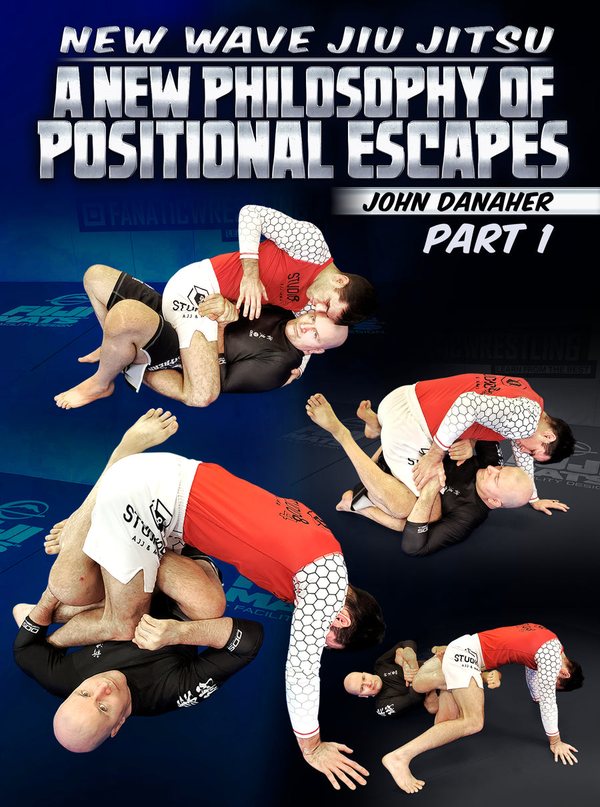 The guillotine, the armbar, the triangle from the front, the kimura, and the heel hook with the leg entanglements around it. Not covered: the rear naked choke, which Danaher says he dealt with in his Positional Escapes course (from the back there is only the switch to the armbar), the arm triangle, D’Arce and anaconda, the straight ankle lock, toe hold, knee bar, omoplata and americana.
Danaher’s Submission Escapes or Garry Tonon’s Exit The System?
Same subject, same school, same $197 list price (checked November 13, 2026). Tonon covers ten submissions and the back in 5 h 04 and ends with seven live rounds. Danaher covers five in 12 h 32 and goes much further into two of them, the guillotine and the heel hook. Caught by many different things: Tonon. Caught by guillotines and leg locks, and you want the reasons: Danaher.
Do I need to play leg locks to use it?
Not for the guillotine or the kimura defence. The armbar and triangle escapes stand on their own, but the counters that follow are leg locks. In the leg volumes Danaher twice shows a plain way out for people who do not want to trade heel hooks.
Is it for white belts?
Danaher names no level. Michael T. (August 2021), a white belt, wrote that some of it was beyond him. Sunil K. (October 2021) thinks he got it too early in his training, though some of the escapes still worked for him in rolls.
Does it work in the gi?
Every demonstration is no-gi. The five submissions exist in the gi too and nothing in the escapes needs a grip on cloth. What you do not get: collar chokes, and anything on how sleeve and collar grips change these positions.
It is 12 hours. Where do I start?
With the submission that catches you most. Each one stands on its own, and the route under What’s inside lists the short part of each that carries the method.
Is there a discount code?
The list price is $197 (checked November 13, 2026). BJJ Fanatics runs sales often, so check the price on the day you buy.
Know what he needs
Caught in the same five submissions, again and again? This course tells you what each one needs, in what order to take it away, and what to attack when it fails.
$197 list on BJJ Fanatics, checked November 13, 2026.