
Home / Garry Tonon / Escapes / Exit The System Review
Garry Tonon’s Exit The System Review
Buy it if you escape one submission and land straight in his next. Get out as early as you can, and come out of every escape attacking.
See Exit The System →No-gi. Who should buy it ↓
- No-gi
- 8 volumes, 5 h 04
- 82 chapters
- 7 live rounds, 22 min
- Released December 2019
Garry Tonon’s Exit The System is a no-gi course on getting out of submissions: armbars, kimuras, guillotines, triangles, arm triangles and leg locks. Most chapters run from the moment before he has it to the moment it is fully locked.
Getting out is only half of it
You rip your arm out of an armbar and his next attack is already on its way. Tonon’s rule for that moment: “anytime you have an opportunity to escape and attack, it’s vital that you do.” So he takes each submission from early to late, and most escapes end on the other man’s legs. Finishing from there is not taught.
$197 list, $88.65 with the Black Friday code we tested on November 23, 2026, for 5 h 04, with 22 minutes of live rounds.
Four stages of getting out
Tonon splits defence into four stages: stop it, escape it, escape it late, and attack from there. First why the last one matters. Then the first three, in his order. Then how to train them.
Tonon shows the round you know in half a minute. One man attacks a triangle. The other pulls his head out and lands in an armbar. He rips his arm out of that, and the first man is already on his legs for a heel hook. Three attacks, and the man who only pulled out never made one. He makes the same point with one heel hook and two ways out.
01 WRONG: caught in his heel hook, you only pull your knee free and stand up away from him. Out, but no attack. RIGHT: from the leg tangle, roll around his legs and come out holding his heel
Tonon calls the first way the bare minimum, and says that sometimes it is all you get. But back away like that, he says, and you have to pass his guard before you can attack at all. The second way you are out, and he is the one defending.
Vol 1 · 8:24 and 9:30Stage one is prevention: the earliest way out is not to be in it, and most chapters start there. For the armbar from closed guard, Tonon lists what the man on the bottom needs: an angle on you, your arm across his body, and his legs high on your shoulders. He has an answer for each. Then he gives one rule for the moment you feel his legs open, whatever he was setting up.
02 In his guard, the moment his legs open and come up, bring your knee up tight to your arm on that side. His leg ends up outside your knee and cannot get over your arm
He calls it knee to elbow, and it comes back in the triangle chapter, because a triangle also needs the legs to open for a moment. Stopping things early has a price, though. Do nothing else, he says, and you dance around a man without ever attacking him.
Vol 1 · 31:41Stage two is the escape. Against good people you will get caught anyway, Tonon says, and then you are here: he has a grip, and there is still room to move. His example is under side control. The man on top takes your wrist and reaches under your elbow for a kimura. Straighten the arm, because he needs it bent. Bridge into him and you can pull the arm back. You are safe, and still pinned. Tonon calls that satisfactory and says you can do better: shrimp until your knee is between his arms, then use your legs.
03 He pins you in side control and holds your wrist, but your knee is already inside his arms: break the grip with your legs, push his arms apart, kick a leg over his neck and lock your legs around his head
It is the choice from the first clip again: arm back and still underneath him, or his head between your legs. The bridge and the shrimp are what get the knee in, and he says they work even when the man’s hands are already locked. In the course this ends as a triangle from the bottom.
Vol 2 · 18:19Stage three: there is no room left. Tonon calls this the late escape and says almost nobody trains it. You spend every round making sure nothing gets locked, so when it does, you have nothing.
The armbar at the top of this page is the one he is known for, and he says so himself. His first question about any submission is what is holding you. Here it is the two legs over you. Take away the one across your body and you can turn. So he has you let your arm go straight on purpose and use that hand to push the leg down. Turn your thumb to the mat, which puts your elbow on the wrong hip for the break, and walk out. The clip stops as you come up. In the course he adds one thing there: grab his far hip. Leave him free, Tonon says, and you are back in the round from the first stop.
The same moment on your legs: he has your heel, his legs are locked around your hip, and Tonon says you have very little time. His order is to break the grip of the top hand, hide your heel, and step over so your feet get in the way of his. Now you could kick free. That is the satisfactory way again. Grab his foot instead and roll.
04 Legs tangled with his: turn onto your belly, put your head to the mat, roll through over your shoulder and come out on your back hugging his heel to your chest, legs still tangled with his
That roll is the last step, and it is the roll from the first clip. Tonon’s point about this position: once the man has lost your heel, he is the one in trouble.
Vol 6 · 11:47In the course both escapes go on into his legs, as most of them do. Tonon shows those attacks there and does not teach them: for the finish he points you to other courses and names none. Our leg lock ranking is where to look for one.
One problem is left, and Tonon raises it in the first ten minutes. You can try an armbar many times in live rounds, but an armbar escape only when somebody catches you. His fix is to start rounds in the bad spot and let your partner get as close to the finish as you can stand before you move. Volume 8 shows seven such rounds, about 22 minutes: from mount, a front headlock, 50-50, an armbar, a triangle, back control and closed guard. They go at about half speed and nobody explains what you are seeing, so you need the earlier volumes to follow them. After one round he tells his partner he was ready to tap to an armbar. His one warning: do this with partners who take your arm to its limit and stop there.
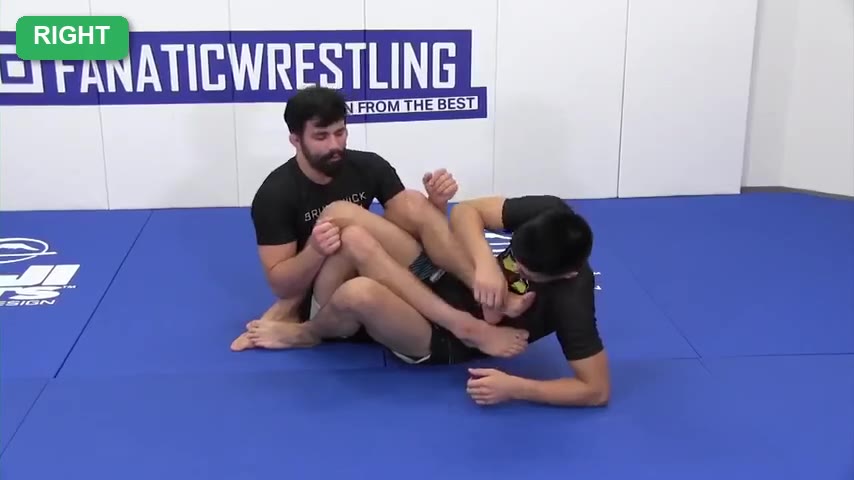 01
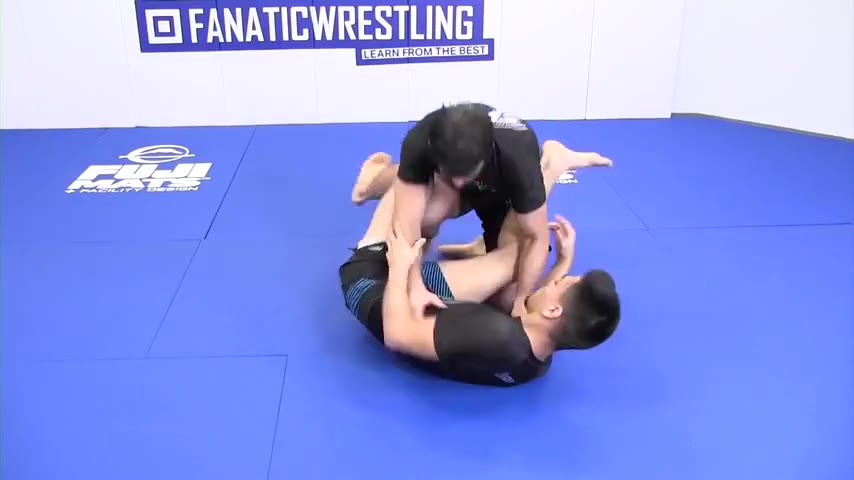 02
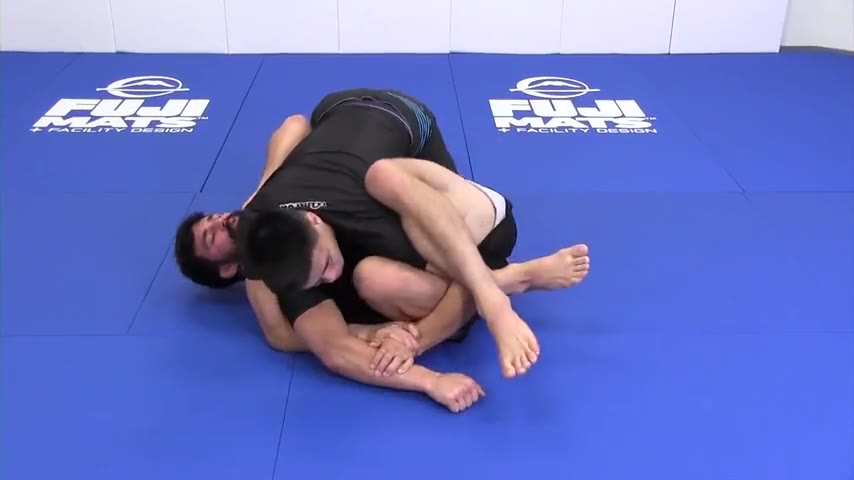 03
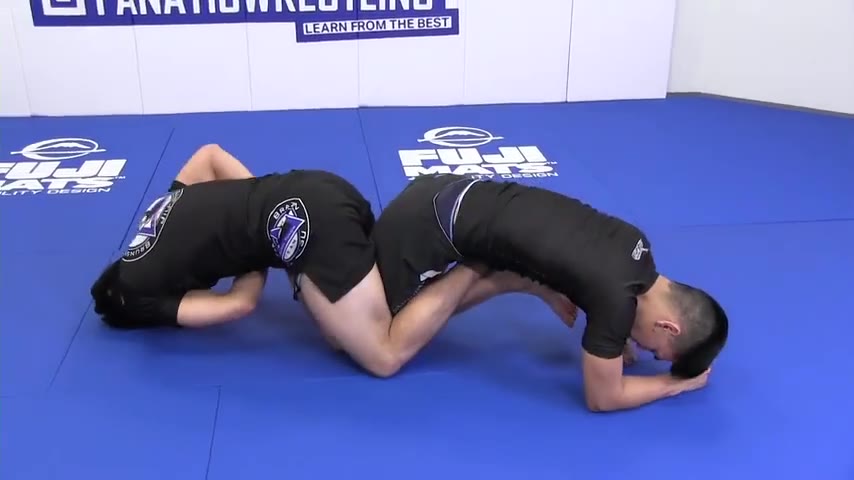 04
How many of these do you do?
Count the ones you already do in a round, not just in drilling. If most are new to you, this course will change what happens after you get caught.
Black Friday code BLACKFRIDAY2026, tested at checkout on November 23, 2026: $88.65 instead of $197. BJJ Fanatics rotates these codes.
Who should buy it
- You escape and get caught againThat is the whole course. Get out, and end the escape in your own attack.
- You tap as soon as it is lockedThe late escapes are what Tonon is known for, and the armbar alone gets 44 minutes.
- You train no-gi with leg lockersNearly an hour on heel hooks, ankle locks, toe holds and knee bars, plus a drill for keeping your legs out of trouble.
- You can’t finish a heel hook yetMost escapes end with you in a heel hook position, and the finish is not taught. You get the position, not the tap. The escapes themselves do not depend on it.
- You are newThe ideas in Volume 1 help at any belt. The late escapes ask you to let your arm go straight on purpose, and for that you need a partner you trust.
- You get stuck under mount and side controlThere are no pin escapes here.
 Lachlan Giles’ Fundamentals of Escapes covers them, and so does Tonon’s own
 Can’t Keep Me Down.
- Gi onlyThere is not one collar choke or gi grip in it, and nearly an hour is leg locks.
- You want the rear naked choke escapeHe leaves the escape from a locked rear naked choke out on purpose, and the back gets eight minutes of hand fighting and getting past the hooks. His later course
 Protect Your Back is about that position.
What buyers and other grapplers say
Kevin C. (November 2023) took the same idea from it that we did: a bad position has to be turned into an attack. Julian A. (November 2022) says the high elbow guillotine escape has saved him many times. NA441 (February 2023) did not watch it start to finish and began with the submission he gets caught in most, which is a good way to use it.
The complaints are mild. NA441 finds the back defence thin. Joseph R. (October 2022) says it is a lot to take in and has to be studied in chunks. Matt M. (June 2024) calls it close to complete, misses a thorough treatment of leg lock defence, and expects to buy  Danaher’s submission escapes as well.
Away from the shop the picture is the same. The longest write-up we know of is a review from December 2019. Its author calls the course short and to the point, with the body triangle as its one weak part. Asked in 2024 whether it still holds up, an owner called it still very relevant. He uses it the way NA441 does, which is the way we would: when one submission keeps catching you, go back to that chapter. Someone else sharpened his turning escape with Tonon’s details, the one in the clip at the top of this page, and then got out of his coach’s armbar.
The criticism is mild there too. The one complaint we came across: some moves are not shown from a second angle, the front headlock escape most of all. It came from someone who still counts this among his favourite instructionals. Where people disagree is whether it suits white belts: see the FAQ.
Worth it? The pros and cons
- One idea carries all eight volumes: get out, then attack. You can remember that in the middle of a round (detail 01)
- Two questions that work on a submission he never covers: what is holding me, and what is he attacking
- Late escapes, the part he says almost nobody trains: two ways out of a locked armbar and how to switch between them, and the locked heel hook (detail 04)
- He says when an escape is weak: the late escape from an inside heel hook, the ones from a locked D’Arce, and his own arm spin once the guillotine is tight
- Seven live rounds from bad starts: the way he says escapes have to be trained
- The counterattacks are shown, not taught. Most escapes end at a heel hook grip, and he says several times that finishing is for other courses
- No pin escapes: mount and side control are only places where a submission starts
- The back gets eight minutes and there is no escape from a locked rear naked choke
- No-gi only
- The live rounds have no commentary, so you see him get out without being told how
- Leg lock defence moves fast: four heel hook positions in 24 minutes
Get out, then attack.
What’s inside: eight volumes, one submission at a time
The ideas first, then one kind of submission per chapter, then live rounds. Tap a volume for what’s in it.
Vol 1 · 1:07:43The ideas, then the armbarwhy escapes matter, out or out and attacking, what holds you, the four stages, armbar prevention, turning escape, stack escape, four more armbars
The first 24 minutes are the ideas, each shown on the mat, and they are the course: getting out versus getting out and attacking (detail 01), the round where one man only pulls out, the two questions to ask about any submission, and the four stages of defence. Then 44 minutes on the armbar, more than any other submission gets. It covers stopping it from inside his guard (detail 02) and from under mount, the turning escape in the clip at the top, the stack escape with your hands locked, and what to do when one fails and you have to switch to the other. It ends with four more kinds of armbar, down to the quick one a man throws up from under your pin.
Vol 2 · 42:01Kimurahis elbow under yours, hiding the hand, guard, side control, turtle, half guard, hand behind the back, single leg
Tonon has two ways to beat a kimura: get your elbow off his, or keep your hand in front of your body. Twelve chapters apply them from guard, side control (detail 03), turtle, half guard and a single leg. When your hand does get behind your back, the answer is to go with it and roll. One thing keeps coming back: a man who holds a kimura is offering you his back, and Tonon takes it.
Vol 3 · 22:54Guillotinelow elbow, high elbow, arm-in, the standing front choke, arm spin, half guard
The shortest volume. What matters is where his elbow is. If it is low, cover his shoulder so he cannot lift his hands, hop over his legs to his side and take a kimura of your own. The high elbow and arm-in versions get their own escapes, and most of them end in that kimura or in a heel hook. Near the end is an escape he knows nobody else in jiu-jitsu uses, the arm spin. It comes with a warning: only as the man grabs your head, never once it is tight.
Vol 4 · 37:47Trianglesprevention, shoulder turn, loose triangle, locked triangle, back triangle, reverse, side and inverted triangles
Prevention repeats the armbar rules, knee to elbow included (detail 02). Against a man who snaps triangles on fast, Tonon turns his shoulder so only the arm is caught and accepts the omoplata that follows: better to give a little of what the man wants than all of it. For the loose triangle he sits up tall, posts a thumb in the hamstring, gets the second hand in and goes to the legs. For the locked one that is not enough, he says: stand up and step over. Then the back triangle, with a grip around the big toe that he points out is legal, and the reverse, side and inverted triangles.
Vol 5 · 27:09Arm triangles and the backfront headlock, D’Arce, anaconda, mounted arm triangle, back control, body triangle
Tonon is plain about this one: once a D’Arce or an anaconda is fully locked, the escapes work less often, so the work is early, in the front headlock, before the arms close. Under a mounted arm triangle he turns toward the man. Turning away gives up your back, and he keeps it for when you are about to go out. The back gets eight minutes: hand fighting, getting past the hooks, and the body triangle. He does not teach an escape from a locked rear naked choke, and says why.
Vol 6 · 35:18Heel hooks and ankle lockshiding the heel, standard ashi, outside ashi, 50-50, inside heel hook, ankle lock
It starts with what he calls the most important habit in heel hook defence: keep your heel hidden against his hip. Then four positions in 24 minutes. The fully locked outside heel hook is detail 04. About the inside heel hook he is honest: once the man has the heel, the late escape is weak, and he compares it to a locked rear naked choke. The last 11 minutes are the straight ankle lock, including a turn he built for men much bigger than him.
Vol 7 · 32:04Toe holds, knee bars, inside positiontoe hold, two-leg toe hold, knee bar, two-leg knee bar, the inside position drill
Ten minutes each on toe holds and knee bars. A toe hold comes on fast. Before his grip is set, turn your foot in. Try that once it is tight, he says, and you break your own leg. Once it is locked, go with the twist and straighten the leg. For knee bars you spin, and it only works if the man does not spin with you. The last 11 minutes are a prevention drill: keep your legs inside his, from guard, half guard and after a failed triangle, and at the end your arms inside his, under side control, mount and north-south.
Vol 8 · 38:50Omoplata and live roundsthree omoplata escapes, seven live rounds, outro
Nine minutes on the omoplata, with three escapes that end on his legs, on his back and in a triangle. Then the seven live rounds described under “You never get to practise it”.
Free sample: BJJ Fanatics has one chapter free on the product page and on YouTube: the escape from the locked triangle in Volume 4 (3:50).
Compare to
- New Wave Jiu Jitsu: A New Philosophy Of Submissions Escapes (John Danaher, $197 list, 8 volumes, 2021): the same subject at the same list price. By its chapter list it goes deeper on fewer submissions: two volumes on the guillotine, one each on the armbar, the triangle and the kimura, and three on heel hooks. It lists nothing on arm triangles, toe holds, knee bars or the omoplata. Read our review. Tonon gets through more in five hours. Leg locks are your main problem: look at Danaher’s first. See it on BJJ Fanatics.
- Fundamentals of Brazilian Jiu Jitsu Escapes Gi & No Gi (Lachlan Giles, $127 list, 8 volumes): the other half of escaping. Its chapters are positions, not submissions: the back, turtle, the front headlock, side control, scarf hold, north-south, knee on belly and mount. Stuck under pins: this one first. For the long version of pin escapes,
 Danaher’s Pin Escapes & Turtle Escapes: Go Further Faster is 10 h 52 in the gi. Read our review.
- Unifying The Systems (Garry Tonon, $197 list, 8 volumes, 2020): the attacking side. Exit The System puts you at the other man’s legs or on his back and stops. This one is about going from one submission to the next when the first one fails: legs to back, kimura to triangle, front headlock to legs. It runs 7 h 54, with no live rounds. Read our review.

List prices on BJJ Fanatics, checked November 13, 2026. Lachlan Giles’ course was on sale that day for $63.50.
Get the next review like this one
New reviews in this format land in your inbox, with the details on video. You also get the free BJJMore email course and the instructional-platform discounts I use myself (worth $46).

BJJMore earns a commission if you buy through these links, at no extra cost to you. Released by BJJ Fanatics in December 2019; reviewed on all eight volumes.
FAQ
Is Exit The System worth it?
Yes, if you escape one submission and land in the next, or tap as soon as something is locked in. It teaches you to get out as early as you can and to come out of the escape attacking, mostly on his legs. It is $197 list for 5 h 04 ($88.65 with the Black Friday code we tested). It has no pin escapes, and it shows the counterattacks without teaching you to finish them.
Is it gi or no-gi?
No-gi. There is not one collar choke or gi grip in the eight volumes, and nearly an hour is leg locks. BJJ Fanatics lists it as no-gi too.
How long is it?
5 hours 4 minutes over eight volumes and 82 chapters. You will see ten hours quoted in places. The eight volumes add up to 5:03:51. About 22 minutes of that is live rounds in Volume 8.
Does it cover mount and side control escapes?
No. Mount and side control appear only as places where a submission starts. For pins, look at Lachlan Giles’ Fundamentals of Escapes, Tonon’s own Can’t Keep Me Down, or Danaher’s Pin Escapes & Turtle Escapes.
Is it good for white belts?
It depends on what catches you. The ideas in Volume 1 help at any belt. The late escapes ask you to let your arm go straight on purpose, so you need a partner you trust. Someone who found little new in the parts he watched still calls it a great resource for newer people, and wishes he had had it as a white belt. A small white belt counts its lesson among his biggest eye-openers: learn to escape first, and later attack from your escapes. We would change the order a little. An escape needs somewhere to land: without a guard you get out and are passed again a second later. So learn half guard first, the easiest guard to get, and escapes after that. Others object for another reason: pin escapes before submission escapes, a must for as long as higher belts are pinning you. For this course that point holds: it has none, so if you spend your rounds stuck under mount and side control, start with a pin escape course.
Does it cover leg locks?
Yes. About 56 minutes on heel hooks, straight ankle locks, toe holds and knee bars, plus an 11 minute drill on keeping your legs and arms inside his. It moves fast. Matt M., a buyer on BJJ Fanatics (June 2024), still missed a thorough treatment of leg lock defence. Danaher’s submission escapes course gives leg locks three of its eight volumes.
Exit The System or Danaher’s submission escapes?
Same subject, same $197 list price. Tonon covers ten submissions and the back in five hours. Danaher’s chapter list goes deeper on five: the guillotine, the armbar, the triangle, the kimura and the heel hook, which gets three volumes. People have asked which of the two to buy since 2021, and the answers keep landing on the same split: Tonon is short and gets to the point, Danaher has more running time and more depth per submission. If you struggle to sit through Danaher, take Tonon. We have reviewed both on every volume. Danaher’s runs 12 h 32 over eight files, 5 h 11 of it on heel hooks and leg entanglements, with no live rounds. Read our review of Danaher’s.
Is there a discount code?
On November 23, 2026 the Black Friday code BLACKFRIDAY2026 took 55% off at checkout: $88.65 instead of $197. BJJ Fanatics rotates its codes and sales, so check the price on the day you buy.
Don’t just get out
You escape one submission and land in his next? This is the plan: stop it early, get out late if you have to, and come out attacking. No-gi, 5 h 04, and you bring your own heel hook.
Black Friday code BLACKFRIDAY2026, tested at checkout on November 23, 2026: $88.65 instead of $197. BJJ Fanatics rotates these codes.