
Home / Reviews / John Danaher / Danaher Positional Escapes Review
John Danaher Positional Escapes Review: New Wave Jiu Jitsu
Buy it if you get stuck under mount, under side control or in turtle, and even on a good day you only get back to guard. Danaher shows the one move that decides each escape, and how to come out on top or on his legs.
See Positional Escapes on BJJ Fanatics →No-gi course. Who should buy it ↓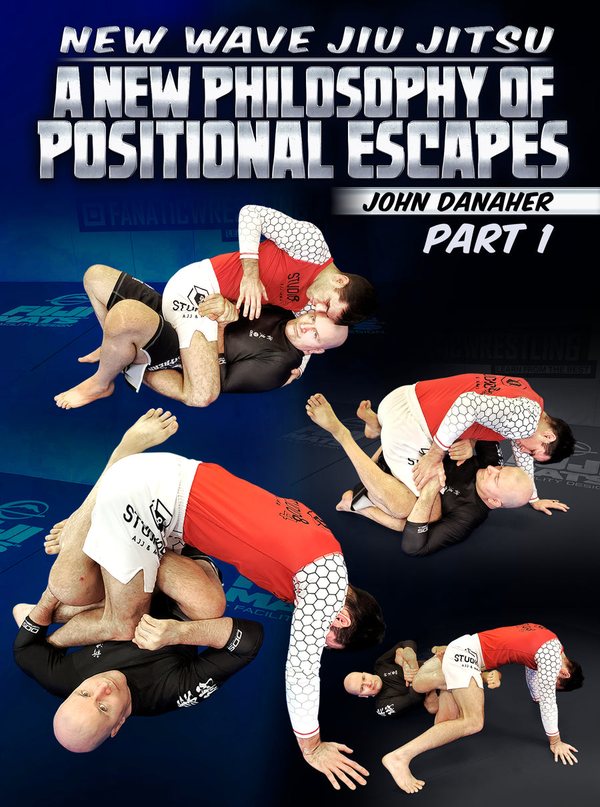
- No-gi
- 8 volumes, 9 h 55
- 6 positions
- No live rounds
- Released 2021
A New Philosophy Of Positional Escapes is John Danaher’s no-gi course on getting out of pins: mount, the back, knee on belly, side control, north-south and turtle. Danaher treats them all as one problem, with one move that decides each escape.
Yes, if you train no-gi and want more than your guard back
He is sitting on your chest. You bridge and shrimp, and on a good day you are back in guard. This course keeps going: Danaher names the one move that gets you out of each pin, then goes for the man’s legs or his arm while he is still trying to hold you. It is clear and well ordered, and it is long and nearly all talking. Put him in guard, Danaher says, and no one even notices. “You put them in a heel hook, everybody notices.” (Vol 8 · 29:34)
$197 list (checked November 8, 2026), about $20 an hour. No-gi, no live rounds, and most of the escapes end in a leg entanglement: the course takes you there and leaves the finish to other parts of his series.
See Positional Escapes on BJJ Fanatics →Get out, then go after him
Six positions, in the order the course takes them: mount, the back, knee on belly, side control, north-south, turtle. Danaher’s picture of a pin is the same every time. It is not the man’s weight that holds you. It is the wedges he has put round your head, shoulders and hips, and you get out by working your own elbows and knees inside them. In each pin one move decides the escape. For each pin we show that move first, then what Danaher does when the man shuts it down. Last comes the attack: when the pin breaks, the man is still busy trying to keep it, and that leaves his legs or his arm open.
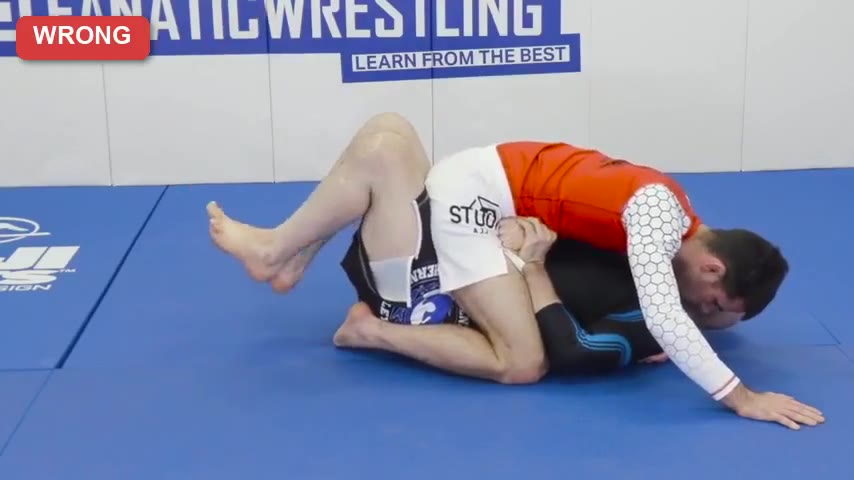
Danaher starts with mount because so many people fear it. Elbows in first, so the man cannot get under your arms and stretch you out. Then, without a gi, not the elbow escape most of us learned first but the kipping escape, a sharp heave of the hips and both legs together, because it is the shortest step from defending to attacking. The move that decides mount, Danaher says, is a knee inside the man’s knee: guard needs two knees in, his leg needs one. The work is against his feet, Danaher says, not his weight. Bring both knees up behind his tailbone and kip with your feet together. Done right, he does not fall back into your guard. He tips forward over your folded legs.
01 WRONG: mounted, kicking with your feet apart, he does not move. RIGHT: feet together and both knees up behind his tailbone, and the kip tips him forward onto his hands
Short, fast pulses, Danaher says. Long heavy swings do less.
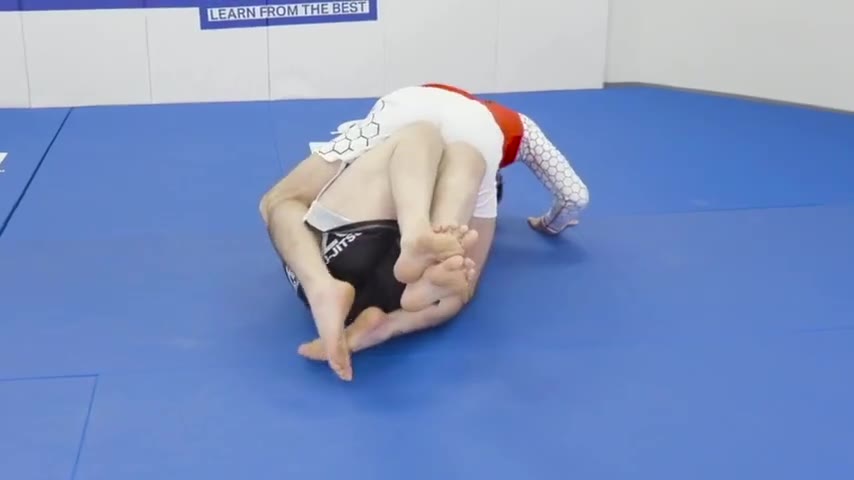
Vol 2 · 12:5302 Mounted with his feet tucked under you: kip your hips up and fold your knees in under him; he tips over onto your legs instead of back into your guard
Danaher’s warning: done well this works without effort, done a little wrong it does not work at all. Even Garry Tonon needed months, Danaher says.
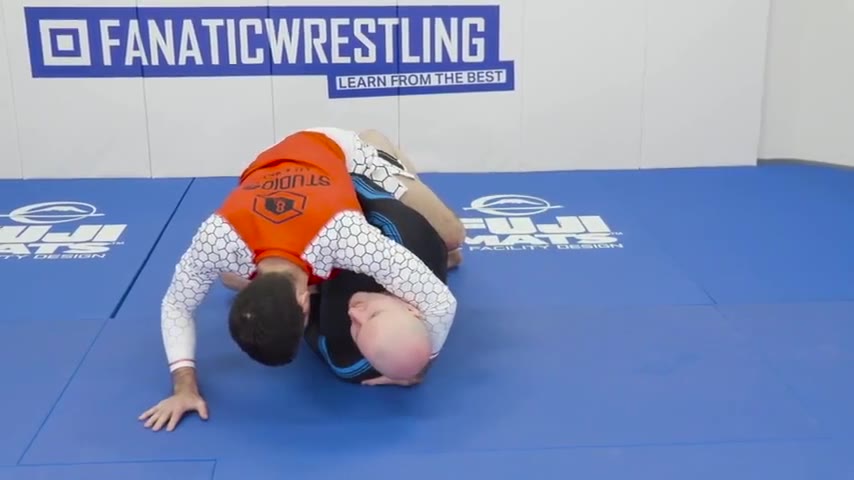
Vol 2 · 16:53Hit that kip on someone a couple of times and he learns the answer: he gets his weight back to the middle before you can kick. Danaher’s reply is the old rule of going with a push: when he pushes back, take him further than he meant to go. You see it in his hands. He posts on one side, then has to post on the other, and that is when your legs come up and a knee slides in between you.
03 With him on top of you: make him post a hand on one side, then on the other, then kick your legs up and slide a knee in between you; he ends up leaning over your knee
There is also a kip over your head, where he has no side to jump off to. Danaher would keep that one if he could keep only one. It is also the hardest, so start sideways.
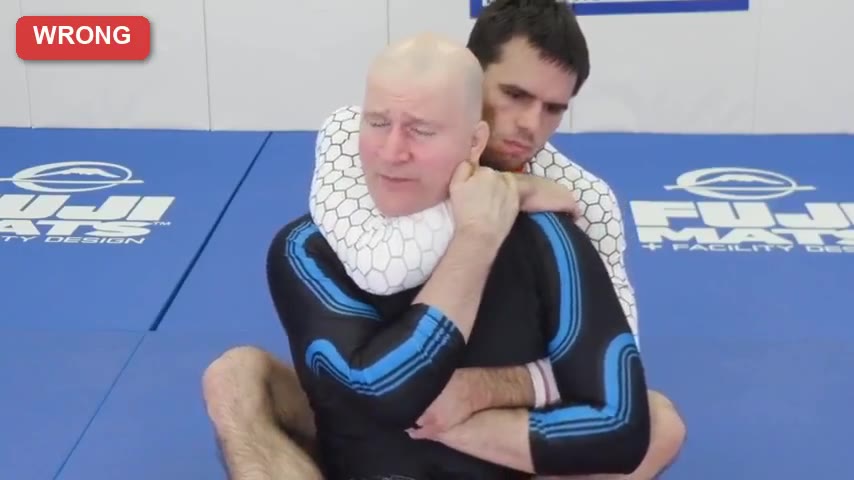
Vol 2 · 28:23Next the back, where he holds you with his legs and his arms at once: two fights, his hooks and his arms. The move that decides the back is your elbow on the mat: tilt to one side, get your head forward past his, point your knee away from his hook and step over it until the elbow is down. From there he cannot strangle you, and when he scrambles to come on top he climbs onto your legs. But all of that is the second fight. The first is his choking hand, because you can beat the hooks and still be strangled. Most of us grab the wrist. It does not stop the hand, Danaher says. The hand has to disappear.
04 WRONG: back taken, you hold his wrist with one hand and his arm still slides up around your neck. RIGHT: put your hand over the back of his hand and cover it with both hands low on your belly, so his hand disappears under yours and never reaches your neck
Hands first, Danaher says. Get everything else right and lose this, and you still get strangled.
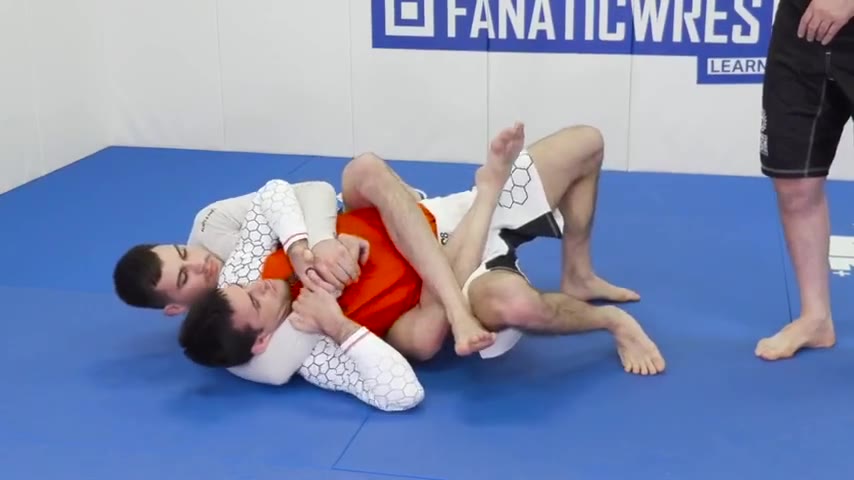
Vol 3 · 6:08Against hooks you win by clearing his bottom foot. A body triangle takes that fight away, because one leg now guards the other. That is why people who escape any normal back control get stuck here. The old foot lock on the crossed feet is out: tried in EBI, Danaher says, it never came close and often got the escaper strangled. The rule instead: never fight the strong triangle. Work your knees through, one at a time, until his legs are in their weakest crossing. Then pull the top leg off by hand and slide out to your side. If his legs are too good for that, break the other connection, his arms round your chest, and roll hard with him.
05 Body triangle from behind: pommel his crossed legs into the weakest triangle, pull his top leg off with your hand so his legs split, and slide out to your side; when he comes up on top, he lands on your legs
Once the elbow touches the mat, Danaher says, it is time to attack.
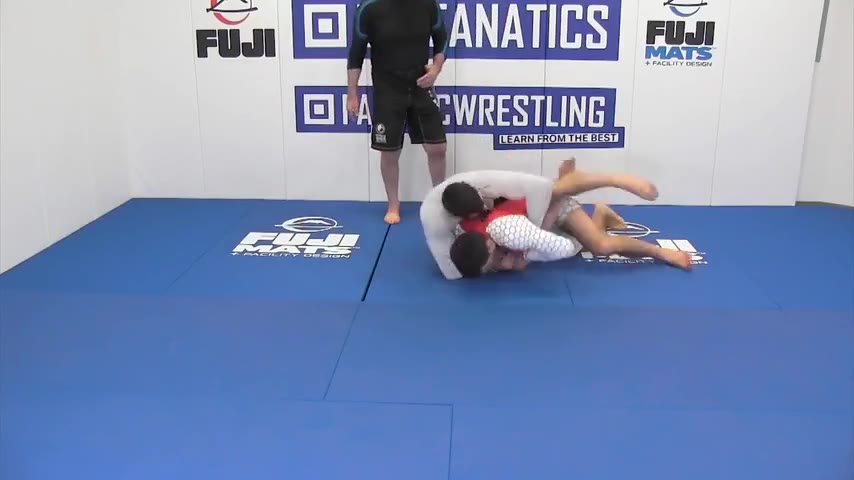
Vol 3 · 48:5806 He has your back on the mat: roll hard with him and come up on top, kneeling between his legs
This one ends even: on top, between his legs, with no attack. Danaher calls it one of his team’s most successful moves in EBI competition.
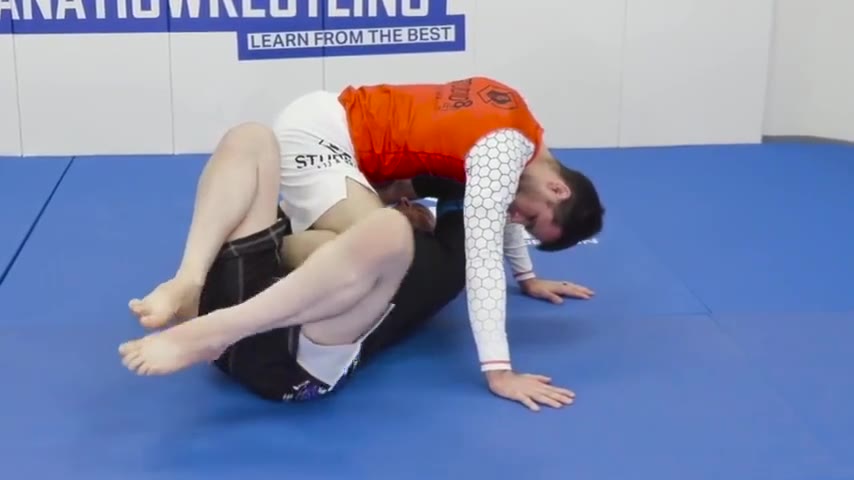
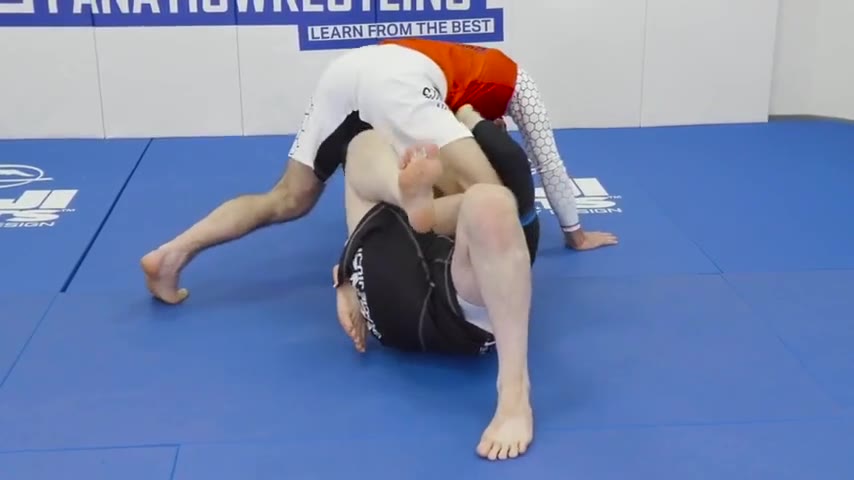
Vol 3 · 1:12:47Now he is off your chest and up on one knee. A light, loose pin, Danaher says, built for a man who wants to keep moving: there is space between his chest and yours, and the switch from defending to attacking is faster than from mount or the back. Danaher’s two escapes both go straight for a leg. In the first, the work happens before the legs move: you turn in and make him take a step, until he is bent over you on both hands. Then your legs swing up and through under him. In the second you stay tight: a small bump takes his knee off your belly, you turn in on your side, and your arm goes round his leg.
07 He is bent over you on both hands: swing your legs up and through under him; you end with your feet crossed round his leg while he stays stuck on his hands
Vol 4 · 6:4808 Knee on belly: bump his knee off your belly, turn in on your side and wrap your arm round his near leg
A loose pin, Danaher says, becomes the man’s own downfall: the space he leaves is your way in.
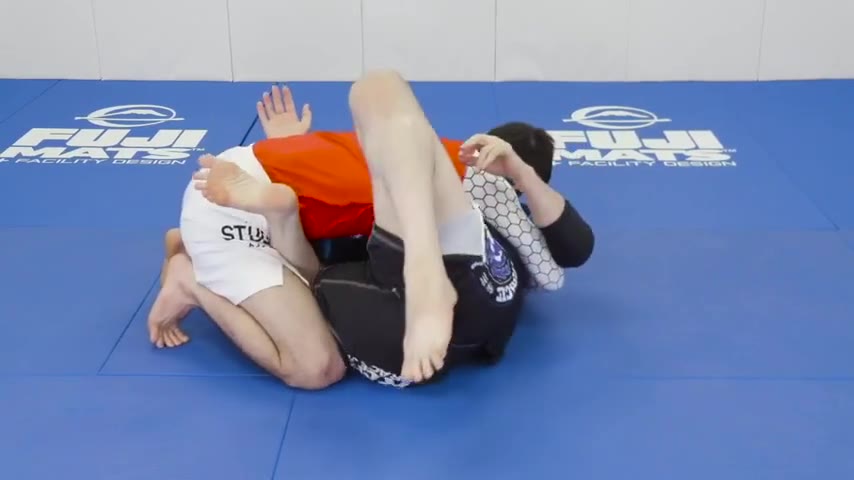
Vol 4 · 19:49Mount, the back and knee on belly are held with the legs, so you come out onto his legs. Side control is held with the arms, and the rule changes: go for his arm or his neck first, and when he pulls away he has to leave his legs behind. It gets three and a half hours, more than a third of the course. The escape itself is the plain elbow escape, which Danaher calls the king of side control, and the move that decides it is your near knee into his hip: elbow inside, foot higher than your knee, head in front of his. What is new is where you stop. Not at guard. One step further, with your legs over his back and shoulders so he is caught in them. That is the clamp, and Danaher says it is no harder to reach than guard.
09 Side control: swing your near leg up over his back to his hips, then kick your other leg up and bring it down across his shoulders; he is caught in your legs, not just back in your guard
From here Danaher’s first attack is the triangle.
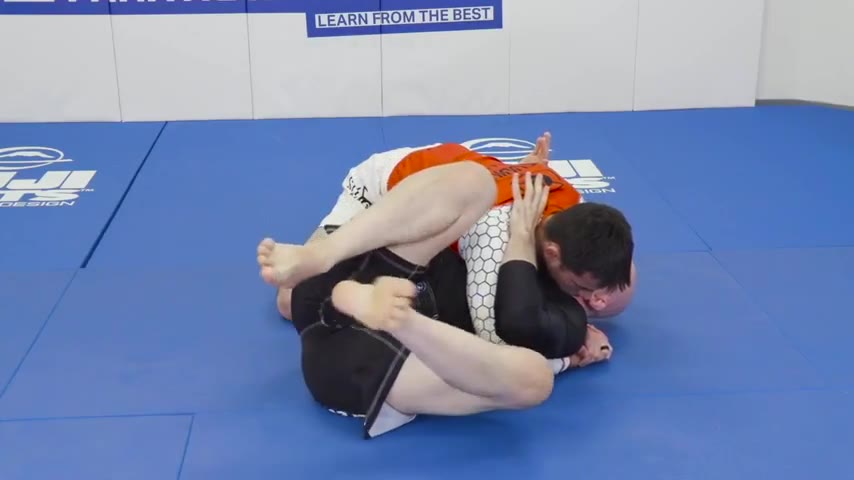
Vol 4 · 37:17The clamp starts with your knee into his hip. A good top player knows that, and leaves no room for it. Here the kip from mount comes back, with one change, Danaher says: feet apart this time, and a thumb on his neck so his head cannot follow you. Curl your knees to your chest and turn your hips up onto your side under him. Now your legs have room to come up and over him.
10 Side control with his head by yours: curl your knees to your chest, turn your hips up onto your side under him, then swing one leg high and bring your other shin across his upper back
Danaher says his students use this all the time. The other fix is to shrimp the opposite way, knees away from the man.
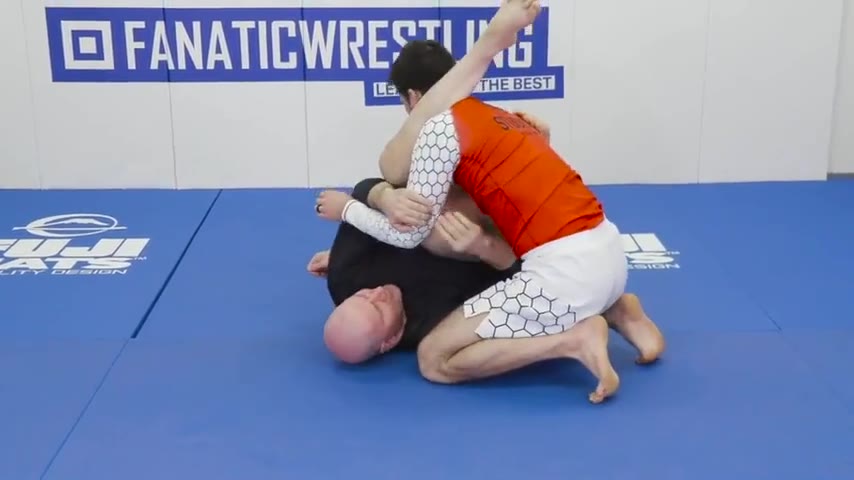
Vol 5 · 3:58Some days the knee never reaches his hip, kip or no kip. Danaher’s backup goes in higher, at his armpit: the high leg escape. Your head has to get inside his crossface first. With his shoulder on your jaw, this escape does not exist. Then swing your legs up over his head for an armbar. Danaher is honest about that armbar: it is not a strong one. It is there to make the man pull away, and when he does, you are already on his legs.
11 Side control: throw your legs up over his head for the armbar; when he stands up to pull the arm out, one of your legs is already inside his legs
No pause between the two, Danaher says: he pulls out and you go straight to the legs.
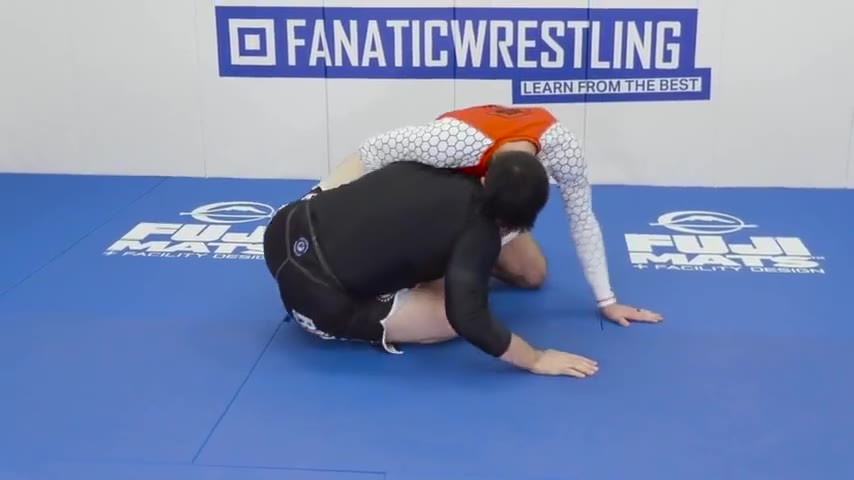
Vol 5 · 56:18Now there is little room at the hip for a knee and no arm left to attack: the elbow escape gets very hard and the high leg escape is useless. Danaher goes to the old one, the knee escape: underhook, head inside, up to your knees. The ending is new. You do not come up for the takedown. You circle out, catch his near leg and sit back under him with it.
12 On your knees with him draped over your back: circle out, catch his near leg and sit back underneath him; you land on your back holding his leg while he is left crouching over you
Danaher calls the knee escape one of the strongest and most traditional ways out of side control, and adds the ending on the legs.
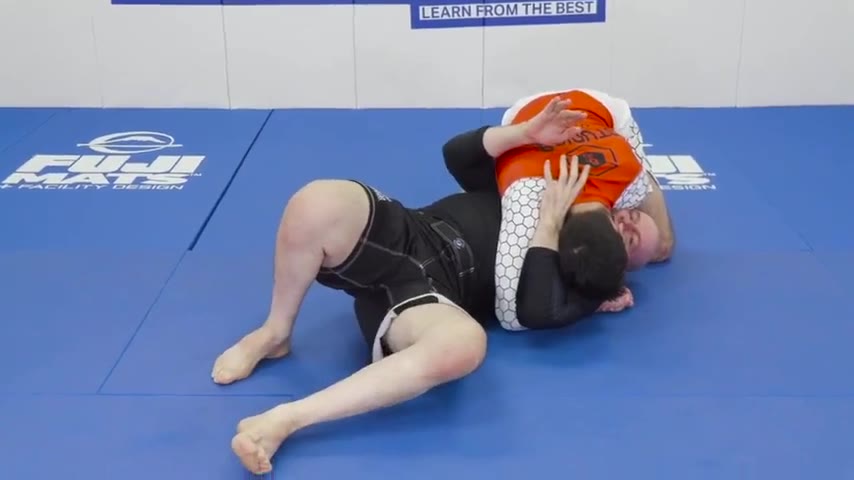
Vol 5 · 1:20:00Everything so far turns toward the man. There will be a day, Danaher says, when his crossface is so heavy that you cannot. Then you turn the other way, the way he is already pushing you. Most people never try it for fear of giving up their back. You thread an arm through under him, walk your legs round, and come out behind his arm.
13 Side control with a crossface you cannot turn into: with your arm already through under him, walk your legs round, then corkscrew your shoulder up to the ceiling and come out behind him with your chest on his upper arm
A backup, Danaher says, not a first choice. That stays the elbow escape.
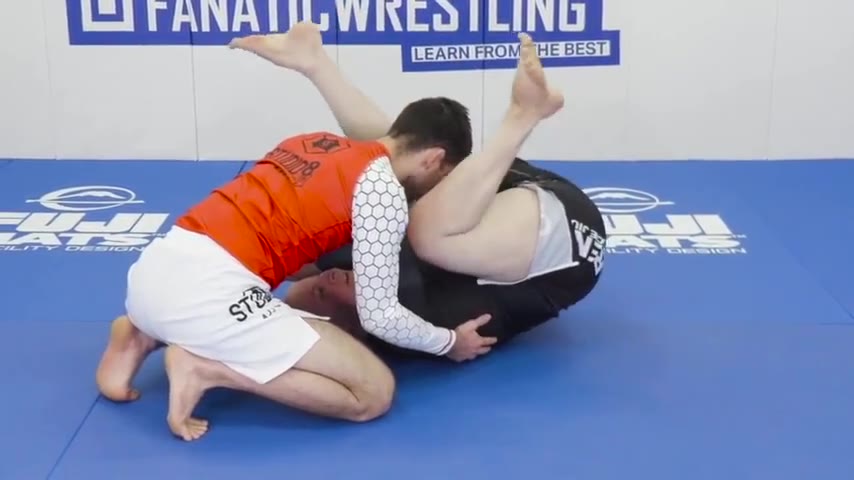
Vol 6 · 32:40North-south. Students tell Danaher it is the one pin they cannot get out of, and Danaher’s answer is that they treat it as side control. The man’s hips are above your shoulders now, so there is no hip to put a knee into. So the move that decides it moves to the front: the knee goes in at his collarbones, Danaher says, not at his hip. The escape is the high leg again, this time as the first choice: one leg swings high over his head, and you turn onto your side.
14 North-south: roll back onto your shoulders, swing one leg high over his head so it hooks over his shoulder, then turn onto your side toward him with that leg still between you
From there Danaher goes for the arm, and for the legs when the man pulls it out.
Vol 6 · 1:11:40Turtle is not a pin, Danaher says, but treat it as one: the man is a step away from your back. Here the escape depends on his grip. The grip to fear is the seat belt, with one arm already next to your neck. Thumb inside his wrist first. Then sit through and roll him past you until your elbow is on the mat. It is the same move that decides the back, Danaher says: elbow down, no strangle, and when he comes up on top he runs onto your legs. If his arm is deep round your waist instead, you trap his wrist against your ribs, turn your hips toward him and throw him over the front corner. The clip at the top of this page shows that throw: hips toward him, over the front corner, up on top.
Six positions, and the same two questions each time: which one move gets me out, and what has he left open while he tries to hold on?
 01
 02
 03
 04
 05
 06
 07
 08
 09
 10
 11
 12
 13
 14
How many of these do you do?
Count the ones you already do when you are stuck underneath, not just in drilling. If you get out but always end up back in guard, the attack at the end of most escapes is what this course adds.
$197 list on BJJ Fanatics, checked November 8, 2026.
Who should buy it
Which one are you?
- You get out, but only ever back to guardMost escapes here end on his legs or his arm, and Danaher’s case is that it costs you no more.
- Body triangles shut you down52 minutes on that alone, after the hand fight that keeps you from being strangled.
- You train no-gi and play some leg locksYou will use nearly every ending in the course.
- You do not leg lockThe escapes stand on their own and a few have a plain ending. Most of the follow-ups will pass you by.
- You are a white beltDanaher names no level, and the kip is all or nothing at first.
- You train in the giDanaher has a gi course on the same pins, in the table below.
- You want to see it in live roundsThere are none here. One course in the table below has them.
- You get submitted more than pinnedThat is the sister course, in the table below.
Which pin escape course for whom
- You train in the giPin Escapes & Turtle Escapes: Go Further Faster (John Danaher, $197 list, 8 volumes, 10 h 52, gi)The same picture of a pin and several of the same escapes, with more time on mount and solo drills. The escapes end in guard or on top, with no leg attack after. Read our review.
- You train no-gi and want mount, side control, the back and turtle in one course, with an attack at the endNew Wave: Positional Escapes (John Danaher, $197 list, 8 volumes, 9 h 55, no-gi)This course.
- You want live rounds and the scarf hold, and $349 is fineThe Pillars Of Defense: Pin Escapes (Gordon Ryan, $349 list, 9 volumes, 8 h 44, no-gi)Also built on escaping into an attack, with five live rolls and Gordon’s voice-over. No back and no turtle. Read our review.
- You get caught in submissions more than you get pinnedNew Wave: Submission Escapes (John Danaher, $197 list, 8 volumes, 12 h 32, no-gi)The other half: what he attacks, not where he holds you. Read our review.

Torn between Gordon’s course and Danaher’s older one? We put those two side by side in Gordon Ryan vs Danaher: pin escapes. List prices on BJJ Fanatics, checked November 8 and 13, 2026.
What other grapplers say, and how we read it
What people praise is what the course is built around: the mount escape, and the attack at the end. One grappler no longer fears mount because of the kipping escape, and uses it to get to leg attacks. Another likes the course for exactly that: escapes that lead into submissions.
The warnings are the same thing seen from the other side. One is that it is leg lock heavy, and that you should only go this way with a leg lock base and mostly no-gi training. No-gi, yes. On the leg locks we are less strict: the escapes stand on their own and a few have a plain ending, but without leg locks most of the follow-ups will pass you by.
The sharper complaint came from someone partway through the course, who felt the focus was more on the counter attacks than on the escapes, and missed help for when things go wrong: what to do once the man is already under your arms in mount, how to win the head fight on the back. The reply he got: it is counter heavy, and that is the point. On the arms, it pointed to the kip with one arm or none.
Having gone through all eight volumes, we think both are right. The escapes get real detail, the kip and the side elbow escape most of all. But the man who is already under your arms in mount gets a sentence or two, not a chapter.
Worth it? The pros and cons
- One picture for every pin: his wedges, your elbows and knees inside them, and one move that decides each escape
- Most escapes end in an attack: his legs out of mount, the back and knee on belly, his arm or neck and then his legs out of side control and north-south
- 52 minutes on the body triangle, and before it the hand fight that stops the strangle from the back
- A last volume of 31 minutes that sums the whole method up in five steps
 Most of the attacks are leg entanglements, and the finishing details are left to other parts of his series. If you want escapes with no leg attack after them, Danaher’s older Pin Escapes & Turtle Escapes ends in guard or on top, but it is taught in the gi
 Nearly all of it is talking and there are no live rounds. Gordon Ryan’s Pin Escapes has five live rolls with his voice-over
 No front headlock and no scarf hold. Lachlan Giles’s Fundamentals of BJJ Escapes has a volume on the front headlock
- Mount gets 1 h 13 and knee on belly 21 minutes. Pin Escapes & Turtle Escapes spends 2 h 09 on mount
What’s inside the eight volumes
Eight volumes, all no-gi. Side control takes 3 h 32, the ideas 1 h 38, the back 1 h 25, mount 1 h 13, turtle 1 h 06, north-south 40 minutes and knee on belly 21. Tap a volume for what’s in it.
This route is about two hours and gives you the method and the main escape for each pin:
- Volume 8, all 31 minutes. The five steps. Start here.
- Volume 1 from 22:32, 5 minutes. What a pin is, and why his weight is not the problem.
- Volume 2 from 5:15, 20 minutes. The sideways kip from mount.
- Volume 3 from 1:03, 18 minutes. Hands, head, elbow: the way off the back.
- Volume 4 from 33:06, 10 minutes. The elbow escape to the clamp.
- Volume 5 from 49:00, 12 minutes. The high leg escape.
- Volume 6 from 57:03, 5 minutes, then from 1:08:32, 4 minutes. Why north-south is different, and the way out.
- Volume 7 from 40:46, 11 minutes. The seat belt in turtle.
What can wait: Volume 4 from 1:06:59 to the end lists the ways he can hold side control. No escapes in it.
Vol 1 · 1:06:09The ideawhy guard is not enough, what a pin is, the five pins
It is an hour of talking. The idea of the course: getting back to guard is good enough, and good enough is not the best you can do. The part to watch starts at 25:29: with Danaher’s full weight on his chest and nothing tied up, a partner still moves out and gets back to guard. The main point is made several times over.
Vol 2 · 1:13:20Mountthree kipping escapes, two elbow escapes
It teaches three kipping escapes in the order Danaher wants you to learn them: sideways, then the one for when the man pushes back, then overhead. Then comes the elbow escape in two versions, with a rule for which. If the man is already mounted, your knee goes inside his. If he is still stepping over, turn with him and catch his foot.
Vol 3 · 1:25:09The backhands, head, elbow, then 52 minutes on the body triangle
The first twelve minutes are the hand fight, the course’s answer to the choke from the back: it stops the strangle before it locks, and there is no chapter on a choke that is already on. The body triangle starts at 32:42. Danaher has a hip replacement and leaves these escapes to two partners, talking them through. Of the four answers only the first ends on his legs. The other three end on top or in his guard.
Vol 4 · 1:20:30Knee on belly, then side controltwo leg entries, the elbow escape, the clamp
The first twenty minutes are knee on belly. Then side control begins with the elbow escape to the clamp. Not in the stops above: how to move his head to the side of his hips for one second so your knee can enter, and what a crossface and a reverse crossface each take away from you.
Vol 5 · 1:35:20Side control, part twokip and reverse shrimp, the clamp’s attacks, high leg, knee escape
It opens with two fixes for an elbow escape that gets stuck, then the clamp’s attacks: the triangle first, then the armbar and the kimura, then the legs when he pulls out. After the high leg escape comes a fast arm lock that needs no leg over his head, which Danaher tells you to use with caution on your friends. The knee escape closes the volume. Danaher’s aim, said here: people should be afraid to pin you.
Vol 6 · 1:36:35Side control, part three, and north-southankle trap, turning away, sit-outs, the high leg
It starts with an ankle trap for when the man stops your single leg, with a plain sweep for people who will not go upside down under anyone. Then come two escapes that turn away from him. Of the first, Danaher says himself that it breaks the idea of the course: you end apart, with no direct attack. North-south starts at 57:03, with an answer for each way the man can place his arms.
Vol 7 · 1:05:53Turtlewaist grip, body lock, seat belt, hand fighting
Each grip gets its own answer: the throw from the top of this page against a deep waist grip, a shoulder roll against a shallow one, a pull to guard against a body lock, the sit through against the seat belt. The last ten minutes are hand fighting, with plain advice for when you have split his hands: stand up.
Vol 8 · 31:38The summaryfive steps, then your choice
Five steps hold for every pin: pull your elbows and knees in, tip him off balance, get one frame in, win the one move that decides the escape, then get more of your limbs inside than he has round you. Then comes the choice: guard, which Danaher and his students still take quite often, or the attack.

BJJMore earns a commission if you buy through these links, at no extra cost to you. Released by BJJ Fanatics in 2021; reviewed on all eight volumes.
Get the next review like this one
New reviews in this format land in your inbox, with the details on video. You also get the free BJJMore email course and the instructional-platform discounts I use myself (worth $46).
FAQ
Is Danaher’s Positional Escapes worth it?
Yes, if you train no-gi and getting back to guard is not enough for you. You get the move that decides each escape and an attack for the moment the pin breaks. It is long, nearly all talking, and most of the attacks go to the legs.
Do I need to know leg locks?
To get out, no. To use the endings, yes. Most escapes finish in a leg entanglement, and Danaher says more than once that the finishing details belong to other parts of his series. A few escapes have a plain ending: a sweep in place of going under the man, back to guard from north-south, standing up from turtle.
Does it work in the gi?
Every demonstration is no-gi, and the gi comes up only as something the man on top could grip. We have heard it argued that the kip works in the gi too, only harder: more friction, and collar strangles to think about. The bigger catch: the heel hooks at the end are banned in most gi rule sets. For the gi, Danaher’s Pin Escapes & Turtle Escapes is the course.
Positional Escapes or Pin Escapes & Turtle Escapes?
Same picture of a pin, and several of the same escapes. The older course is in the gi, spends more time on mount, and its escapes end in guard or on top, with no leg attack after. This one is no-gi and adds the kip, the body triangle, the clamp and an attack after most escapes.
Danaher or Gordon Ryan’s Pin Escapes?
Gordon’s course is $349 list (checked November 13, 2026), has five live rolls with his voice-over and covers the scarf hold, but has no back and no turtle. Someone who knows both series put the difference this way: New Wave is the more curated list of moves and the easier one to take in, Gordon goes deeper on specific problems.
Does it cover the rear naked choke?
Not by that name. The first twelve minutes of Volume 3 are the hand fight that stops the strangle from the back before it locks, and every back escape starts from it. There is nothing on a choke that is already locked in.
Is it for white belts?
Danaher names no level. He warns that the kip is all or nothing at first. You will hear both that it is not meant for beginners and, from a grappler who trains only no-gi, that it is your whole first year. We land in between, which is why we put white belts under Maybe: the escapes stand on their own, but most of the endings are leg entanglements, and you first need a guard to escape to.
It is almost ten hours. Where do I start?
With Volume 8, the 31-minute summary. Then go to the pin you are stuck under most. Each one stands on its own, and the route under What’s inside lists the short part of each.
What does it cost?
The list price is $197 (checked November 8, 2026). BJJ Fanatics runs sales often, so check the price on the day you buy.
Stop settling for guard
Stuck under the same pins, and back in guard on your best day? This course gives you the move that decides each escape, and what to attack the moment the pin breaks.
$197 list on BJJ Fanatics, checked November 8, 2026.