
Home / Daniel Schuardt / Ankle locks / The Mussolini Lock Review
Daniel Schuardt’s The Mussolini Lock: 50/50 Is Broken Review
Buy it if 50/50 is where you get stuck: one grip on his shin that goes with him when he sits up to get out, and a next move for every way he fights it.
See The Mussolini Lock →No-gi, 50/50. Who should buy it ↓
The Mussolini Lock: 50/50 Is Broken is Daniel Schuardt’s course on one lock from one position: a cross ankle lock from 50/50, held with a grip that twists the shin instead of bending the ankle. Schuardt, a black belt under Lachlan Giles, used it on his way to bronze at ADCC 2026 and filmed these 2 hours 29 minutes about a week later.
Yes, if 50/50 is where you get stuck
You are in 50/50. His feet are crossed, his hands are on yours, and the moment you wrap his ankle he turns to his other hip. Schuardt’s answer is one grip on the shin. It does not need his feet split and it follows him: “you can track somebody with the Mussolini lock regardless of what side they’re on” (Vol 2 · 19:48). Every defence opens your next attack.
$99 list, $44.55 with the Black Friday code BLACKFRIDAY2026 we tested on November 23, 2026, for 2 h 29. No live rounds, one short gi chapter, and every rep is on a much smaller partner.
Prefer to watch? The 4‑minute video review
 4:25
The ADCC finish, the grip, the four ways he gets out and Schuardt’s answer to each, and who the course is for, in his own words from the course.
The roll, stop by stop
Schuardt: “We’re not trying to break the ankle. We’re trying to break the shin.” (Vol 2 · 13:39) The stops below run in the order of a roll, not in the order of the volumes.
- 1You can’t get to 50/50 yetfour ways in (Vol 1)
- 2His feet stay crossedthe bar (Vol 2)
- 3You have his leg wrappedthe grip (Vol 2)
- 4He turns away and comes upsame grip, leg over (Vol 1, Vol 2)
- 5He fights your handyour leg holds his arms off (Vol 3)
- 6He stands up on the footbring him back down (Vol 3)
- 7He turns his heel awayhis heel, his back or his knee (Vol 3)
Nothing in this course works until your legs are around his, and Schuardt says so in his overview. Twenty minutes of volume 1 are ways in: from K guard, from closed guard when he stands up to open it, from De La Riva when he posts a hand, and off his own ankle lock when he gets to your foot first.
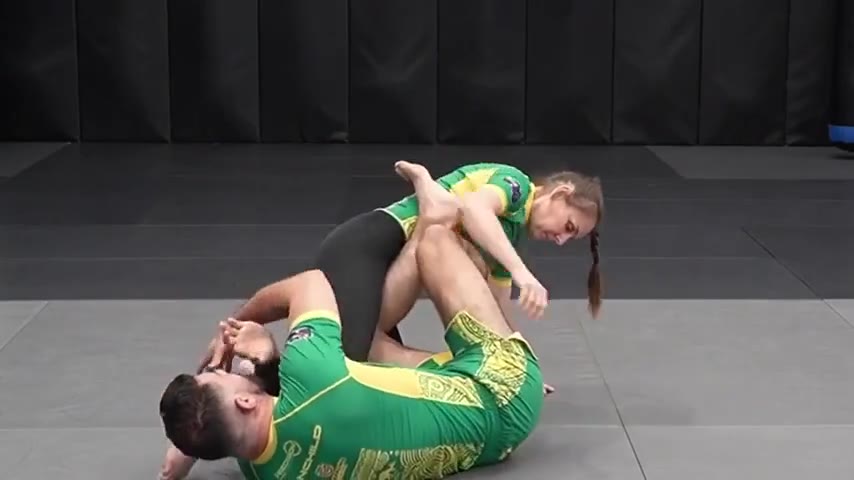
1 He kneels in your guard: turn under him, swing your leg over his, and you both land in 50/50
If his knee slips out on the way, Schuardt keeps his hold behind the ankle, turns his chest across to put the knee back on the mat between his thighs, and crosses his feet again.
Vol 1 · 7:28Now you are in 50/50, and so is he. The usual plan starts with splitting his feet while he tries to split yours, then climbing to a better leg position, and a good opponent spins back to 50/50 so you start again. Schuardt describes gym rounds with Lachlan Giles where they spun like that for twenty minutes. He learned the plan in Giles’ camp and still calls it good. His shortcut is to leave the feet alone. Wrap the leg straight away, bar it, straighten your legs and slide the grip down into place. If the feet stay crossed, he says, it does not matter.
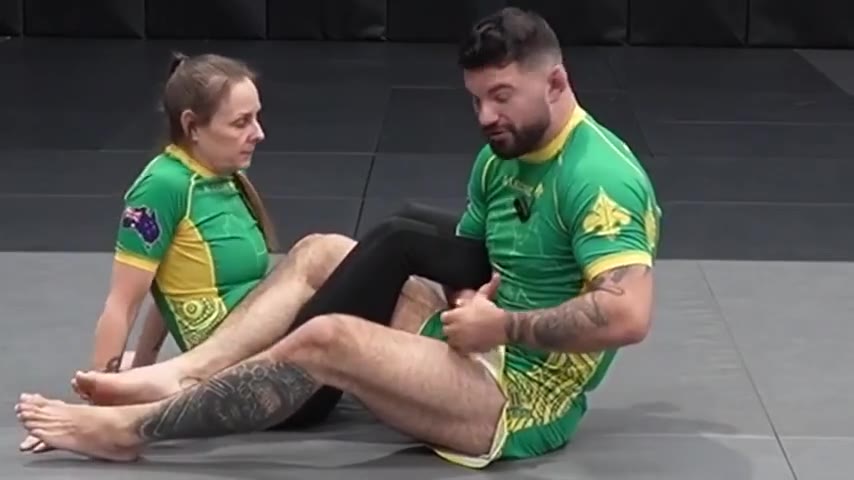
2 Seated in 50/50: forearm under his knee, hold your own leg, and his leg ends up straight across your chest
Schuardt calls this the bar, a word he believes comes from college wrestling. With your legs straightened the other man has a hard time turning in toward you, and you can push through until the grip sits where you want it.
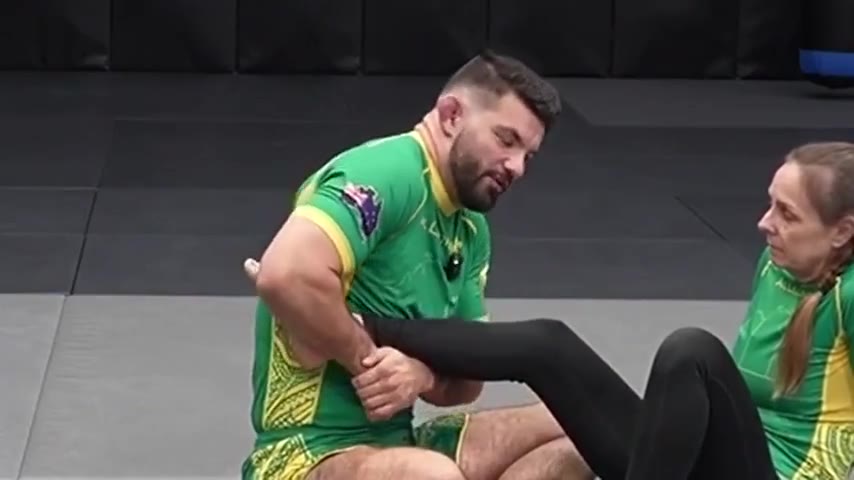
Vol 2 · 37:28This is the lock. Most ankle locks pull the foot low and arch back on the ankle. Schuardt goes the other way: hand over hand until the bony edge of his wrist sits in the hollow between the shin bone and the Achilles, the heel up on his ribs, and the second hand tucked behind his own elbow. Not elbow deep. That, he says, is the version for strong people. This one he says still works when you get it half right.
3a Wrist just above his heel, heel to your ribs, second hand behind your elbow, then turn your shoulders across his shin
Schuardt shows it seated first, with his legs holding nothing, to make one point: the pressure comes from the twist. Elbow down, hips and shoulders turning across the centre line.
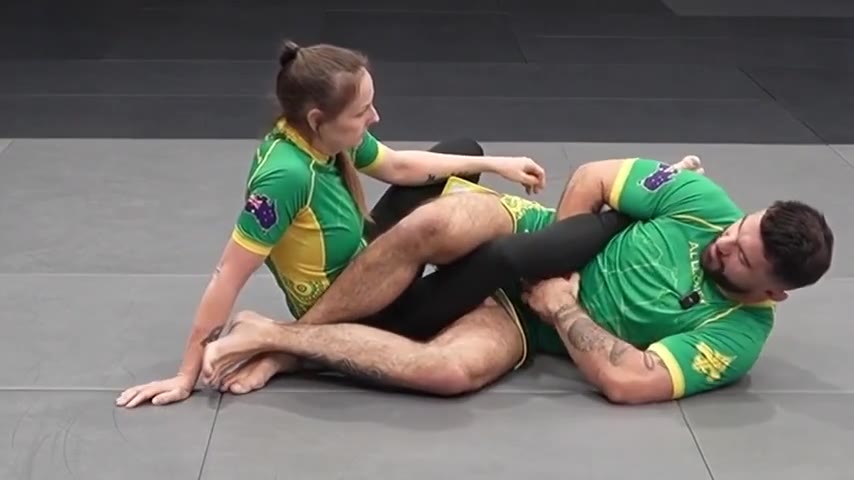
Vol 2 · 14:193b In 50/50 with his leg wrapped: drop onto your shoulder, wrap tight to your chest, top arm over his shin
The same grip, now with your legs around his. From here Schuardt does not step on the hip. He drives his heel back through the other man’s body, which pulls his own hips into the knee, and drops his elbow. He calls this side the strongest finish.
Vol 2 · 15:563c Inside the lock: his shin bends over your wrist bone. And if he doesn’t tap?
He targets the shin, not the ankle. With the heel pinned to your ribs and your hips driving into the knee, his shin bends over your wrist bone. The goal, in Schuardt’s words, is torque through the leg plus pressure across the shin bone.
The second half is an illustration of what Schuardt believes happens if the man doesn’t tap. He has never had to break a shin, and nobody has shown that this lock does (FAQ). Which bones touch, the angles and the forces are approximate, and the bend is exaggerated so you can see it.
Vol 2 · 12:36, 16:51He turns to his other hip and gets up onto a hand and a knee. Schuardt is plain about what that did to the locks he used before. The standard cross ankle lock needs the man kept on the hip he starts on, so you fight the turn with your knees. When he turns anyway the answer was the Woj lock, which Schuardt credits to Chris Wojcik and John Danaher, and that one only holds while his knee stays bent. First the old lock as he slips out, then the shin grip as he comes up.
The old cross ankle lock with him turned away to his other hip: the trapped leg straightens and slides out, and he sits up free
Schuardt calls this one of the main reasons he went back to the shin grip.
Vol 1 · 38:164 He sits up onto a hand and a knee: bring your top leg over his trapped leg and roll forward, your hip across his shin
It is the grip of stop 3 and only the direction changes: instead of going out over the shoulder, Schuardt comes up and pushes his hip through the middle of the shin.
Vol 2 · 20:13Schuardt names his ADCC match with Pixley as the place he finished this way, and says it is off the table wherever reaping is banned.
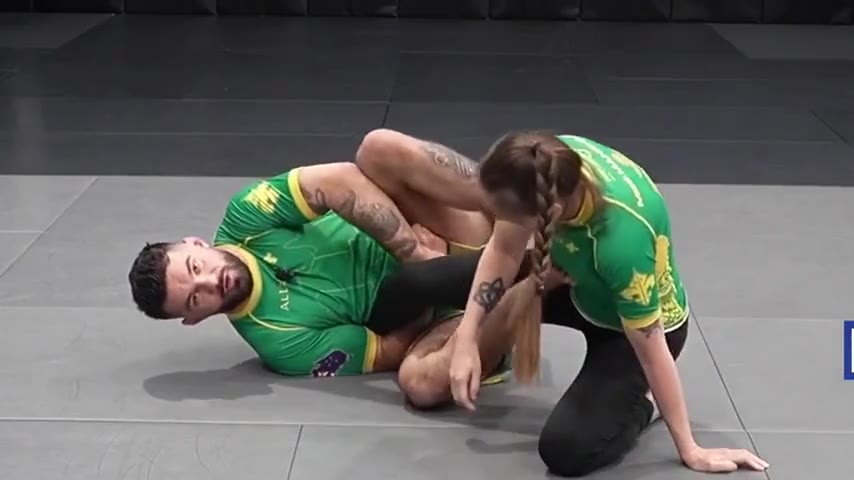
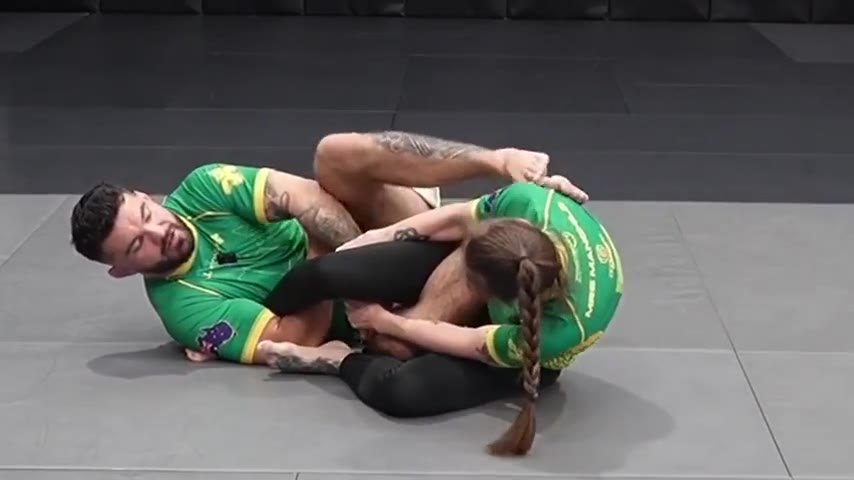
Turning away no longer gets him out, so he goes after the hidden hand. It is hard to peel with one hand, so he ends up using two, and that is what Schuardt wants: two hands on your grip is no hands on your legs, and nothing holding his own body up. From here his rule is “Where possible, Mussolini lock.” (Vol 3 · 3:00) When the man attacks the grip instead, improve your legs.
5 He bends over to peel your grip: foot on his shoulder, leg across, and his arms stay off it
If the angle still will not come, the freed legs take you to outside sankaku or the saddle and the heel hooks from there.
Vol 3 · 3:38Next he gets up and puts his weight on the foot you hold. Schuardt agrees that a planted foot is very hard to break. His answer is “a move that I learned from John in my time in Texas” (Vol 3 · 5:04): “just pull my heels to my bum” (Vol 3 · 5:23). That puts your weight into the standing man and brings him down to a knee, and a foot that is even a little off the mat can be finished.
6a He comes up and stands over you: pull him in with your legs as you rock back, and he drops to his knees, folded over your legs
From there Schuardt comes up over his shoulder for the finish, or threads his legs into outside sankaku for more power.
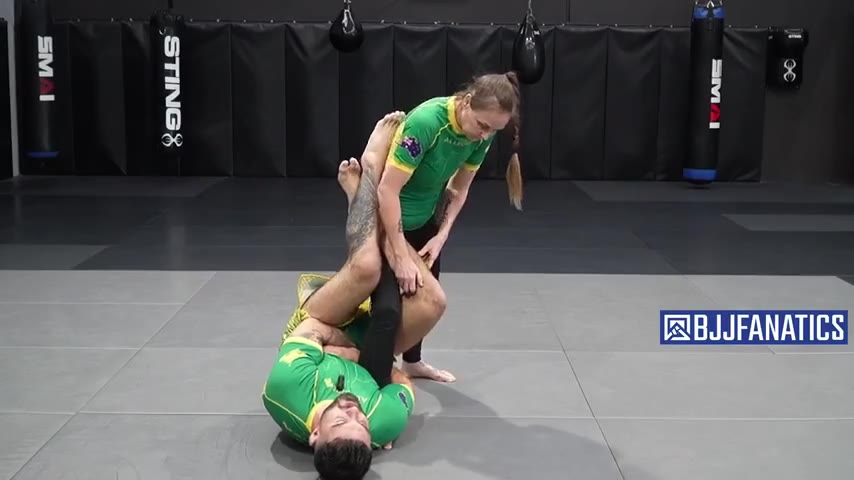
Vol 3 · 5:516b His hips stay up: step on his lower ankle, push it out, and he sits down on his hip
This is for when he is on a knee with his hips up and the tap will not come. Pushing the heel outside the line of his hip turns his knee, Schuardt explains, and then he is easy to knock down. It is the ankle you step on, not the knee, and it is the version he recommends to gi and masters competitors.
Vol 3 · 7:47If he leans so far forward that he will not come down at all, volume 4 has the other answer: let the pressure go and spin under him for the heel hook.
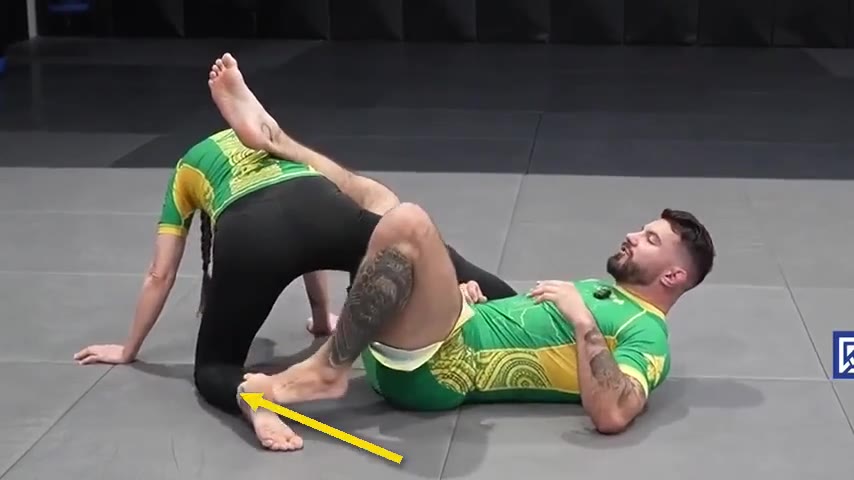
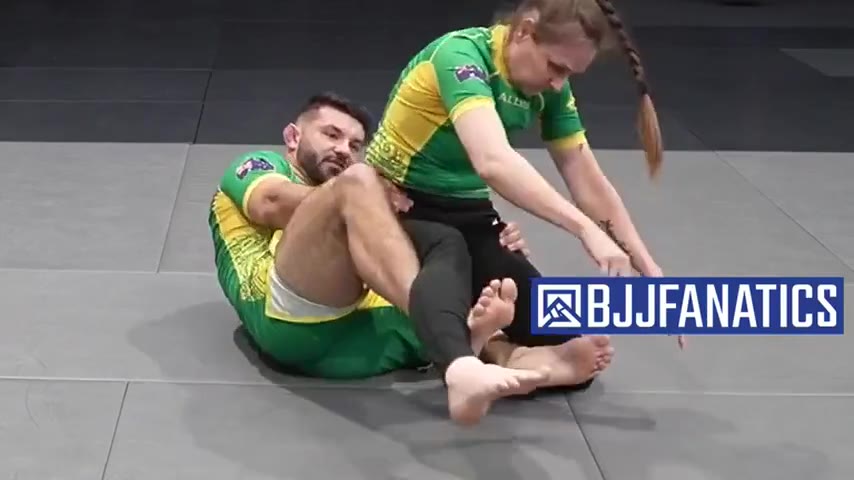
The last way out is to turn the heel toward your shoulder, so the shin no longer lies across your wrist. Schuardt grants that it works: turned all the way, the shin lock is gone. But a man who turns like that can no longer sit square with his feet crossed, and what he shows you instead is his heel, his back or his knee. Schuardt’s rule for choosing: if your grip on the ankle is tight, take the heel hook. If it is slipping, let the knee go and climb to his hips.
7 He is stretched out like a hurdler: let go, he drops into your lap, and you are on his back
This is the answer where heel hooks are not allowed, and for when you feel the leg slipping. Schuardt wants the man in what he calls a hurdler’s position because he is stretched out there and cannot move well.
Vol 3 · 19:22The inside heel hook on a man who is up on a knee and the kneebar for when he crowds you are in the same volume.
 1
 2
 3a
 3b
 4
 5
 6a
 6b
 7
How many of these do you do?
Count the ones you already do in a roll, not just in drilling. If most are new to you, this course will change what happens after you wrap his leg in 50/50.
Black Friday code BLACKFRIDAY2026, tested at checkout on November 23, 2026: $44.55 instead of $99. BJJ Fanatics rotates these codes.
- No-gi, one gi chapter
- 4 volumes, 2 h 29
- 35 chapters
- 28 minutes of entries
- No live rounds
- Released September 2026
Who should buy it
Which one are you?
- Plays 50/50 in no-gi and stalls thereThis is the course: a grip that does not need his feet split, and a next move for each way he gets out.
- Loses the cross ankle lock when he turns to his other hipThat is stop 4. Same grip, your leg over his.
- Leg locker who wants a threat that makes people moveBy Schuardt’s account the lock forces the man off his crossed feet, and the heel hooks, back takes and kneebar of volume 3 start there.
- Competes where reaping is banned, or trains in the giReaping is banned in IBJJF gi and in IBJJF no-gi below brown belt. There, by Schuardt’s own reading, the leg over of stop 4, the saddle and the heel hooks are out. The gi gets one chapter of under three minutes.
- New to leg locksThe entries start from guards you know and he adds ten minutes on finishing a heel hook so nobody is lost. But volume 3 assumes you can hold a leg entanglement, and he keeps De La Riva, reverse De La Riva and the crab ride short on purpose.
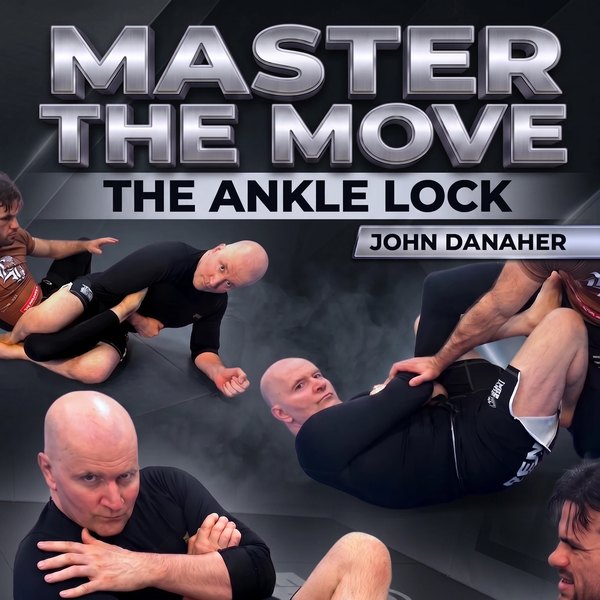 Owns Danaher’s ankle lock courseA different lock. Danaher slides the grip down the foot and attacks the ankle. Schuardt keeps it above the heel and twists the shin.
- Wants a full heel hook game from 50/50Schuardt says heel hooks are not the focus here. He sums up Lachlan Giles’ plan in a minute and a half.
 Wants the straight ankle lockBy his own word the grip is not better there than the usual methods. Rau’s Dynamic Ankle Locks and Danaher’s course are built on that lock.
- Wants to see it work on someone who fights backEvery rep is with a partner who goes along. He names three of his ADCC matches and shows none.
What buyers and BJJ Reddit say about it
Ted N., a buyer on BJJ Fanatics (November 2026), says it made him far more dangerous from 50/50, and that it comes on fast even without perfect grips and setup.
Max A., a buyer on BJJ Fanatics (November 2026), says it is more than a new submission: people react to it, and that reaction gives him easier, deeper positions for his other leg locks.
The most useful story on r/bjj comes from someone who started out unimpressed. On October 3, 2026 he called it a slight update of Dean Lister’s cross leg lock, a minor change of grip. Ten days later he still saw the old Lister lock, but liked how Schuardt aims at the lower inside of the shin. On October 24, after studying the course, he started a thread to say he had changed his mind: what is new is the target, the angle and the finish, not the grip alone.
J E., a buyer on BJJ Fanatics (October 2026), recommends it and finds it thorough, with one caveat: most people do not have a game wide enough to use all the ways in.
In that first thread the same early skeptic also had two complaints: the course does not deal with the defences very well, he wrote, and the lock keeps you in 50/50, a position he would rather leave.
In the same October thread, someone else found no hidden details in it: to him, a short video on social media gives you the same information. He still tells people to buy it to support the athlete, and warns that you have to put up with the way Schuardt talks.
Later that month, Schuardt and several users wrote on r/bjj that many Instagram versions of the lock use weak mechanics, so a clip may not give you the same thing. Two mistakes Schuardt names, the elbow too deep and a step on the hip, are both in stop 3.
Size is where reports differ. A 135 lb grappler who trains mostly in the gi calls it worth it: in November he wrote that he hits the lock on everyone at his gym, at every belt level, though he is not into the heel hook parts. In an October thread a smaller grappler could not make enough torque with it from outside ashi (the reply there: it does not work from outside ashi anyway), and someone else says a friend found it much harder to finish on a much larger, stronger man.
And Schuardt himself. Asked on r/bjj for proof that the lock injures (October 2026), he answered that he has no hard evidence it will break a shin, and that he is confident it can with the right leg position and grip.
Worth it? The pros and cons
- One grip that works with his feet still crossed and follows him to either hip (stops 2 to 4)
- A next move for each defence: he fights your hand, stands up, turns his heel away (stops 5 to 7)
- 28 minutes of ways in: four to 50/50, two to the saddle and a saddle option off the K guard. Rau’s Dynamic Ankle Locks has none
- Schuardt says where it stops: the grip is not better for the straight ankle lock, the Woj lock is someone else’s to teach, and he lists what he thinks gets you disqualified under IBJJF rules
- He gives his sources: the grip from Lachlan Giles, the answer to the standing man from “John in my time in Texas”, the Woj lock from Wojcik and Danaher
 No live rounds and no match clips. He points to three of his ADCC matches as proof and shows none. Wojcik’s Woj Lock The World has close to 20 minutes of live rounds
- Every rep is on a partner far smaller than he is, and he says he has never had to break a shin. Danaher says in Master The Move: The Ankle Lock that a grip around the Achilles controls people but rarely breaks them unless you are much the stronger. Schuardt’s answer to that is the twist, and you never see it on a man his own size
- About a third of the 2 h 29 is the lock itself. The rest is ways in, older cross ankle locks, heel hooks, back takes and a kneebar, several of them kept short by his own account
- Where reaping is banned, and in the gi, much of it falls away by his own reading, though the BJJ Fanatics text sells it for gi and no-gi
- Long talks between the demos, three minutes on the name, swearing and jokes all the way through. Some buyers love that. Not everyone on Reddit did
- No drills, and almost nothing on getting out of the lock when it is on you: three minutes on what to do when both of you hold it
One grip, and a next move for each way he gets out. Black Friday code BLACKFRIDAY2026
What’s inside the four volumes
35 chapters over four volumes, nearly all no-gi. Tap a volume for what’s in it.
Vol 1 · 42:58Getting there, and the locks that came beforethe name, four ways in, lapel anchor, shin buster, Woj lock, Bomboclat lock
Three minutes on where the name comes from, then an overview of the whole course. Four ways into 50/50 take 20 minutes: from K guard (stop 1), from closed guard when he stands up to open it, from De La Riva when he posts a hand, and off his straight ankle lock when he has your foot first. The last 16 minutes are the cross ankle locks Schuardt used before. In the gi he anchors his hand on his own lapel. In no-gi he braces the forearm on his hip bone, a finish he calls the shin buster. The Woj lock is for when the man reaches his other hip, and Schuardt shows how the man slips out of it (stop 4). Last comes the Bomboclat lock, which he likes less because the hand is exposed.
Vol 2 · 43:52The lock, and what it does to 50/50heel hook finish, the grip, leg over, against his leg locks, the bar, Tony Montana
It opens with ten minutes on finishing an inside heel hook from 50/50, added so nobody is lost later. Then the lock: nine minutes on the grip and the finish (stop 3), three and a half on the leg over when he turns away (stop 4). Five minutes argue that the grip beats whatever leg lock the other man has on you, a straight ankle lock or a Woj lock, with Schuardt allowing that he is far bigger than his partner. Then the theory of 50/50, where whoever gets the other’s feet uncrossed first is the one attacking, the plan he learned from Lachlan Giles in a minute and a half, and the bar that skips it (stop 2). The volume ends on the Tony Montana, the name he uses for the strongest heel hook position he knows in 50/50.
Vol 3 · 31:41His ways outhand fight, standing, heel turn, heel hooks, back takes, kneebar, back defence
The two direct defences come first: fighting the hidden hand (stop 5) and standing up on the foot (stop 6). Then the turn of the heel and everything it gives away. To catch a heel your shoulder has to get past the line of his foot, and Schuardt shows the spin both ways. There is the inside heel hook on a man who is up on a knee, the back take (stop 7), a matrix version for when his knee slips out early, the rule for choosing between heel hook and back, and a kneebar for when he crowds you. The last six minutes are defence: he turns his heel and goes for your back, and you hook his far leg and spin to a kneebar.
Vol 4 · 31:00The same grip elsewhere, and the rulesinside spin, two saddle entries, saddle finish, straight ankle lock, both hold the lock, IBJJF
First the standing man who leans forward and will not come down: spin under him for the heel hook. Then two ways into the saddle that land with the ankle already wrapped, one from half butterfly and one from the false reap, and how to finish there, which Schuardt calls trickier than in 50/50 because there is nothing to drive his heel back into. Four minutes cover the straight ankle lock position, where he says the grip is not better than the usual methods. Three cover what to do when both of you hold the lock: get to what he calls the open hip first and turn your knee down. Six and a half go to IBJJF rules as he understands them, and three to a summary.
Schuardt or Danaher?
Master The Move: The Ankle Lock is John Danaher’s course on the same family of locks: 4 h 56 over six volumes, $197 list (November 2026). The two disagree on where the arm goes.
The grip. Danaher slides it down to what he calls the half foot, with the heel in front of your chest. A grip left up around the Achilles, he says, controls people but rarely breaks them unless you are much the stronger. His cross ankle lock bites the outside of the ankle, like a toe hold. Schuardt keeps his wrist above the heel on purpose and twists the shin.
50/50. Danaher gives it one chapter of six minutes, as a counter when the other man attacks first: take the top leg without separating his feet, and put a foot across his belly if he fights your hands. That is the idea of stop 2 and the move of stop 5. Schuardt builds a course on them.
The standing man. Schuardt learned his answer from “John in my time in Texas”, and the only John he names in the course is Danaher. Danaher’s own course handles the standing man from the straight ankle lock, first by catching both ankles and knocking him back.
Take Danaher’s for the ankle lock from every position, with 29 minutes of ways in and a volume of counters. Take Schuardt’s if 50/50 is where you fight. At list price both cost $40 per hour of teaching. Read our review of Master The Move: The Ankle Lock.
Compare to
- Dynamic Ankle Locks (Jason Rau, $79 list): the short course on the straight ankle lock, 1 h 27 over three volumes, from outside ashi. Same kind of question, what to do when he stands, kneels or turns, from another position and with no ways in. Schuardt himself says the shin grip is not better than the usual methods there. See it on BJJ Fanatics. Or read our review.
- Woj Lock The World (Chris Wojcik, $79 list): the lock Schuardt used when a man reached his other hip, and the one he tells you to learn from Wojcik or Danaher. 2 h 20 over four volumes, with close to 20 minutes of live rounds. Schuardt moved away from it as his main answer because it only holds while the knee stays bent. See it on BJJ Fanatics.
- Leg Lock Anthology: 50/50 (Lachlan Giles, $149 list): Giles’ own 50/50 course. Schuardt trained in Giles’ camp and sums up that plan in a minute and a half: split his feet, isolate the leg, climb to outside sankaku, spin for the heel hook. The pick if the heel hook from 50/50 is what you want. See it on BJJ Fanatics.

Can’t use reaping or heel hooks where you compete, or you train in the gi? Our best ankle lock instructionals has three picks for the gi. Prices are BJJ Fanatics list prices, November 2026.
Get the next review like this one
New reviews in this format land in your inbox, with the details on video. You also get the free BJJMore email course and the instructional-platform discounts I use myself (worth $46).

BJJMore earns a commission if you buy through these links, at no extra cost to you. Released by BJJ Fanatics in September 2026; reviewed on all four volumes.
FAQ
Is The Mussolini Lock: 50/50 Is Broken worth it?
Yes, if you play 50/50 in no-gi and get stuck there. It gives you one grip that works with his feet still crossed and follows him to either hip, and a next move for each way he defends it. It is $99 list for 2 h 29 ($44.55 with the Black Friday code we tested on November 23, 2026). Skip it if you want the straight ankle lock, a full heel hook game, or proof in live rounds: there are none.
What is the Mussolini lock?
A cross ankle lock from 50/50 with a different grip. The bony edge of your wrist sits in the hollow just above his heel, his heel rests on your ribs, and your second hand is hidden behind your elbow. You twist across the shin instead of arching on the ankle. Schuardt says his coach Lachlan Giles and a training partner showed him the grip about a year before the course, and that the name comes from a photo of Mussolini with his arms crossed.
How long is it?
2 hours 29 minutes over four volumes: 42:58, 43:52, 31:41 and 31:00, in 35 chapters.
Is it legal under IBJJF rules?
Part of it, by Schuardt’s own reading, and he adds that this is how he understands the rules. He calls the finish on the hip the man starts on legal as long as you are seen to be turning that way, along with the step on the ankle, bringing a standing man back to the mat, and the straight ankle lock versions. He says the leg over of stop 4 is out wherever reaping is banned, that every version from the saddle is out there too, that the spin under a standing man may get you in trouble, and that he believes the Woj lock is not legal either. Heel hooks and reaping are banned in the gi under IBJJF rules, and in IBJJF no-gi only brown and black belts may use them. Check the rule book of your event.
Does it really break the shin?
Not proven. In the course Schuardt says he has never had to break one and that he believes it would break if the man did not tap. On Reddit in October 2026 he wrote that he has no hard evidence. Users there report taps but no confirmed break from this lock. They do report partners hurt for days or weeks: a black belt who could not walk right after one class of drilling it, and partners who finished the session after the tap but missed the next week of training. Schuardt himself wrote that he usually gets the tap at 15 to 20% of his effort. So build the pressure slowly. What the course shows is the lock on a partner who goes along and who is far smaller than he is. Why doesn’t your forearm give first? His answer: brace it. In the Mussolini lock your other forearm makes a ledge for your wrist, and then the shin takes the brunt of the force (Vol 1 · 32:56, Vol 2 · 17:34). He admits an unbraced forearm might give (Vol 2 · 17:52). The 3D illustration under Stop 3 shows what he believes happens if the man doesn’t tap.
How do you defend the Mussolini lock?
The course is taught from the attacking side, with almost nothing on getting out once the lock is on. On r/bjj, users name three ways out: stand up, fight the attacker’s second hand before it joins the grip, and turn so the angle is wrong. The course shows Schuardt’s next move against each of those: the man fights the hand (stop 5), stands up on the foot (stop 6) or turns his heel away (stop 7). Turning away is not free: it shows the attacker your heel, so your heel hook defence has to be ready too. And do not expect it to be easy: once the grip is locked, it is hard to peel off.
Schuardt or Danaher’s ankle lock course?
Schuardt if 50/50 is where you fight: 2 h 29, $99, one grip on the shin and a next move for each defence. Danaher’s Master The Move: The Ankle Lock if you want the ankle lock from every position: 4 h 56, $197 list, with a volume on cross ankle locks, 29 minutes of ways in, and 50/50 in a single six minute chapter. They teach different grips: Danaher slides down the foot to attack the ankle, Schuardt stays above the heel and twists the shin.
Is it the Woj lock under a new name?
No, and the course shows both. In the Woj lock, as Schuardt teaches it, the heel slips onto your chest and you twist the knee the way an outside heel hook does, which is why it needs the knee kept bent. In his own lock the wrist stays above the heel and the twist goes across the shin. He credits the Woj lock to Chris Wojcik and John Danaher.
Does it cover heel hooks?
More than the title suggests, less than a heel hook course. Ten minutes on finishing an inside heel hook, the Tony Montana position, and in volume 3 how to catch the heel when he turns it away. Schuardt says himself that heel hooks from 50/50 are not the focus. The BJJ Fanatics text promises a complete system of heel hooks, back takes and kneebars.
Does it work in the gi?
There is one gi chapter, under three minutes, on anchoring your hand on your own lapel for the cross ankle lock. Everything else is filmed no-gi. The parts Schuardt calls legal under IBJJF rules are the ones a gi player can use: the finish on the hip the man starts on, the step on the ankle (stop 6) and the straight ankle lock versions.
Is there a discount code?
On November 23, 2026 the Black Friday code BLACKFRIDAY2026 took 55% off at checkout: $44.55 instead of $99. Early in November BJJ Fanatics also had it at half price. Codes and sales rotate, so check the price on the day you buy.
One grip for the 50/50 you keep getting stuck in
Feet crossed, hands fighting, and he turns away the moment you wrap his ankle? This is one grip for all of it, and a next move for each way he gets out. No-gi, no live rounds.
Black Friday code BLACKFRIDAY2026, tested at checkout on November 23, 2026: $44.55 instead of $99. BJJ Fanatics rotates these codes.