
BJJ Fundamentals
BJJ White Belt Techniques: 30+ Moves You Need to Know
Dozens of positions, hundreds of moves, a few hours of mat time a week. These 30+ are the ones worth learning at white belt, because they still work when you are a blue belt and beyond.

White belt can be the hardest belt in BJJ if you don’t know what techniques to focus on. Below are 30+ moves and techniques every BJJ white belt should know, grouped by position, so you can tick off what you already have and see what to drill next. Where we have a clip of a move from an instructional we reviewed, it plays right next to it.
Rather follow one course from start to finish than a checklist? See our guide to the best white-to-blue belt curriculum instructionals.
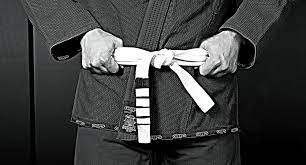
The white belt checklist
Tap a group to jump to the how-to.
- Submissions armbar, rear naked choke, triangle, kimura, americana
- Chokes rear naked choke and triangle first; then bow and arrow, Ezekiel (gi) or guillotine (no-gi)
- Escapes mount (trap and roll, elbow escape), side control, back mount, north-south
- Takedowns double leg, single leg, body lock, leg trip from the clinch
- Sweeps scissor, flower, butterfly, the bridge
- Guard passes toreando, knee slide, double under, tripod pass
- Guards closed, butterfly and half guard, plus the names of six open guards
What is a ‘white belt move’ in BJJ?
Some moves get called ‘white belt moves’ as an insult: moves that only work on other beginners. For example, breaking someone’s closed guard by grinding your elbow into their thigh. Any blue belt will just squeeze their guard tighter and wait for your arms to tire. Those moves are not worth learning, because they stop working as you advance.
Every move on this list still works at higher belts in some way. They come in two kinds:
- Easy wins, such as the americana and kimura. You can hit them in sparring right away, which is fun and keeps you coming back. You will almost never finish a higher belt with an americana, but threatening it from mount makes them turn and give up their back. Higher belts do that all the time, so it is still a tool at black belt.
- Foundations, such as the triangle choke, the knee slide pass and mount escapes. You might drill the triangle for weeks before you catch anyone with it, but your game from blue belt on is built on these, so start now.
For the courses that teach these best, see our guide to the best BJJ instructionals for beginners.
BJJ white belt submissions
The most important submissions to learn as a BJJ white belt are:
- The armbar
- The rear naked choke
- The triangle choke
- The kimura
- The americana
These submissions are important for white belts to learn because:
- The armbar, triangle and rear naked choke are among the highest percentage submissions in jiu jitsu and MMA
- The americana and kimura are the easiest submissions to learn for BJJ white belts
For the standard figure-four rear naked choke from back control, grip your opposite biceps with the choking hand and place your other hand behind their head. Marcelo Garcia’s academy distinguishes this figure-four grip from the palm-to-palm short choke, which uses a different hand connection.
The americana works best from mount or side control. Control their wrist with both hands, pin it to the mat beside their head, then slide your far hand under their elbow to form a figure-four grip. Slide their hand along the mat toward their hip while you lift their elbow. Keep your elbows tight to your own body so they can’t bridge out.
The kimura uses the same figure-four grip but turns the arm the other way: their wrist goes toward their back while their elbow comes the opposite way. From the top, don’t sit up to finish it: that gives away the pin.
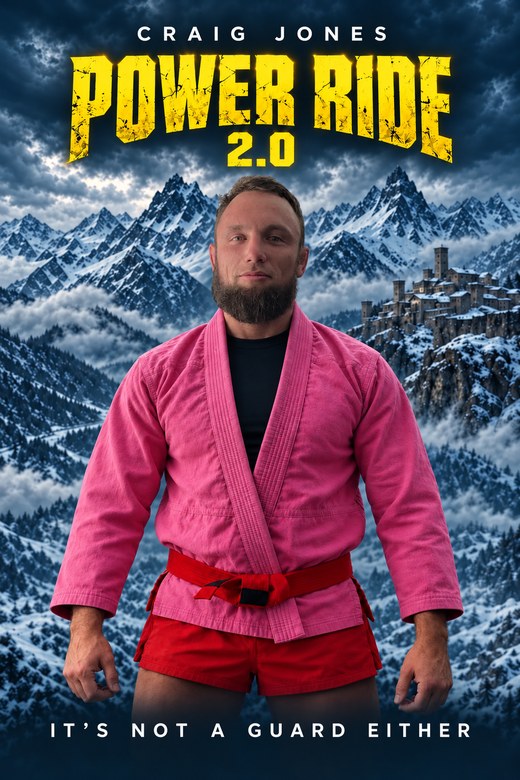 Craig Jones on the kimura from the top: bring your elbow to their elbow and keep your weight forward, instead of sitting up and giving away the pin. Power Ride 2.0, Vol 3 · 19:08 Our full review →
You may find the armbar, triangle and kimura hard to finish against colored belts, and that’s ok. Focus on recognizing the opportunities and getting into the right position. The finishing details come with repetition.
BJJ white belt chokes
The two essential chokes for BJJ white belts are:
- The rear naked choke
- The triangle choke
The triangle choke is the one submission every white belt should obsess over. From closed guard, control one wrist while pushing the other arm across your centerline. Throw your leg over the back of their neck, lock your legs in a figure-four (ankle behind your knee), and squeeze your knees together while pulling their head down. The key detail: angle your hips 30 degrees to the side of the trapped arm. Most beginners try to finish straight-on and wonder why it doesn’t work.
If you want to learn more chokes, add some gi chokes such as the bow and arrow choke and the Ezekiel choke. If you train no gi, the guillotine choke is a great addition.
 Craig Jones’s moment for the guillotine: from a front headlock, the bottom player climbs from his elbows to his hands. Switch your head to the other side, slide your arm deep and sit back. Anti-Wrestling Equation, Vol 4 · 25:52 Our full review →
There are plenty more chokes to learn in Brazilian jiu-jitsu (such as head and arm chokes and more gi chokes) but you can reserve those for when you become more advanced.
BJJ white belt escapes
Escapes are arguably the most important skills for a white belt. You’ll spend a lot of time on the bottom, so having reliable escapes keeps you in the round and builds confidence. For the instructionals that teach escapes best, see our guide to the best submission escape instructionals.
As a white belt, learn to escape the four big pins: mount, side control, back mount and north-south.
Mount
To escape mount, learn two escapes: the trap and roll (also called the upa) and the elbow escape (also called the shrimp escape). For the trap and roll, trap one of their arms by hugging it to your chest, hook their same-side foot with yours, and bridge explosively at a 45-degree angle. For the elbow escape, frame against their hip with your forearm, shrimp your hips out, and work your knee inside to recover half guard or full guard. For more detail on mount positions and technique, check our best mount instructional guide.
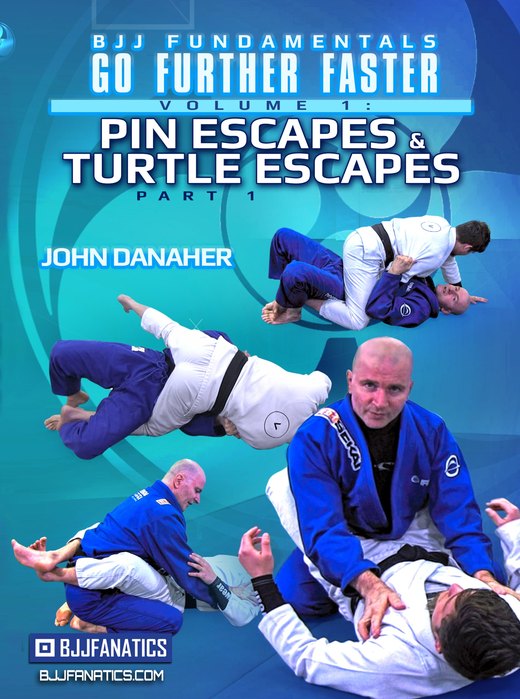 John Danaher’s other way to use the bridge: leave the top player’s foot free on purpose. Your bridge makes them put a foot out to keep their balance, and that is the gap your leg slides into. Pin Escapes, Vol 2 · 27:20 Our full review →
Side control
To escape side control, frame against their neck and hip with your forearms to create space. Bridge to make room, hip escape to get your near-side knee in front of their hip, then push them away to recover guard. The most common white belt mistake here is lying flat and bench-pressing. Frames and hip movement are what matter, not arm strength.
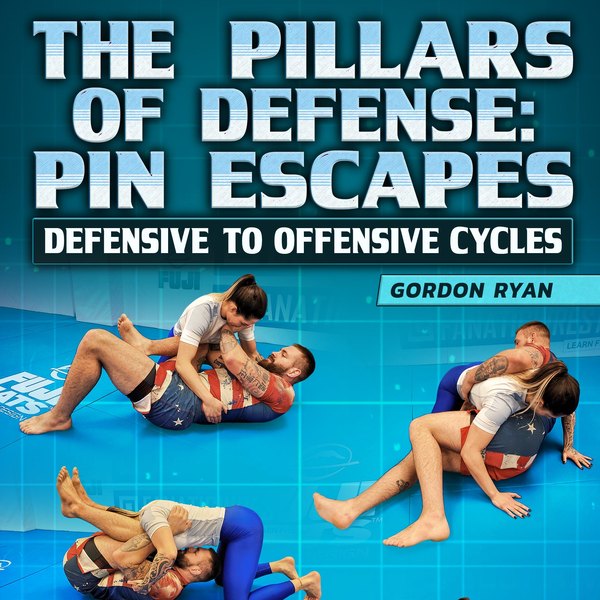 Gordon Ryan under a heavy crossface: turn your face away and bridge. The top player’s shoulder slides over your head instead of crushing it, and your knee comes in to meet your elbow. Pillars of Defense, Vol 2 · 3:04 Our full review →John Danaher’s rule for the knee: lift your foot higher than your knee, and the knee angles down and slides inside their legs instead of catching on their hip. Pin Escapes, Vol 6 · 41:03 Our full review →
Back mount
To escape back mount, fight their choking hand first (the hand closest to your neck). Work to get to the “weak side” (the side where they don’t have an underhook), get your shoulders flat on the mat, and walk your hips out to escape between their legs into their half guard.
From John Danaher’s key back escape: with your back taken, strip the choking arm off your neck. Pin Escapes, Vol 8 · from 7:13 Our full review →North-south
North-south is one of the hardest positions to escape in BJJ. As a white belt, focus on not ending up there in the first place by framing early during side control escapes. If you do get stuck there with both their arms wrapped around your hips, here is one way out:
John Danaher’s way out: bridge so their head lifts, put one knee inside at their collarbone and swing the other leg over their head. Pin Escapes, Vol 7 · 1:04:10 Our full review →BJJ white belt takedowns
As a BJJ white belt you should learn some basic takedowns:
- Double leg takedown – Change level, drive your shoulder into their hips, clasp your hands behind their thighs, and drive forward at an angle. Head position varies with the entry; an outside head position can still expose you to a guillotine. See BJJ Fanatics’ J’Den Cox breakdown, and work on the entry and its defense with your coach.
- Single leg takedown – Grab one leg, pull it tight to your chest, and use a trip or a run-the-pipe finish to get them down. Keep your posture upright so they can’t sprawl and snap you down.
- Double underhook takedown (body lock style) – Get both underhooks, clasp your hands on their lower back, and use an inside trip or lift to take them down.
- Leg trip from the clinch – From an over-under clinch, step your foot behind theirs and drive them backward over your leg.
You don’t need to be able to hit these takedowns against experienced grapplers yet. But you should be able to perform them technically in drilling and hit them against untrained opponents.
BJJ white belt sweeps
A BJJ white belt should know a few basic sweeps from closed guard:
- Scissor sweep – From closed guard, get a cross-collar grip and a sleeve grip. Open your guard, put your shin across their stomach, and kick their far knee out while pulling them forward with your grips. Timing matters here: sweep when they’re leaning forward into you.
- Flower sweep (or pendulum sweep) – Grab their same-side sleeve and an ankle or pants grip. Swing your leg high like a pendulum to generate momentum, and use that momentum to roll them over your body.
- Butterfly sweep – From butterfly guard (feet hooked inside their thighs), get an underhook on one side. Elevate them with your hook on the underhook side while falling to the opposite side. The most common mistake is trying to sweep them sideways instead of diagonally.
A white belt should also be able to sweep someone who leans too far in one direction by just bridging them over. If they post their hands, that gives you space to hip escape and reguard.
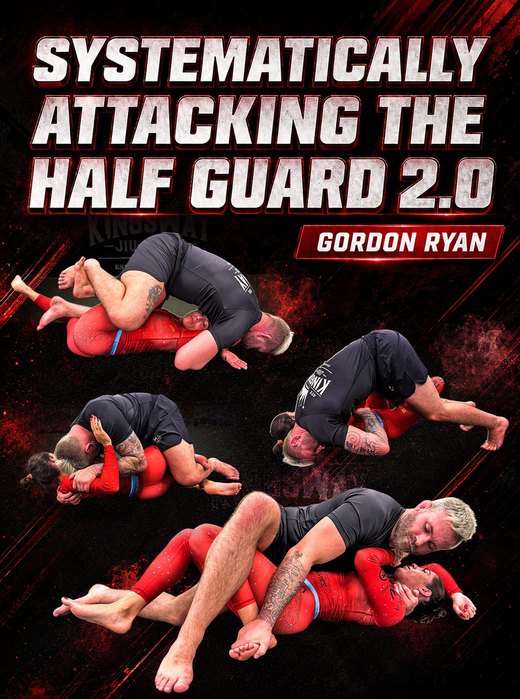 Gordon Ryan on the bottom of half guard: the top player is up high on her toes, so he pushes her hip up and rolls her over his shoulder. Half Guard 2.0, Vol 1 · 9:24 Our full review →
For more on closed guard techniques including sweeps, see our best closed guard instructional guide.
BJJ white belt guard passes
A white belt should know the following basic guard passes:
- Toreando pass – Grip both of their pants at the knees (or control their shins in no gi). Push their legs to one side, then step around to side control on the opposite side. Speed beats strength here.
- Knee slide pass – Get a cross-face grip and slide your knee across their thigh, flattening them as you drive through to side control. Keep heavy chest pressure so they can’t re-guard.
- Double under pass – Get both arms under their legs, stack their hips up by driving forward, and walk around to side control. Clasp your hands so they can’t separate your arms.
- Tripod pass from half guard – Come up with your hips high and your head low, then work your trapped knee free. Only go up once they can’t post a hand on your hip: while they still can, they bridge you straight over (the sweep shown in the sweeps section above). So stay low and chest to chest first, and make the tripod your last step.
Gordon Ryan’s tripod, the last step of his half guard pass: hips high, head low, her ankles still crossed around his leg. Half Guard 2.0, Vol 3 · 27:15 Our full review →A white belt should not necessarily be able to hit these guard passes against colored belts. Guard passing gets exponentially harder at higher belts because their guard retention improves dramatically. At white belt, it’s more about building awareness of your options and learning the basic mechanics. For a deeper breakdown, see our guide to the best guard passing instructionals.
BJJ white belt guards
A white belt in BJJ should become proficient in the following guards:
- Closed guard – Your legs locked around their waist. This is your home base as a white belt. Focus on breaking their posture (pull them down using your legs and a collar or head grip) before attacking submissions or sweeps.
- Butterfly guard – Sitting up with your feet hooked inside their thighs. Good for sweeps and for transitioning to other guards. Focus on keeping your posture upright and using your hooks actively.
- Half guard – One of their legs trapped between yours. Learn to get on your side (not flat on your back), get an underhook, and either sweep or take the back. Flat half guard is a losing position.
 Flattened in half guard, both their arms under yours? Gordon Ryan pulls his elbows down and lifts them over his shoulder until they have to let go with a hand, and his elbow is back inside. They Shall Not Pass, Vol 6 Our full review →
The white belt should also be able to recognize and name the open guard positions:
- De la riva guard
- Reverse de la riva guard
- Spider guard
- Collar sleeve guard
- Single x guard
- X guard
Ideally, a white belt has also started playing one or two open guards, but you don’t need to be good at all of them yet. Pick one that feels natural and drill it consistently.
Final thoughts on what BJJ white belts should know
Everyone’s game ends up looking different. Even at white belt you will drift toward the positions that suit your body and your personality, and that is how it should be.
Think of this list of fundamental white belt techniques as a cheat sheet for plugging holes in your game, or as a loose curriculum to plan your training around.
Work through these basics and you will have enough tools to start building your own game at blue belt. Want video lessons to get there faster? See our picks for the best BJJ instructionals for beginners.