
Home / Wrestling for BJJ / Wrestling Fundamentals From The Bad Guy Review
Chael Sonnen’s Wrestling Fundamentals From The Bad Guy Review
Buy it if you never wrestled and freeze whenever one of you ends up on all fours. On top, take his base away before anything else; underneath, get yours back before you stand.
See Wrestling Fundamentals →No-gi. Who should buy it ↓
- No-gi
- 4 volumes, 2 h 30
- 31 chapters
- No live rounds
- Released June 2019
Chael Sonnen’s Wrestling Fundamentals From The Bad Guy is American college wrestling for people who never did it, taught as wrestling and not rebuilt for jiu-jitsu. Its 2 hours 30 minutes cover the three things those rules reward: take him down, keep him down, get back up.
Yes, if you never wrestled
You get behind a man on all fours and he stands right back up. On all fours yourself, you stay there. Sonnen’s answer to both is base: on top, knock him off his hands and knees before anything else; underneath, get back to yours before you stand. And when a move goes wrong: “Just fix it. Just fix it. Don’t give up on the position.” (Vol 1 · 20:59)
$79 list, $35.55 with the Black Friday code BLACKFRIDAY2026 we tested on November 23, 2026, for 2 h 30. It is college wrestling under college rules: no submissions, and not a word about guillotines when you shoot.
From the first grip to getting back up
Sonnen lays the course out at the very start: take a man from his feet to the mat, keep him there, and get out from under him when it is your turn. The volumes run in that order and so do the six moments below. One idea runs through all six. A man in a good position is hard to move, so take his and keep yours.
Sonnen starts where two people with no training end up: a hand on each other’s neck. His rule on the feet is a distraction, then an attack, both from a good stance: knees bent, hips in, elbows in, head up. Pull on his neck, and when he steps, drop to a knee and pick up his ankle. Every answer he has leads you into the next attack. He pulls the foot away: pull his head down to the mat in front of you, the snap down. He pops his head back up: shoot in on his legs, a high crotch or a double leg. Sonnen picks these attacks because a failed try leaves you somewhere safe with the next move ready.
 One thing to know before you copy the shots. Sonnen calls the double leg the best takedown in wrestling and teaches it, and the high crotch, without a word about your neck: in wrestling a choke is against the rules. Michael Pixley leaves them out as shots in Closing The Gap, his jiu-jitsu course, because of guillotines and kimuras.
That snap down is where much of the first volume ends up. The ankle gets away: pull him down. He clamps on your underhook: circle until his head is low enough to cover. You each have one arm under and one arm over, and he pushes into you: club him on the back and pull your arm out. Each time you are over the top of a man whose head is down. That is the front headlock, and Sonnen spends more time there than anywhere else on the feet: three chapters, close to fifteen minutes. It keeps you safe, he says, it scores, and it makes the man carry your weight.
His test: your elbow sits on your own hip, and nobody watching should be able to see the man’s hair. If they can, your elbow is out and he will turn the hold into his own attack. Don’t let go and start over. Bring the elbow back. Then drop, and Sonnen means drop: don’t ease yourself down, let gravity take his head to the mat.
From here Sonnen gets behind the man, shoots on his legs, or goes to the side and presses an arm across his throat until he tips onto his hip, for points. Sonnen calls that one a choke, in a gray area of the wrestling rules (Vol 1 · 19:31).
01 Wrong: your elbow is out and his head sticks out beside your hip. Right: bring your elbow back to your hip so his head disappears under you, drop to your knee and pull his head to the mat, then put your weight on him
After that you only have to get behind him, Sonnen says: bounce his head once more, unlock your hands and spin, reaching high on his butt and never for a leg.
Vol 1 · 14:22The spin behind ends with your hands behind his armpits, and Volume 2 picks up right there: he is on hands and knees, you are on top. Wrestling starts the bottom man in that shape on purpose, Sonnen explains. He cannot see you, so the rules give him the strongest position they can: knees under his chest, hands under his face. Sonnen reads that as a clue. Before any hold, get him out of it. Bump him forward until his knee is no longer under his chest, and he cannot stand up.
The clip at the top of this page is the next step: a leg comes in, your weight goes forward, and he goes flat. Sonnen’s order: “Then I’m going to bring a leg in. Then I’m going to bring both legs in. Then I’m going to flatten him out.” (Vol 2 · 7:46) With both legs in, “my heels go right into his groin” (Vol 2 · 4:13), feet standing on the mat, not wrapped around him. Keep your head up, he says: drop it and your hips rise, and the man pushes back to his base (Vol 2 · 3:48).
From a flat man Sonnen turns him toward his back for points: a half nelson, an arm bar or a turk, and a cradle when the man steps a knee up.
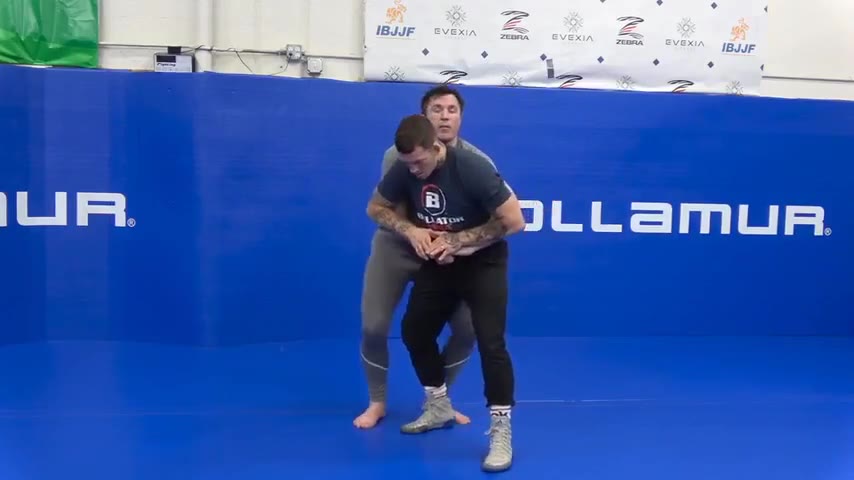
You can do all of that and the man still gets to his feet. Sonnen says so himself. You are behind him with your arms around his waist, and this is where most of us let go. He keeps wrestling. Two things hold you on: locked hands, and your hips tight to his. If the man gets his hips forward, your arms go long and the lock breaks.
Then put him back down. Sonnen shows four ways, and one rule covers them all: don’t set him back on his base. Lift him and put him down where he stood, and he lands in a ball and springs right back up. Sonnen calls that the worst thing you can do. So the first two returns tip him until his weight lands on his hands. The third does more: you land already riding him. The fourth: switch your feet, drop to one knee with the other leg straight, and pull him back over it. And when you feel the lock going anyway, drop your ear to his hip, circle in front and turn it into a double leg.
02 He is standing and your arms are locked around his waist from behind: step out to a slight angle, hook your foot behind his far leg, straighten that leg and sit straight down. He sits down with you, your leg still across him
Straight down, Sonnen insists. Not forward, not back, and no leaning to one side.
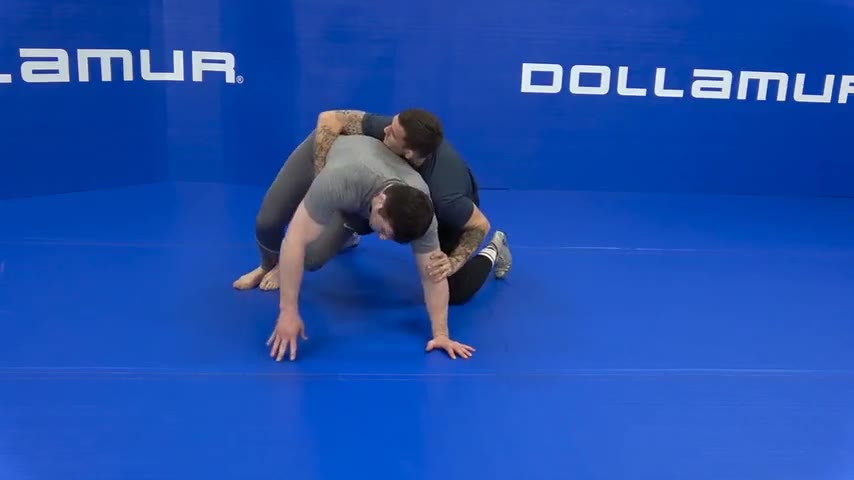
Vol 2 · 18:35Volume 3 turns it around. Now you are on hands and knees with him on top of you, and the same clue reads the other way: this is the base the rules give you, so everything starts from it. Sonnen teaches four ways out. The stand up, with your shoulders pushing back into him, not your hips, and your hands going to his hands, not his wrists. The Granby roll, below. The switch, which puts you on top. The sit-out. Then he strings them together, because the man follows: a Granby, he follows, a stand up.
And when he has done to you what the clip at the top does to him, and you are flat on your belly under his weight? You cannot push up, Sonnen says. Bring one knee up under you, then the other, and you have your base back.
03 He is on top of you while you are on hands and knees: step your outside leg out to the side, bring the other leg next to it with your hips high, roll over your shoulder and come up on one knee beside him, out from under
Only two steps, Sonnen says. Keep the roll tight, closer to a flip, and turn to face him as you come up.
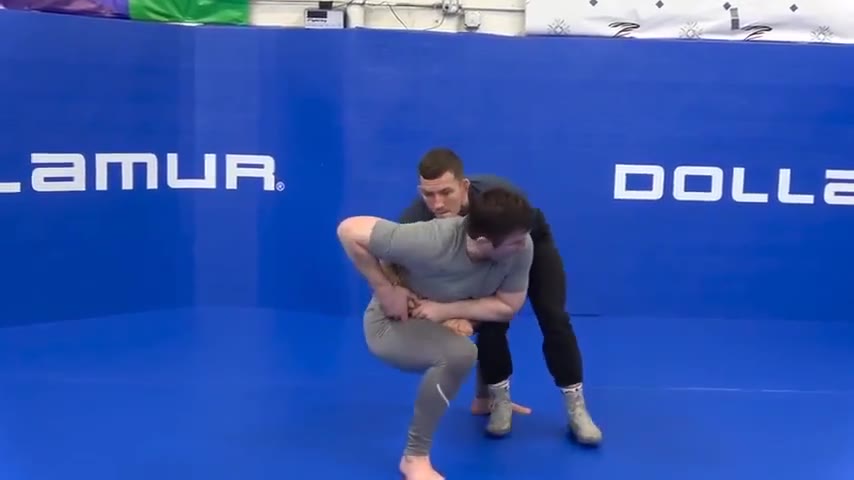
Vol 3 · 6:26Sonnen plays this one for a laugh: you did everything right, you even listened to his tape, and the man is still locked around your waist. It is “He stands up anyway” from the other side. There you held the lock and sat him down. Here you are the one being held.
His answer is short. Both hands go to one of the man’s arms. Your opposite leg steps back behind his. Turn, go to the mat with him, and stay patient on that arm until you can turn your hips over.
04 He has your waist locked from behind: wrap both hands on one of his arms, step a leg back, turn and take him down to the mat with you, then turn your hips over and come out on top
Sonnen’s point: doing everything right does not always get you free, so have the next move ready.
Vol 3 · 12:05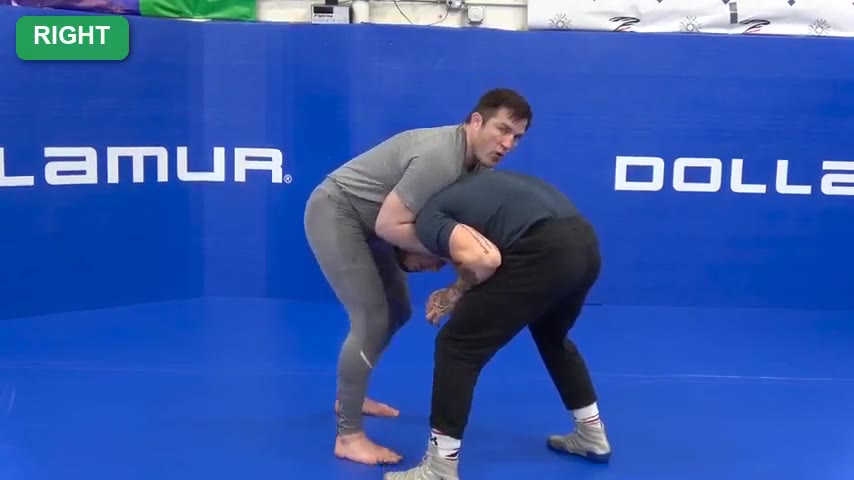 01
 02
 03
 04
How many of these do you do?
Count the ones you already do in a roll, not just in drilling. If most are new to you, this course will change what happens when one of you ends up on all fours.
Black Friday code BLACKFRIDAY2026, tested at checkout on November 23, 2026: $35.55 instead of $79. BJJ Fanatics rotates these codes.
Who should buy it
Which one are you?
- You never wrestled and want all of it onceThe feet, on top and underneath, in one course of 2 h 30.
- You get behind people and lose themVolume 2 is 37 minutes on a man on all fours: how to flatten him, and four ways to put him back down when he stands.
- You coach kids or run a beginners’ classVolume 4 is a practice plan: warm-up, partner drills, wall drills, throws without slamming, tumbling.
- You wrestled at schoolThen it is a refresher. Ryan A., a buyer who wrestled in school more than twenty years ago, used it as exactly that.
- You only want takedownsThe feet get 38 minutes here. Closing The Gap gives them two hours and picks the moves for jiu-jitsu.
- You train mostly in the giIt is filmed in no-gi kit and no gi grip is shown. The collar tie and the underhook exist in the gi too, and one owner says the collar tie chain works from a collar grip as well.
- You want wrestling adjusted for jiu-jitsuIt is wrestling under wrestling rules, with nothing changed for a man who pulls guard or goes for submissions. See Compare to for the three that do the adjusting.
 You want hand fightingOne chapter of 3 minutes 23. Slay The Hand Fight gives it three hours.
- You want to see it work against resistanceEvery rep is with a partner who helps. No live rounds, no match clips.
What buyers on BJJ Fanatics say
Dan (September 2022) had no wrestling background and was tired of pulling guard all the time. This was what he needed, he writes. Joe C. (May 2024) sums it up as the course for people who wish they had wrestled in high school. Sebastian H. (November 2023) trains at a gym with no wrestling class and uses it to fill that gap.
Two buyers describe its limits without complaining. Andrei A. (November 2026) says it goes over general concepts and is not really a whole system. Brian (March 2023), a coach, says Sonnen goes over the moves lightly and puts the weight on principles.
None of the buyer reviews complains. Our own complaints are in the cons below.
What other grapplers say
Grapplers who talk about it elsewhere say much the same as the buyers above. Someone who never wrestled found it very helpful and calls Sonnen a very good teacher: it felt like sitting in on one of his kids’ seminars. That fits the film, where Sonnen talks to young wrestlers throughout. An owner says it helped his game a lot, above all the chain from the collar tie to the ankle pick, which keeps you low and the other man close. And a guard puller by his own account was surprised how well some of the holds and rides worked against skilled opponents. That last report is the one we weigh most: every rep in the course is with a partner who helps, so it is the test the film leaves out. It is one person’s word, though.
The one limit we heard named is the one in our cons. When Craig Jones’s Just Stand Up came out in January 2023, a grappler with a folkstyle background listed this course, for rides and takedowns, among the wrestling courses that cover the folkstyle basics, and added that none of them expects the other man to stay on the ground or to try to submit you. That is exactly the gap: Just Stand Up and Power Ride, under Compare to, are built for that man. We also came across one flat verdict that it is not worth the money. It came with no reason, so there is little to weigh.
Worth it? The pros and cons
- All of wrestling’s three jobs in 2 h 30: take him down, keep him down, get back up. Closing The Gap and Slay The Hand Fight both stop on the feet
- One idea you can remember in a round. On top, break his base first. When he stands, don’t set him back on it (detail 02). Underneath, roll out from under him (detail 03)
- Most positions are taught from both sides: the front headlock on him and on you, the lock around the waist as the holder and as the one held (details 02 and 04), the leg ride and how to clear it
- Checks you can run on yourself: nobody should see his hair in your front headlock, your straight arms should reach the mat in your stance, your feet should stand on the mat when your legs are in
- He shows the mistake and then the repair instead of a perfect rep (detail 01)
- $35.55 with the code is $14 per hour, less than Closing The Gap or Slay The Hand Fight with the same code
- It is not adjusted for jiu-jitsu: nothing is changed for a man who pulls guard, and the shots are wrestling shots. Closing The Gap picks its shots for jiu-jitsu and leaves the double leg and high crotch out as shots
 The bottom volume gets you up against a wrestler. Just Stand Up teaches the stand up against a jiu-jitsu player who wants your back
 The rides end in points and pins. Power Ride takes the same rides on to an hour of submissions from the pins
- Hand fighting is one chapter of 3 minutes 23, plus a minute on wrist control. Slay The Hand Fight spends three hours on it
- Many moves, each shown briefly: the low single gets three and a half minutes, the cradle four
- No live rounds and no match clips. One partner, who helps on every rep
- Volume 4, 43 minutes, is warm-ups, drills and tumbling for young wrestlers. The technique is about 1 h 48
- Released in 2019, and the picture is small by today’s standard
Take him down, keep him down, get back up. Black Friday code BLACKFRIDAY2026
What’s inside the four volumes
31 chapters over four volumes, all in no-gi kit, all taught on one partner: Austin Vanderford, whom Sonnen calls a national champion in wrestling. Tap a volume for what’s in it.
Vol 1 · 38:31On the feetcollar tie, two-on-one, front headlock, arm drag, underhook, low single
Sonnen opens with what makes college wrestling different from the Olympic kind: you have to show control. Then the chain off the collar tie: ankle pick, snap down, high crotch, double leg, low single. The two-on-one comes next, with an answer for each thing the man does. He posts on your shoulder and you take him over with a lateral. He pushes your head away and you step outside into a double. He reaches for your elbow and you go over the top into a head and arm. Then close to fifteen minutes of front headlock (detail 01): the drop, the spin behind, a shuck, a crank from the side and two more ways in: the football, for a better opponent, and a club on the back from the over-under. The volume ends with arm drags, underhooks and a short introduction to the low single, which he credits to John Smith. More than once he stops to say where a double leg holds: under the man’s butt, never up on his lower back.
Vol 2 · 36:39On topleg rides, mat returns, cradle
Leg rides first: the bump forward, both legs in and the drive flat, then the half nelson, the arm bar, the turk and the bent leg turk. His picture for the turk is a dog at a fire hydrant: lift your knee and the man’s hips break. Eight minutes of mat returns follow (detail 02). Then the ride with one leg in deep, and a position he calls home base: your elbow in the man’s armpit and a hand on his far ankle, the place to go back to whenever you feel lost. From there come a hold wrestlers call a guillotine, which is a ride and not the choke, and the ball and chain, a roll for when the man tucks his arm away. The volume closes with what to do when he sits out, the cradle, and four more ways to get your legs in.
Vol 3 · 32:38Underneathstand up, Granby roll, switch, sit-out, counters
The four ways out take the first eleven minutes: stand up, Granby roll (detail 03), switch and sit-out. Then the answer for when you reach your feet and he is still locked on (detail 04). Then the counters. He grabs your far ankle: leave the foot where it is and turn your knee up. He flattens you: one knee at a time. He sits on your trapped leg: turn your whole body the other way and the leg comes out. Six minutes go to getting his legs out when he rides you, four to chaining the escapes. The last seven cover the man who drops down onto your leg, and the front headlock from underneath. There the test from Volume 1 flips: now you want your own head to show.
Vol 4 · 42:45Practicewarm-ups, drills, body mechanics, tumbling
No new takedowns. This is how wrestlers practise. Shadow wrestling to warm up, then taking turns with a partner at an easy pace, then flow wrestling, where each of you lets the other score. A little over a minute of that runs with nobody talking, and it is the closest the course comes to live wrestling. Then the drills: hand replaces foot, the swing single, Granby and stand up reps, mat returns in sets of ten, pummeling (the only hand fighting chapter), balance on one leg, a five-minute wall sit, stand ups against a wall for when you have no partner, and throws that don’t slam your partner. Five minutes near the end repeat the grips that matter most, and the last chapter before the goodbye is forward rolls, cartwheels and sprawls. Sonnen is talking to young wrestlers and the people who will teach them here, and says so.
Free sample: BJJ Fanatics has three YouTube videos on the product page.
Compare to
- Closing The Gap (Michael Pixley and Heath Pedigo, $98.50 list, 4 volumes, 1 h 58): the feet, picked for jiu-jitsu. Pixley starts in the same collar tie and gives the feet two hours where Sonnen has 38 minutes, leaves out the double leg and the high crotch because of guillotines and kimuras, and ends with a volume of coached live goes. He has nothing on riding a man from behind or on getting up from underneath. Only want takedowns that are safe in jiu-jitsu: Pixley. Want the mat as well: Sonnen. See it on BJJ Fanatics. Or read our review.
- Slay The Hand Fight (Nick Rodriguez, $194 list, 4 volumes, 3 h 10): the part Sonnen gives three minutes. Rodriguez spends a whole course on who touches first and how to make the man come forward, and he stops at the shot. See it on BJJ Fanatics. Or read our review.
- Just Stand Up (Craig Jones, $197 list, 4 volumes, 3 h 29): Sonnen’s third volume, rebuilt for jiu-jitsu. Both men teach you to push the hand on your waist down to your back pocket as you stand. Sonnen stands up against a wrestler who wants to ride him. Craig Jones stands up against a man who wants his back. See it on BJJ Fanatics. Or read our review.
- Power Ride (Craig Jones, $197 list, 6 volumes, 4 h 09): Sonnen’s second volume, taken to the finish. Leg rides, the turk, the cradle and the spiral ride from turtle, and then a volume of more than an hour on submissions from the pins. Sonnen’s rides end in points. See it on BJJ Fanatics. Or read our review.
Want the whole field? This course is one of eleven in our best wrestling instructionals for BJJ. List prices on BJJ Fanatics, November 13, 2026.
Get the next review like this one
New reviews in this format land in your inbox, with the details on video. You also get the free BJJMore email course and the instructional-platform discounts I use myself (worth $46).

BJJMore earns a commission if you buy through these links, at no extra cost to you. Released by BJJ Fanatics in June 2019; reviewed on all four volumes.
FAQ
Is Wrestling Fundamentals From The Bad Guy worth it?
Yes, if you never wrestled and want the feet, the top and the bottom explained once by a wrestler. It is $79 list ($35.55 with the Black Friday code we tested on November 23, 2026) for 2 h 30. Skip it if you want wrestling adjusted for jiu-jitsu: there are no submissions in it.
Is it made for BJJ?
No. Sonnen teaches American college wrestling and says so in his opening lines. He speaks to grapplers a handful of times: control matters in grappling too, the hold wrestlers call a guillotine is not the choke, a hook is a leg on the inside. Nothing is changed for an opponent who pulls guard or goes for submissions.
How long is it?
2 hours 30 minutes over four volumes and 31 chapters: 38:31, 36:39, 32:38 and 42:45. The fourth volume is warm-ups and drills, so the technique itself is about 1 hour 48.
Do I need a wrestling background?
No. It starts with the first thing two untrained people do, grab each other by the neck, and with how to stand. Joshua W., a buyer on BJJ Fanatics (December 2025), had never wrestled and found it clear and easy to follow.
Is it gi or no-gi?
No-gi. Both men wear no-gi kit and no gi grip is shown. BJJ Fanatics lists it as no-gi too.
Does it teach submissions or chokes?
No submissions. The one hold Sonnen calls a choke presses an arm across the man’s throat from the side, and only until he tips onto his hip for points (Vol 1 · 19:31). The rides in Volume 2 end in back points and pins. For submissions from the same rides, see Power Ride under Compare to.
I already have Power Ride. Do I need this too?
Only for what Power Ride leaves out. On the mat they overlap: Sonnen’s Volume 2 (36:39) teaches the same leg rides, the turk and the cradle, and stops at points and pins, where Power Ride goes on to more than an hour of submissions. What Sonnen adds is the rest of wrestling: 38 minutes on the feet, from the collar tie to the low single, and Volume 3 on getting up from underneath. If you have Power Ride, buy this for the feet and the bottom, not for the rides.
Will it stop me getting guillotined when I shoot?
Not directly. Sonnen teaches the double leg and the high crotch as wrestling shots. He does say chest up, hips in, head up on the double (Vol 1 · 10:50), but as a way to score: in wrestling a choke is against the rules, so nothing in his shots is about your neck. The nearest he comes is the front headlock from underneath, late in Volume 3: fight for the man’s elbow until your head shows, then circle out behind him (Vol 3 · 29:31). Closing The Gap does deal with it: Pixley leaves the double leg and the high crotch out as shots because of guillotines and kimuras, and when he does run a double, he says how he keeps his neck out.
Sonnen or Closing The Gap?
Different halves. Pixley’s Closing The Gap is two hours on the feet with the moves picked for jiu-jitsu. Sonnen gives the feet 38 minutes and then spends 1 hour 9 on the mat: riding a man on all fours, putting him back down, and getting up yourself. Only takedowns: Pixley. The whole picture for less money: Sonnen.
Can I use it to coach kids?
That is close to what it was made for. Sonnen talks to young wrestlers throughout, and in Volume 4 to the parents, uncles and aunts who will teach them. That volume is a practice plan: warm-up, drills in sets of ten, wall drills, throws that don’t slam your partner, and tumbling so a child learns to fall.
Is there a discount code?
On November 23, 2026 the Black Friday code BLACKFRIDAY2026 took 55% off at checkout: $35.55 instead of $79. BJJ Fanatics rotates its codes and sales, so check the price on the day you buy.
Take his base, keep yours
Never wrestled? This is the short version of what you missed: take him down from the tie you are already in, flatten him when he is on all fours, put him back down when he stands, and get up when it is you. Wrestling rules, no submissions, 2 h 30.
Black Friday code BLACKFRIDAY2026, tested at checkout on November 23, 2026: $35.55 instead of $79. BJJ Fanatics rotates these codes.