
BJJ Fundamentals
Brazilian Jiu Jitsu Submissions
73 BJJ submissions in four families: arm locks, chokes, leg locks and the odd ones. For each one: what it breaks, where you hit it from, and a video for nearly all of them.

How many BJJ submissions are there, you ask?
Well, here are 73. I’m not sure it’s all of them, but it’s a bigger list than I found anywhere else, and I keep adding to it.
They’re sorted by what they attack: arm and shoulder locks, chokes, leg locks, and the odd ones (spine, neck, ribs). Each entry tells you what breaks and where you hit it from. Where one of the courses we reviewed shows a move well, there’s a short clip from it too.
Rules checked 21 October 2026: competition legality depends on age, belt and gi/no-gi division. The notes below use the current IBJJF illegal-moves table; other events use different rules, and variations can change legality.
All 73 submissions
- Arm bar
- Kimura
- Americana
- Arm crush
- Omoplata
- Judo Americana from Kesa Gatame
- Arm lock from Kesa Gatame
- Huizinga roll
- Monoplata
- Baratoplata
- Tarikoplata
- Mir lock
- Standing Mir lock (Jon Jones)
- Monocana (Americana from Monoplata)
- Standing arm lock (Aoki)
- Quick armbar from collar sleeve
- Arm bar from crucifix (Ude-hishigi-ashi-gatame)
- Choi bar
- Biceps slicer
- Scorpion death lock
- Wrist locks
- Rear naked choke
- Bulldog choke
- Kangaroo choke
- Guillotine
- D’Arce choke
- Anaconda choke
- Japanese neck tie
- Peruvian neck tie
- Von Flue choke
- Arm triangle
- North south choke
- Buggy choke
- Triangle choke
- Inverted triangle
- Back triangle
- Inverted back triangle
- Loop choke
- Clock choke
- Ezekiel choke
- Ezekiel from the back
- Bow and arrow choke
- Lapel choke from the back
- Cross collar choke
- Baseball bat choke
- Pena choke
- Papercutter choke
- Lapel choke from side control (Ninja choke)
- Diesel Squeezel (Iron fist)
- Front naked choke
- Gogoplata
- Tepee choke
- Leg scissors choke
Arm and shoulder locks
1-21 · 21 submissionsLocks on the elbow, shoulder and wrist. The elbow ones straighten the arm (the arm bar family). The shoulder ones twist it: inward like the kimura and omoplata, or outward like the americana. Two overviews go deeper: arm bars and shoulder locks.
1. Arm bar
The arm bar is a submission that overextends the elbow joint. It is one of the most commonly used submissions in Brazilian jiu jitsu. It’s also used in other grappling arts, such as Judo, in which it’s called juji gatame. The arm bar from closed guard is one of the first submissions most people learn. Every arm bar variation side by side: our arm bar overview.
What breaks: elbow hyperextension
Submission from: mount, closed guard, side control, knee on belly

2. Kimura
The Kimura is a submission that internally rotates the shoulder too much. You can also use the kimura to sweep and control your opponent or to transition to other attacks. How it relates to the omoplata, baratoplata and the rest of its family: shoulder locks, explained.
What breaks: shoulder internal rotation
Submission from: half guard top, mount

 The kimura from top half guard: push his hand toward his shoulder and bring your elbow to his elbow, weight forward, instead of sitting up and giving away the pin. Vol 3 · 19:08 Our full review →
3. Americana
The Americana is a submission that externally rotates the shoulder beyond its reach. It’s a submission that is more commonly finished at the lower belt levels of Brazilian jiu jitsu.
What breaks: shoulder external rotation
Submission from: side control, mount

4. Arm crush
The arm crush hyperextends the elbow joint, just like the arm bar. However, the body configuration you use to apply this submission is completely different from the arm bar.
What breaks: elbow hyperextension
Submission from: butterfly guard, mount

5. Omoplata
The Omoplata internally rotates the shoulder beyond its reach. It’s similar to a Kimura, but you use your legs to apply the submission, rather than your arms.
What breaks: shoulder internal rotation
Submission from: closed guard, collar sleeve guard, spider guard

 Why he keeps posturing out of your omoplata: seated with your head higher than his, he just drives his head up and you tip back. Danaher’s fix, later in Vol 2 of Master The Move: Omoplata, is your hips over his shoulder. Our full review →
6. Judo Americana from Kesa Gatame
I always call this one ‘Judo Americana’ because I don’t know the official name (which is probably in Japanese, or it doesn’t exist if it’s not an official Judo move).
It’s a lock from kesa gatame (scarf hold), in which you use your legs to externally rotate the shoulder beyond its reach. In my experience, old school, heavy judoka always use this.
What breaks: shoulder external rotation
Submission from: kesa gatame (scarf hold)

7. Arm lock from Kesa Gatame
Similar to the Judo Americana, you can use your legs to apply a straight arm lock when you’re in the kesa gatame position. This submission is often paired with the Judo americana.
What breaks: elbow hyperextension
Submission from: kesa gatame
8. Huizinga roll
The Huizinga roll is like a reverse omoplata. It was popularized by the Dutch judoka Mark Huizinga, who used it effectively in competition. You can use the Huizinga roll to flip someone from turtle to his back, as well as to finish the submission.
What breaks: shoulder internal rotation
Submission from: turtle

9. Monoplata
The monoplata is similar to the arm bar in leg positioning, but instead of trying to hyperextend the elbow, you try to internally rotate the shoulder. This submission has been used to great effect by Marcelo Garcia.
What breaks: shoulder internal rotation
Submission from: modified mount

10. Baratoplata
The Baratoplata submission was popularized by Rafael “Barata” Freitas. You can use the Baratoplata when you go for the Kimura, but you’re unable to separate your opponent’s arm from his body.
What breaks: shoulder internal rotation
Submission from: Kimura

11. Tarikoplata
The Tarikoplata is a submission that was invented by Tarik Hopstock. It’s similar to the omoplata and Baratoplata, but the leg configuration is different. Tarik enters this submission from practically anywhere and uses it to sweep and submit his opponents.
What breaks: shoulder internal rotation
Submission from: bottom half guard

12. Mir lock
The Mir lock was made famous by Frank Mir who hit it in a UFC match. It’s a devastating submission from closed guard that externally rotates the shoulder.
This submission is almost never used, which suggests it might not be high percentage. But then again, Frank used it successfully in an MMA match, so make of that what you will.
What breaks: shoulder external rotation
Submission from: closed guard
13. Standing Mir lock (Jon Jones)
Jon Jones hit what you might call a standing Mir lock against Glover Teixeira at UFC 172. He didn’t submit Glover with it, but he definitely hurt his shoulder (Glover had to get surgery to repair his labrum). I find it very interesting that these Americana style submissions are used in an explosive way in MMA, more so than in Brazilian jiu jitsu.
What breaks: shoulder external rotation
Submission from: standing with overhook
14. Monocana (Americana from Monoplata)
From the Monoplata position you can also hit an Americana style submission, if your opponent rotates his shoulder externally to defend the monoplata. I haven’t seen this submission very often, but I’ve seen Marcelo Garcia hit it in training. (I wonder if the opponent could easily try a hitch hiker escape.)
What breaks: shoulder external rotation
Submission from: monoplata

15. Standing arm lock (Aoki)
Brazilian jiu jitsu doesn’t use a lot of standing submissions, and they’re largely thought to be low percentage. But tell that to Shinya Aoki! He used an Aikido style arm lock to break someone’s arm from the standing position during an MMA match. (Again, I wonder how many low percentage submissions would work better if you apply them explosively.)
What breaks: elbow hyperextension
Submission from: standing with underhook

16. Quick armbar from collar sleeve
You can do a quick arm bar from open guards where you control the sleeve, such as the collar sleeve guard. You pinch your knees around the shoulder and your thigh presses into the elbow. In Judo they call this technique Ude Higishi Hiza Gatame.
What breaks: elbow hyperextension
Submission from: collar sleeve guard, open guard

17. Arm bar from crucifix (Ude-hishigi-ashi-gatame)
From the crucifix position you can do an arm lock on the arm you trapped with your legs. You can do this both from top crucifix (when you’re still in turtle), and from bottom crucifix.
What breaks: elbow hyperextension
Submission from: crucifix

18. Choi bar
The choi bar is an arm bar from bottom half guard. From the knee shield you crunch his shoulder down, get your top leg over his arm and finish the arm lock. Craig Jones hit it on Joao Costa at ADCC 2022, 16 seconds into the match (the match and the course it comes from).
What breaks: elbow hyperextension
Submission from: knee shield half guard
 The finish: let go of the choi bar grip and axe your leg in deep and heavy. Craig: “It rotates Tyler’s thumb in the direction we want for an arm bar.” Vol 4 · 14:01 Our full review →
19. Biceps slicer
The biceps slicer is a compression lock. You put a wedge in the crook of his elbow, usually your forearm or your shin, and fold his arm shut over it. That crushes the biceps and pries the elbow joint open. It often turns up when someone defends an arm bar or a triangle by bending the arm.
IBJJF only allows it at brown and black belt, like the calf slicer.
What breaks: biceps and elbow (compression)
Submission from: a defended arm bar, triangle, back mount
20. Scorpion death lock
The scorpion death lock has nothing to do with the scorpion lock, the rib crush further down this list. It’s actually an Americana variation where you use your whole body to externally rotate your opponent’s shoulder. I haven’t seen this hit in black belt competitions though.
What breaks: shoulder external rotation
Submission from: closed guard

21. Wrist locks
Wrist locks can be applied in various ways and from various positions. They’re often viewed as a ‘dirty’ submission in Brazilian jiu jitsu. If they were more respected, we would probably have separate names for all the different kinds of wrist locks, but we don’t. IBJJF permits wrist locks from blue belt in Adult/Master divisions, in gi and no-gi; they remain prohibited for all competitors aged 4-17.
What breaks: your wrist (either way)
Submission from: various positions

Chokes
22-53 · 32 submissionsMost chokes squeeze the arteries on both sides of the neck, so they work in seconds. Head and arm chokes trap one of his arms inside the choke: how that family fits together. The gi chokes use the collar or lapel.
22. Rear naked choke
The rear naked choke (RNC) is the single highest percentage submission in all of grappling. You lock a figure-four grip around the neck from behind, squeezing both carotid arteries to cut off blood to the brain. A properly applied RNC can put someone to sleep in seconds. It’s the bread and butter of back control systems, and the reason getting your back taken is considered the worst position in BJJ.
What breaks: strangulation
Submission from: back mount, crucifix

 Come under the chin instead of a claw, lift it and bridge your hips forward: he goes belly down for the rear naked choke. Vol 6 · 18:13 Our full review →
23. Bulldog choke
The bulldog choke is not very common because your opponent needs to mess up quite a bit to end up there. But, Ben Askren used it to claim a comeback victory against Robbie Lawler in the UFC, and it also occurs sometimes in street fights.
What breaks: strangulation
Submission from: headlock

24. Kangaroo choke
I saw a kangaroo use this choke and I started using it myself as well. Kangaroos have the perfect bodies for this choke, with their short and strong arms and long fingers.
It’s harder for me to do because I’m a human, but I can get this from belly down back mount when I completely flatten out my opponent. I grab an S-grip around my opponent’s chin and squeeze my hands to my chest, just like the kangaroo in this video.
What breaks: strangulation
Submission from: flattened out back mount

25. Guillotine
The guillotine is one of the most frequently used and highest percentage submissions in Brazilian jiu jitsu. It can be done with a variety of grips. A major distinction is between arm in guillotines and arm out guillotines, which function quite differently from each other. The courses worth buying for it: best guillotine instructionals.
What breaks: strangulation/choke
Submission from: front headlock
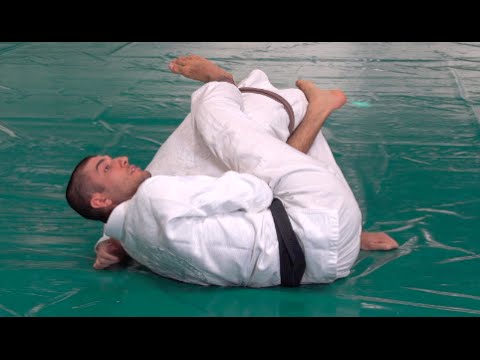
 When he climbs from his elbows to his hands, the guillotine is open: switch your head to the other side, slide your arm deep and sit back, and the top of his head goes to the mat. Vol 4 · 25:52 Our full review →
26. D’Arce choke
The D’Arce choke or Brabo choke is a head and arm choke. It’s often paired with guillotines and Anaconda chokes. It’s often also a neck crank, and it’s one of the hardest chokes in jiu jitsu to apply cleanly. How it differs from the arm in guillotine: arm in guillotine vs D’Arce.
What breaks: strangulation
Submission from: front headlock, top half guard
 Keep it shallow: bring your arms together with your armpit on his head instead of reaching deep, and his sprawl tightens the grip. Vol 2 · 15:09 Our full review →
27. Anaconda choke
The Anaconda choke is similar to the D’arce choke, but you lock your arms the other way around. This submission is most commonly entered after a failed arm in guillotine, from a front headlock position where both players lie on their back. Courses that teach it well: best anaconda choke instructionals.
What breaks: strangulation
Submission from: front headlock
 Another way into the anaconda: swing your leg onto the back of his head. With that weight on his neck he rolls forward, straight into the choke. Vol 5 · 17:06 Our full review →
28. Japanese neck tie
The Japanese neck tie lies somewhere in between the arm in guillotine and the Anaconda choke. Your hands are configured as in a guillotine, but you put your belly behind the back of your opponent’s head and catch his leg with your legs, so that you can compress his head towards his chest.
What breaks: strangulation/choke
Submission from: front headlock

29. Peruvian neck tie
The Peruvian lies in between the arm in guillotine and the D’Arce choke. It’s also similar to the Japanese neck tie in that you keep the arm in guillotine grips, but you try to use your body to compress the head towards the chest. But with this submission you compress the head by stepping your leg over the head and sitting down, and you prevent the rolling escape by throwing your other leg over the back.
What breaks: strangulation
Submission from: front headlock
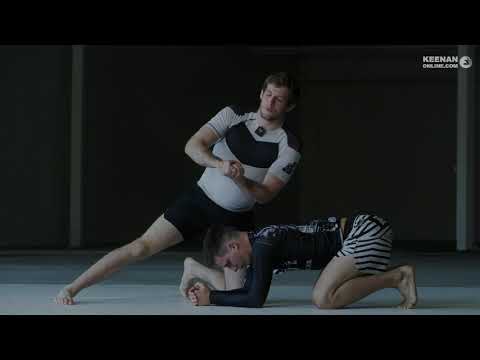
30. Von Flue choke
The Von Flue choke is a shoulder pressure choke that you apply from top side control when your opponent refuses to let go of a guillotine attempt. You sprawl your hips, pressure your shoulder into the neck, and use your body weight to compress both sides. It was named after Jason Von Flue, who hit it in the UFC. Ovince Saint Preux later made it his signature finish.
What breaks: strangulation
Submission from: guillotine counter

31. Arm triangle
The arm triangle is a common and effective bjj submission, although it’s hard to master. Your arm cuts off blood to one side of the neck, and on the other side you push your opponent’s arm into his neck using either your chest, collar bone or neck. It’s typically set up from mount or side control, and finished after transitioning to the choking side. Courses for it: best arm triangle instructionals.
What breaks: strangulation
Submission from: mount, side control
 Choking hand palm down closes the gap at your bicep. Then finish with falling body weight instead of a squeeze. Vol 3 · 26:58 Our full review →
32. North south choke
The north south choke is typically applied from north south, with your arm around the neck and nothing on the other side of the neck. Your arm needs to be extremely tight and your shoulder needs to dip very low, in order to apply the choke on both sides of the neck using just one arm.
The north south is very hard to get good at, but is used at the highest levels of jiu jitsu, for example by Marcelo Garcia. More on the position it comes from: north south in BJJ.
What breaks: strangulation
Submission from: north south

33. Buggy choke
The Buggy choke is an uncommon head and arm choke from bottom side control. You grab your leg behind the back of your opponent’s neck and pressure into his neck with your lat and onto his arm with your thigh. Most notably, Kade Ruotolo hit this in competition in 2020.
What breaks: strangulation
Submission from: bottom side control

 The buggy from bottom side control: turn onto your side first so your knee gets above her shoulder, that is what traps her. Craig Jones caught Chael Sonnen with it twice at CJI 2. Vol 3 · 9:47 Our full review →
34. Triangle choke
The triangle choke is a staple of jiu jitsu. It’s one of the most widely used and highest percentage submissions in all of Brazilian jiu jitsu. It’s also used a lot in other grappling arts and in MMA. If you want to build a serious triangle game, check out our guide to the best triangle choke instructionals.
What breaks: strangulation
Submission from: guards, top side control, mount
 A triangle you don’t have to chase: from Craig Jones’s knee shield, fall back under his pressure, he drops forward into the triangle, and it locks. Vol 4 · 43:59 Our full review →
35. Inverted triangle
The inverted triangle is a tricky submission, that’s typically hit from bottom side control while the opponent is not paying attention. Compared to the normal triangle, your head faces the other way (towards your opponent’s legs). It can be hard to finish this submission.
What breaks: strangulation
Submission from: bottom side control, north south

36. Back triangle
The back triangle is often entered from the back position. It’s quite hard to finish the choke with the back triangle, but it can be done. More commonly, the back triangle position is used to attack arm locks.
What breaks: strangulation
Submission from: back mount, turtle
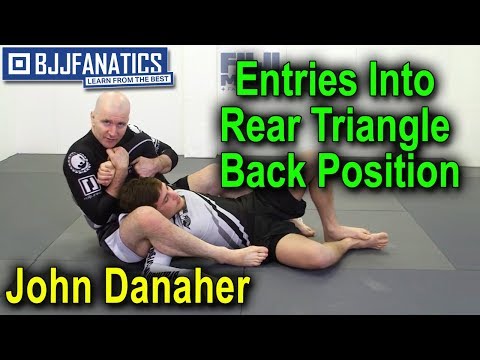
37. Inverted back triangle
In the inverted back triangle, you’re on your opponent’s back and you face his legs. This submission is rarely used in Brazilian jiu jitsu, but it’s a staple in Judo because it’s a quick attack you can do from turtle.
Most famously, Richard Hale choked out his opponent with an inverted back triangle in a Bellator MMA match.
What breaks: strangulation
Submission from: turtle

38. Loop choke
The loop choke is a gi choke that’s a bit similar to a guillotine. You grab a cross collar grip and loop your arm around the back of your opponent’s head, and then use something to pressure his head down (usually your free arm).
What breaks: strangulation
Submission from: guards, turtle

39. Clock choke
The clock choke is a gi choke from top side turtle. You grab the same side collar (so right collar with your right arm), make sure it’s under the neck and walk over to the other side of the turtle while keeping your opponent in place. This submission is reasonably rare.
What breaks: strangulation
Submission from: turtle

40. Ezekiel choke
The Ezekiel choke is primarily a gi choke, although a no gi version exists (but it’s much less common). Typically you grab a deep cross face, and with your cross face arm you grab the sleeve of your free hand, and then you pass your free hand over the throat of your opponent. Your arms now close around the neck, and that causes a tight strangle.
What breaks: strangulation
Submission from: mount

41. Ezekiel from the back
The Ezekiel can also be applied from the back, in which case the arm of your opponent is almost always also trapped, which is a major difference to the front Ezekiel. The Ezekiel from the back was one of the most commonly hit submissions in the IBJJF Worlds of 2019.
What breaks: strangulation
Submission from: back mount

42. Bow and arrow choke
The bow and arrow is perhaps the single most effective submission in gi jiu jitsu. You are basically applying a gi choke with the strength of your deadlift.
(I also have a theory that in the bow and arrow, your opponent’s neck functions as a pulley, which even doubles the force you put into the choke. But I’m not a physicist.)
What breaks: strangulation
Submission from: back mount

43. Lapel choke from the back
The lapel choke is the simplest gi choke from the back. It’s less strong than the bow and arrow choke, but you give up hardly any control while trying it, so you can basically try it for free.
What breaks: strangulation
Submission from: back mount

44. Cross collar choke
The cross collar choke is often said to be the first choke you learn and the last choke you master. It’s basic, but hard to do against knowledgeable opponents. Roger Gracie is famous for mastering this submission.
What breaks: strangulation
Submission from: mount, closed guard

45. Baseball bat choke
The baseball bat choke has a reputation for putting people to sleep instead of making them tap. This happens especially often with the baseball choke from bottom side control, because nobody likes to tap after just having established a ‘dominant’ position.
What breaks: strangulation
Submission from: knee on belly, bottom side control

46. Pena choke
The Pena choke is named after Felipe Pena. It’s similar to a bow and arrow choke, but instead of grabbing your opponent’s collar, you grab your own lapel and feed it around your opponent’s neck. You then throw your top leg over your opponent’s head so that you can pressure him into the choke.
What breaks: strangulation
Submission from: north south

47. Papercutter choke
The papercutter choke is a choke from north south. You simply grab the collar and push your forearm into the neck, and make sure the opponent can’t turn towards you to relieve the pressure (usually by lifting his near shoulder with your free arm).
What breaks: strangulation
Submission from: north south, side control
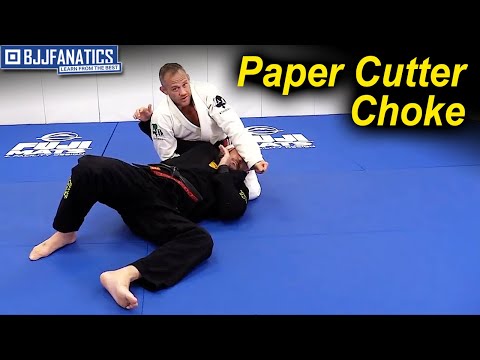
48. Lapel choke from side control (Ninja choke)
There’s a lapel choke from top side control where you feed your own lapel around your opponent’s neck and then walk around to north south to cause the choke. It’s sometimes called the Ninja choke because you can pass the lapel around the neck quite sneakily.
What breaks: strangulation
Submission from: side control
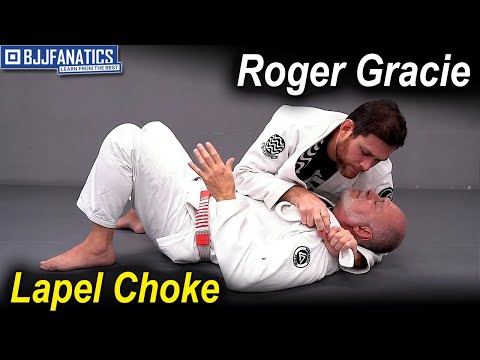
49. Diesel Squeezel (Iron fist)
There’s a guillotine style choke where you jam the fist of your free arm in the neck. Keenan Cornelius calls this the Diesel Squeezel, Karel Silver Fox calls it the iron fist, and Neil Melanson also uses it. Keenan says that it’s the only thing that he always taps Craig Jones with. For me it’s actually my favorite submission, and I typically hit it from bottom half guard or side control.
What breaks: strangulation
Submission from: head control, bottom half guard, bottom side control

50. Front naked choke
The front naked choke uses the rear naked choke grip, but is applied when you’re in front of your opponent. It’s quite an uncommon submission.
What breaks: strangulation
Submission from: headlock

51. Gogoplata
The gogoplata is a submission in which you choke out your opponent with your foot. It’s most famously used by Nick Diaz in Pride against Takanori Gomi.
What breaks: strangulation
Submission from: closed guard, rubber guard

52. Tepee choke
The tepee choke occurs when you clamp your opponent’s neck between your legs while he’s passing your guard. It’s similar to a triangle choke, except that you don’t trap your opponent’s arm, you only trap his neck. You’ll usually be looking for some kind of collar grips as well to reinforce your choke.
Alternatively, you can do a tepee finish from a normal triangle choke. To do this you lock a triangle, then grab your hand around the back of your own legs, and you stretch out your legs completely.
Both the tepee choke and the tepee finish from the triangle choke rarely occur at the higher belt levels.
What breaks: strangulation
Submission from: double under pass, triangle

53. Leg scissors choke
The leg scissor choke is an uncommon submission in which you try to have your opponent’s neck right between your knee caps, you close your legs as in closed guard, and you straighten out your legs. It’s often tried from the top kimura position. It’s not a submission you see often at black belt.
What breaks: strangulation
Submission from: Top kimura

Leg locks
54-66 · 13 submissionsAnkle, knee and hip. The rules change most here, by belt, age and gi or no-gi: the heel hook, toe hold, straight footlock and calf slicer entries say what IBJJF allows. The bigger picture: our leg lock guide.
54. Inside heel hook
The inside heel hook is one of the most devastating submissions in jiu jitsu. IBJJF permits heel hooks only in Adult brown- and black-belt no-gi divisions, not in gi, Masters or youth divisions. Craig Jones and Lachlan Giles are both specialists in this position. What it does inside the knee, and how to stay safe with it: our heel hook guide. The courses: best heel hook instructionals.
What breaks: knee ligaments (MCL, ACL) and the meniscus, by twisting the shin outward
Submission from: saddle, 50/50, outside sankaku

 Finish the inside heel hook with your hips, not your hands: Pawel Jaworski’s grip only blocks the ankle, the hips go up and into the knee. Vol 2 · 11:18 Our full review →
55. Mikey lock
The Mikey lock is Mikey Musumeci’s version of the inside heel hook. Instead of the usual grip with his heel in your armpit, you trap the heel between your neck and shoulder and grip with both hands. If he points his foot to hide the heel, it attacks the foot; if he flexes it, it’s an inside heel hook. Mikey first hit it on Richard Alarcon at Who’s Number One. More in our Mikey lock breakdown.
It’s a heel hook, so the heel hook rules above apply.
What breaks: knee ligaments like an inside heel hook, or the foot when he points it
Submission from: knee bar position, the usual heel hook positions
56. Outside heel hook
The outside heel hook is less strong than the inside heel hook, but can still be devastating. It damages either the ankle or the knee, depending on how it’s applied. The guys from the Danaher death squad specialize in this submission. IBJJF’s same heel-hook restriction applies here: Adult brown- and black-belt no-gi only, not gi, Masters or youth divisions.
What breaks: knee ligaments (LCL) or the ankle, by twisting the shin inward
Submission from: single x, outside ashi garami
57. Toe hold
The toe hold is a submission that internally rotates the ankle beyond its natural reach. IBJJF permits toe holds in Adult/Master brown- and black-belt divisions, in gi and no-gi; outward-pressure variants have stricter limits, so check the official illegal-moves table. The main difference with the outside heel hook is that the toe hold is less likely to damage the knee, because you can’t really bridge into the knee while applying it (which you can with a heel hook).
What breaks: ankle internal rotation
Submission from: single x, 50/50, during passing

 The toe hold grip: your hand goes over the front of the foot, the long end of the lever. Gordon Ryan: “the ball of my thumb connects and covers the ball of my partner's big toe.” Vol 4 · 3:18 Our full review →
58. Straight footlock
The straight footlock (straight ankle lock) typically overextends the ankle joint, although there are variations where you rotate the ankle quite a bit too. You can have a cross body grip on the ankle or a straight grip. IBJJF permits straight foot locks in the 16-17 and Adult/Master divisions, including white belts, in gi and no-gi; they are prohibited in the 4-15 divisions. That does not make every rotational variation legal as a straight foot lock. Courses for it: best ankle lock instructionals.
What breaks: ankle overextension
Submission from: single x, 50/50, double outside ashi
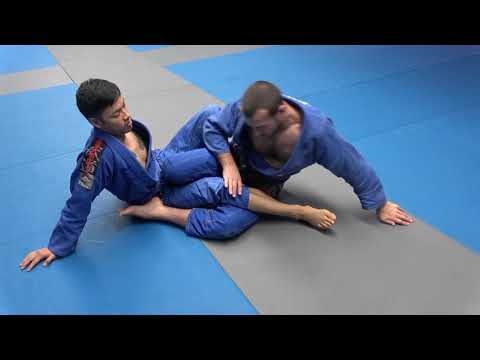
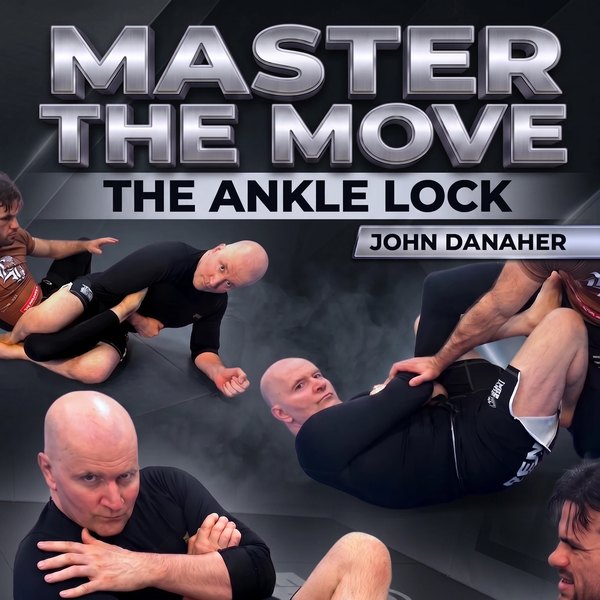 Why the old ankle lock doesn’t tap: Danaher leans his whole weight through a metal pipe on the Achilles, and nothing. Master The Move: The Ankle Lock goes after the front of the ankle instead. Vol 1 · 9:38 Our full review →
59. Aoki lock
The Aoki lock is a straight footlock in which you intentionally let the heel slip, so that you can externally rotate the leg, similarly to an inside heel hook. This can damage both the ankle and the knee.
The Aoki lock is named after Shinya Aoki, who did it in a Mixed Martial Arts match in Pride.
What breaks: ACL, ankle external rotation
Submission from: single x, counter to single x

60. Estima lock
The Estima lock was popularized by Braulio Estima. It’s a quick submission that’s similar to a toe hold. It’s usually applied during passing or from a double guard pull position. You basically grab the foot tight to your body and then rotate your whole body to rotate the ankle more than it can.
What breaks: ankle internal rotation
Submission from: passing, double guard pull, 50/50

61. Knee bar
The knee bar overextends the knee. It’s similar to an arm bar, but on the leg. It’s often paired with other leg attacks, such as heel hooks. Courses: best knee bar instructionals, or the best leg lock instructionals for the whole leg lock system.
What breaks: knee overextension
Submission from: saddle, 50/50
 Finish the kneebar like Craig Jones: elbow tight on her shin, then corkscrew your hips down instead of facing her knee. It takes away her movement. Vol 4 · 1:42 Our full review →
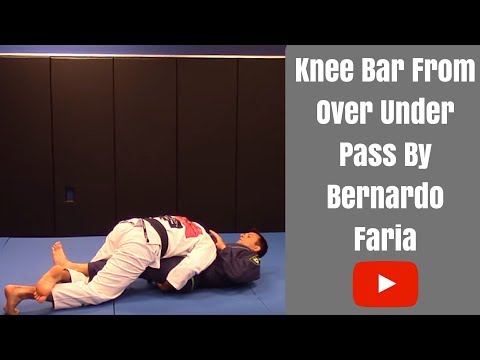
62. Knee bar from over/under pass
The knee bar from the over/under pass deserves a separate mention from the regular knee bar. When you think about it, it’s actually an inverted knee bar. The hips are still pressuring into the knee, but your body is the other way around. Bernardo Faria used to do this move a lot in competition.
What breaks: knee overextension
Submission from: over/under pass
63. Double trouble leg crank
When you’re in saddle and you control the other leg too (which is what John Danaher calls ‘double trouble’), you can weave your arm in between your opponent’s legs and kind of crank his legs together. Sometimes this can come on as a knee bar on the primary leg, but more often it just mushes someone’s shins together, which hurts.
Note that John Danaher himself does not consider this a legit submission. In his leg lock series he describes it as a method to test what your opponent is made of, but he doesn’t expect high level competitors to tap out to this move.
What breaks: knee overextension, shin pain
Submission from: saddle
64. Footlock from bottom back mount
The footlock from when you’re back mounted can happen when your opponent crosses his legs or closes the body triangle. This submission happens almost exclusively at white belt.
What breaks: ankle overextension
Submission from: bottom back mount

65. Calf slicer
The calf slicer is a rare submission in jiu jitsu, but it can happen. It aims to shove a wedge in your opponent’s knee pit, and then to compress his upper and lower leg together, potentially blowing up the knee.
Eddie Bravo famously attacked a calf slicer against Royler Gracie in their rematch at Metamoris. It was an extra nasty calf slicer that also twists the knee (Eddie calls it the vaporizer). Royler didn’t tap, but he was clearly in pain!
IBJJF only allows the calf slicer at brown and black belt.
What breaks: knee separation
Submission from: the truck, the lockdown
66. Z-lock
The Z-lock is an uncommon submission, but it’s interesting because it’s the only submission I know that attacks the rotational capability of your hip. It’s done from the reaping position, and the goal is to internally rotate your hip beyond its reach.
What breaks: hip internal rotation
Submission from: reaping

Spine, neck and the odd ones
67-73 · 7 submissionsSpine, neck, ribs and hips. Several are illegal in most competitions (the entries say which), and one comes straight from pro wrestling.
67. Twister
The Twister is a rotational lock on the spine. It was popularized by Eddie Bravo, but it remains quite an uncommon submission. It’s also IBJJF illegal at any belt level.
What breaks: spine, neck
Submission from: the truck

68. 100% neck crank
The 100% neck crank aims to push the neck towards the chest further than it can. This can be used to sweep or to submit. As a submission, it’s illegal in most jiu jitsu competitions regardless of belt level.
What breaks: neck
Submission from: front headlock

69. Can opener neck crank
The can opener is both a way to break open your opponent’s closed guard, and to break his neck. I believe this submission is illegal in most bjj competitions.
What breaks: neck
Submission from: top closed guard

70. Chest compression
A chest compression aims to compress the chest so much that it can’t expand, thus limiting breathing. It’s a very rare submission in Brazilian jiu jitsu. But, Josh Barnett famously did it against Dean Lister at Metamoris. (Do note the weight difference and the fact that this was at the end of a long match.)
What breaks: ribs, breathing
Submission from: kesa gatame

71. Scorpion lock
The scorpion lock attacks the ribs of your opponent. You lock your closed guard, and then you lock your arms behind your legs, and then you stretch out your legs to the sky (similarly to the tepee finish from the triangle choke).
I used to see this submission happen at local white belt tournaments, but I’ve never seen it at the higher belt levels.
What breaks: ribs
Submission from: closed guard

72. Banana split / Electric chair
The banana split is a submission in which you spread your opponent’s legs as if he were doing a split. It’s one of the only submissions in bjj that straight up doesn’t work if your opponent is flexible enough. Like many unorthodox submissions, it was popularized by Eddie Bravo.
What breaks: groin and hip (the inner thigh muscles)
Submission from: the truck

73. Boston crab
The Boston crab is a pro wrestling (WWE) move. You hold both your opponent’s feet, step over him to flip him to his belly, and squat down. It should generally be considered a very low percentage submission. However, it has finished a fight in MMA, so there may be something to it.
What breaks: lower back (spine)
Submission from: passing

Courses that teach these submissions
Every clip on this page comes from one of these 9 courses. Each has a full review on BJJ More; here is who each one is for, and which entries show it.
For when you play top and keep landing in half guard: one pin, and the arm triangle, D’Arce and kimura that come from it. Best at a sale price.
Clips on this page: 2. Kimura, 26. D’Arce, 31. Arm triangle
For when you get to the omoplata but he rolls out or stands up: five hours on keeping him there.
Clips on this page: 5. Omoplata
For a half guard that keeps getting passed: one system that holds it and attacks from it, triangle and choi bar included.
Clips on this page: 18. Choi bar, 34. Triangle
For when people keep escaping your side control and mount: Craig’s 2022 pinning system, with the belly-down rear naked choke among its finishes.
Clips on this page: 22. Rear naked choke
For when people turtle or come back up on you: front headlock, guillotines, anacondas and the go-behind.
Clips on this page: 25. Guillotine, 27. Anaconda
For when you’re stuck under side control and want to get up and take the back, with the buggy choke as the finish.
Clips on this page: 33. Buggy choke, 61. Knee bar
For when you keep losing the legs before you get to the heel hook: ten ways in, and the finish. Not for heel hook beginners.
Clips on this page: 54. Inside heel hook
For when people slip out of your leg locks before you finish. It has no entries.
Clips on this page: 57. Toe hold
For when you get to the legs but your ankle locks never get the tap. It barely covers how to get there.
Clips on this page: 58. Straight footlock
Guides by submission and position
- Best BJJ Submission Instructionals – the best courses across this whole list
- Best Leg Lock Instructionals – heel hooks, toe holds, knee bars and ankle locks
- Best Heel Hook Instructionals – the most feared submission in no-gi
- Best Ankle Lock Instructionals – straight ankle lock resources; competition rules vary by age and technique
- Best Kimura Instructionals – the kimura from guard, from top and from the back
- Best Guillotine Instructionals – arm in, arm out and the high wrist
- Best Triangle Choke Instructionals – the king of guard submissions
- Best Closed Guard Instructionals – arm bars, triangles and sweeps from closed guard
- Best Mount Instructionals – arm triangles, cross collar chokes and arm bars from mount
- Best Side Control Instructionals – americanas, kimuras and chokes from top
- Best Back Take Instructionals – RNC, bow and arrow and back control systems
- Best Submission Escape Instructionals – for when you are on the wrong end of this list
- Best No-Gi Instructionals – for submission hunting without the gi
- Best BJJ Instructionals Overall
- Best Instructionals for Beginners