
BJJ Belt Requirements & White-to-Blue Curriculum
No list of techniques earns a BJJ belt: your coach promotes you. What you can choose is what to train next. Here is the order we would follow at each belt, with our review for every step.
 By MaxBlack belt under Checkmat, updated November 2026
Your coach decides when you are ready for the next belt. The IBJJF only sets minimum ages and minimum time at each belt, for example 2 years at blue for an adult. It has no technique test. Working toward blue? What most coaches look for.
For the rules themselves, see how BJJ belts work. For time per belt (about 2.3 years to blue on average), see how long each belt takes.
BJJ belt requirements are more than a technique checklist
A white belt can memorize twenty submissions and still be unsafe, impossible to coach, and unable to escape mount. A smaller technical vocabulary used with timing is worth more than a huge collection of moves that disappears during sparring.
Promotion decisions differ by academy, but they usually combine three things:
- Technical understanding: you recognize the major positions and have sensible answers from each one.
- Performance against resistance: your movements work often enough in positional sparring and live rounds. Nobody expects perfection.
- Training behavior: you tap early, control your intensity, protect partners, show up consistently and respond to coaching.
Competition can provide useful evidence, but it is not required at most academies (plenty of people reach black belt without competing). A medal also does not replace the ability to train safely and demonstrate a rounded game.
BJJ white belt curriculum: six stages to build first
This is not a list you need to finish before your first stripe. It is an order that prevents a common beginner problem: learning flashy attacks before you can identify danger or return to a stable position.
Stay safe and navigate
Learn the rules of the room before worrying about winning rounds.
- Tap early and recognize joint versus choking pressure
- Breakfall, technical stand-up and basic hip movement
- Know the positional hierarchy: back, mount, side control, guard and standing
Survive bad positions
Your first defensive skill is buying time: hold your frames and stay safe. The escape comes once you have a guard to go to.
- Elbow-knee connection under mount and side control
- Frames that carry weight through bone structure
- Two-on-one hand fighting when someone has your back
Get a guard to land in
An escape needs somewhere to go. Get the place first.
- Knee-shield half guard first: get there, stay on your side, keep distance and inside position
- Closed guard later: posture control and basic grip fighting
- Guard retention through hip movement, pummeling and frame replacement
Escape back to it
An escape is not finished until you reach a position you can use.
- Bridge-and-roll, and the elbow escape from mount to half guard
- Side-control frame, hip escape and a knee back inside to half guard
- Back escape to the safe side, then turn into guard
Get on top and stay there
A sweep or takedown matters only if you can stabilize afterward.
- Hip-bump, scissor or technical stand-up sweep
- One standing pass such as toreando and one pressure pass such as knee cut
- Hold side control, mount and the back without squeezing at full effort
Finish from control
Build submissions onto positions you can already reach and hold.
- Rear-naked choke and a basic collar choke for gi training
- Armbar, triangle and kimura as a connected upper-body family
- Guillotine mechanics and safe finishing habits
Your gym may prefer different techniques. Keep the order and swap in your coach’s chosen options.
That is the order. Here is what we would watch first, starting with the step most people skip.
What to learn at white belt
Your first years: most rounds are spent underneath, so first you need a place to land.
You will recognize this
- You get the move in drilling. Then someone resists and it is gone.
- You go flat out for two minutes and have nothing left for the other three.
- You escape side control, feel great for half a second, and get passed again.
Start with half guard, not with escapes
The usual advice is: learn escapes first. We disagree.
An escape needs somewhere to go. Escape side control without a guard and you are passed again two seconds later, so nothing feels like it works. An escape also runs on skills you build in guard, like frames.
Half guard is easy to get: trap one leg and you are there.
Once you have it, the escape has a destination: from side control back to half guard, and this time you feel great for longer than half a second. Yes, that goes against Danaher too. We think that advice skips a step.
What to learn now
1. Half guard: a place to land
Get on your side, get a knee shield in, and do not let him flatten you. For now that is the whole job.
For a first half guard course, our half guard ranking puts Craig Jones' Make Z Guard Great Again first for beginners. It is built on the knee shield, the easiest half guard to learn: start with Volumes 1 and 2. In the gi, or older and less athletic? Danaher's Ageless Jiu Jitsu is the other route: survive, get back to half guard, attack from it. It is long, so start with the Bottom Game in the uniform you train.

Craig Jones · No-gi
Your half guard keeps getting flattened: one knee shield that holds him off. Start with Volumes 1 and 2.

John Danaher · Gi and no-gi
Run over every round? Survive, get back to half guard and attack from it, without speed or flexibility. Start with the Bottom Game.
For later, or for when you have a few months in:

Half Butterfly: Victory Blueprint
Adam Wardzinski · Gi
Your butterfly hook is in, but he will not go over: one sweep and what comes next.
2. Escape pins back to half guard
Now escaping pays off. From mount and side control you go back to half guard, and you stay there.
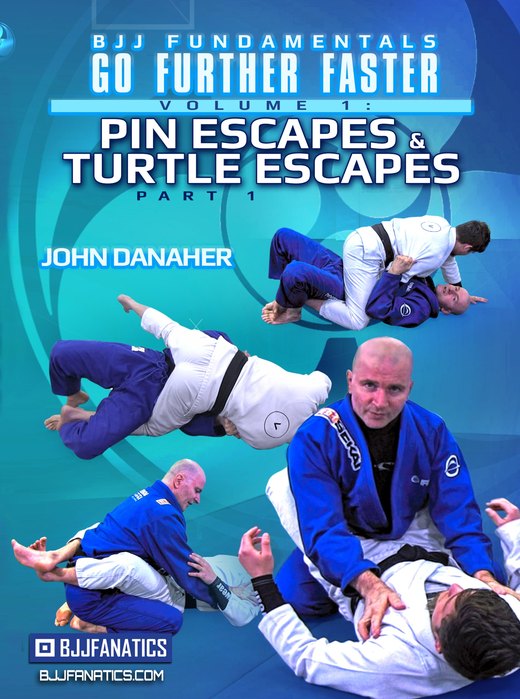
Pin Escapes & Turtle Escapes: BJJ Fundamentals, Go Further Faster
John Danaher · Gi, works no-gi
Stuck under mount or side control? One way out from every pin, back to guard.

Fundamentals of Brazilian Jiu Jitsu Escapes (Gi & No Gi)
Lachlan Giles · Mostly no-gi
Your rounds end under side control or mount: the first escape to learn for each.
3. Keep your guard when he tries to pass
Fewer rounds start under side control if he does not get past your legs in the first place.

The Fastest Way To Develop An Unpassable Guard
John Danaher · No-gi
Passed every round? One plan to keep your guard, not a pile of loose moves.
4. A closed guard that does something
Most white belts hold closed guard and wait. You want one answer for each thing he does.
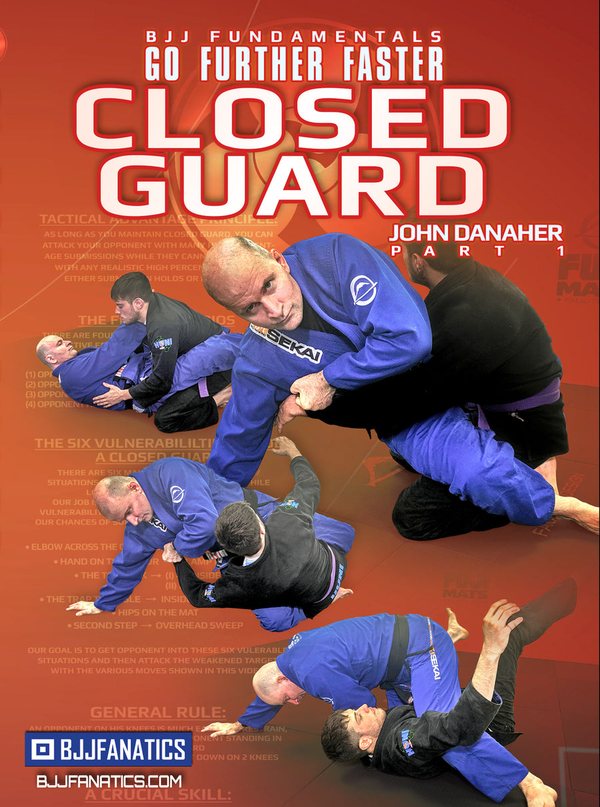
Closed Guard: BJJ Fundamentals, Go Further Faster
John Danaher · Gi
Your closed guard only holds people: a move for each thing he does.
Mica Galvao · Gi
Closed guard goes quiet once he grips your lapel: his grip picks your attack.
Both are in the gi. We have no review of a no-gi closed guard course yet.
5. Survive under pins (gi), optional
Train in the gi and get flattened every round? Saulo teaches you to survive under a pin, so you are still there when the way back to half guard opens.
Saulo Ribeiro · Gi
Pinned underneath all round: get on your side, survive first, then get out.
Five gi volumes, one per belt, 8 h 51 in all. Volume 1 is surviving underneath. No live rounds.
Passing and pins come after this. They are in the blue belt path.
Not sure which one fits you? Our white belt ranking says who each course is for.
Best instructionals for white belts, rankedThe moves themselves, one by one: white belt techniques. Brand new? Start with your first three months.
Prices, if you already know which one you want: Fundamentals of BJJ Escapes is $127 list and Jiu-Jitsu University $197 list on BJJ Fanatics (checked November 2026).
A 12-week white belt training plan
Two or three classes per week are enough to run this plan. Pick one focus for each block and measure it in positional sparring. “I recovered guard twice” is a better target than “I won the round.”
| Weeks | Main focus | Drill | Live-round goal |
|---|---|---|---|
| 1-2 | Safety and movement | Breakfall, technical stand-up, bridge and hip escape | Recognize the position and tap before panic |
| 3-4 | Half guard, a place to land | Get to half guard, knee shield, stay on your side | Hold half guard for thirty seconds |
| 5-6 | Mount back to half guard | Elbow-knee connection, elbow escape | Recover half guard once per round |
| 7-8 | Side control back to half guard | Frame, hip escape, knee inside | Rebuild your frames and get a knee back in |
| 9-10 | Keep your guard | Knee or foot between you and him, back to half guard when he gets around your legs | One round where he never settles in side control |
| 11-12 | A closed guard that does something | Posture control, grip fighting, one sweep such as hip bump or scissor | Break his posture and threaten one sweep per round |
What are the usual BJJ blue belt requirements?
A blue belt is not a white belt who knows every basic move. It is someone who can make mostly sensible decisions across the main positions and has the beginning of a personal game.
A useful readiness check: ask yourself if you can
- Stay calm and defend intelligently under mount, side control and back control.
- Escape those positions against newer partners and make credible attempts against experienced white belts.
- Recover and maintain at least one guard, with a sweep or stand-up you can threaten.
- Pass with at least one distance pass and one close-range pass.
- Stabilize side control, mount or the back after a pass or sweep.
- Finish two or three connected submissions without cranking them.
- Explain why a movement works, not just copy its shape.
- Train safely and adjust your intensity to smaller, newer or injured partners.
The most important word is connected. A simple route such as knee-shield sweep, knee cut, mount, armbar is more useful than fifteen unrelated attacks.
The IBJJF sets no minimum time at white belt, only a minimum age of 16 for blue. In practice it takes about 2.3 years on average (how long each belt takes). What helps most: how to get your blue belt faster.
What a blue belt usually looks like: reliable fundamentals, fewer big mistakes and the outline of a personal game. Typical work: one guard you can keep against heavier partners (closed guard plus knee-shield half guard, or butterfly), a passing pair such as toreando and knee cut, back takes from turtle with the seatbelt and hooks, and escapes that work against other blue belts, not only newer white belts. You can handle brand-new grapplers safely.
Got the belt, or close to it? This is what changes, and what to work on next.
What to learn at blue belt
The people you used to beat got better, and nobody lets you play your game anymore.
You will recognize this
- You have a move for most positions, but nothing links to anything yet.
- You watch one instructional and want to correct your coach. Ask a question instead.
- Progress gets slow and hard to see. This is the belt where many people stop.
What to learn now
1. From half guard back to your feet
Half guard was a place to land. Now you stop lying in it and waiting: turn to your knees and stand up, or get to his side and take the back.

Craig Jones · No-gi
Stuck underneath again: the way back to your feet from turtle, and how to keep others down.

Craig Jones · No-gi
Sick of lying under side control? Get up to his side and take the back.
2. Keep your guard against good passers
Blue belts pass better than white belts, so the guard that held last year gets passed now.

The Guard Retention Anthology: Around And Under
Lachlan Giles & Ariel Tabak · Mostly gi
Good passers get past you now: the details that stop the pass.
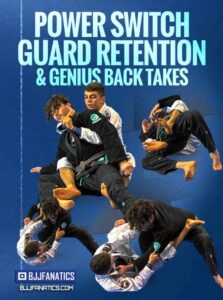
Power Switch Guard Retention And Genius Back Takes
Mikey Musumeci · Gi
Guard passed in the gi again: stop each pass at its source, then take his back.
3. One plan to pass the guard
Without a passing plan you spend whole rounds inside people's guard.

The Fastest Way To Become An Effective Guard Passer (No Gi)
John Danaher · No-gi
Whole rounds stuck in people's guard: a clear plan to get past their legs.
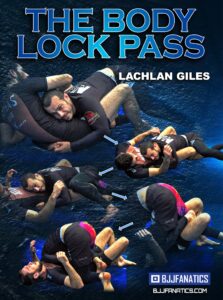
Lachlan Giles · No-gi
One pass to build on: lock low on his hips, weight back, come over his knee.
4. Pin people and keep them there
A pass only counts if he stays down. At blue belt people start escaping.

Power Ride: A New Philosophy on Pinning
Craig Jones · No-gi
People keep escaping once you get on top: pin them so they stay flat and tired.

New Wave Jiu Jitsu: Mounted Pin Attacks (4×4 Mount System)
John Danaher · No-gi
You get mount and he keeps his elbows in: the order that gets the elbow up.
5. Escape and come up on top
You can get out now, so make the escape end on top or on his legs, not only back in guard.

The Pillars of Defense: Pin Escapes
Gordon Ryan · No-gi
You can escape pins now: come up on top, not just back to guard.
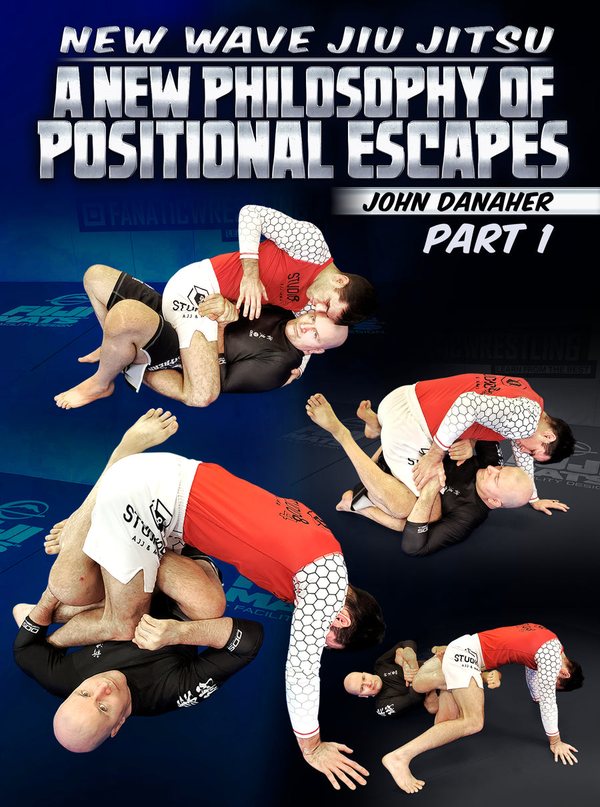
New Wave Jiu Jitsu: Positional Escapes
John Danaher · No-gi
You only ever get back to guard: come out on top or on his legs.
Choosing between Gordon's Pillars and Danaher's Pin Escapes from the white belt path? Gordon Ryan or Danaher, side by side
More options, with who each one is for: best instructionals for blue belts.
Purple, brown and black belt expectations
After blue the list gets more personal. These are the parts people at each belt most often still miss.
Purple belt
A small A-game where one attack leads to the next: for example armbar, triangle and omoplata from closed guard, or half guard to an underhook and the back. Your sweeps (scissor, hip bump, flower, butterfly) chain into each other. You can diagnose common reactions, teach core movements and adapt your game to different bodies. IBJJF: at least 16, and for an adult 2 years at blue.
Loose moves turn into a game of your own.
You will recognize this
- Your partners know what you are going for before you do it.
- Lower belts ask you for help, and explaining a move shows you where you do not really get it.
- A knee, a neck, a back: warming up and tapping early stop being optional.
What to learn now
1. Leg locks: control, then finish
By purple, leg locks are part of most no-gi rounds. Control comes before the finish.

John Danaher · No-gi
You get to the legs and he spins out: control first, then the finish. Start here.

Systematically Attacking The Legs
Gordon Ryan · No-gi
People slip out before you finish: how to hold the leg, then how to finish. No entries.
Start with Enter The System: it has the entries. Systematically Attacking The Legs has none.
2. Survive leg locks and submissions
Once people attack your legs and neck, grabbing the wrist and ripping your foot out stops working.

The Pillars of Defense: Leg Lock Escapes and Counter Locks
Gordon Ryan · No-gi
Tapping to heel hooks or ripping your foot out: what works instead, position by position.

New Wave Jiu Jitsu: Submission Escapes
John Danaher · No-gi
Caught, and all you can do is grab his wrist: what each submission needs, and how to take that away.
3. Pass half guard from the top
Half the room plays half guard against you now. We told the white belts to start there.
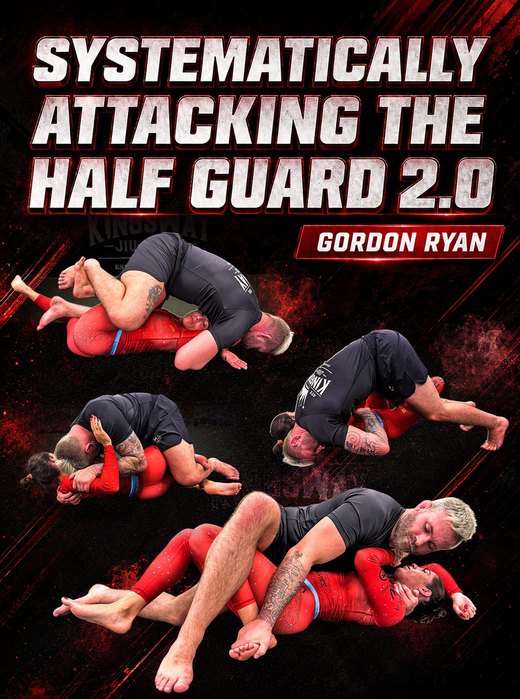
Systematically Attacking The Half Guard 2.0
Gordon Ryan · No-gi
On top in half guard, you try to pass and get rolled: pass without coming up.

Systematically Attacking The Guard: Half Guard Passing (2022)
Gordon Ryan · No-gi
Chest to chest in half guard and one bridge flips you: a rule for each reaction.
4. An answer to every pass
Good passers still get through. Your guard needs an answer for each pass, not one trick.

Gordon Ryan · No-gi
Good passers still get past you: an answer to every way people pass.
5. Wrestling basics, if you never wrestled
Getting up and scrambling decide more rounds from purple on.

Wrestling Fundamentals From The Bad Guy
Chael Sonnen · No-gi
Never wrestled, and you freeze when he goes to all fours: takedown, hold down, get up.
6. One finish you keep getting to, optional
Take a position you already reach every round and turn it into a tap.

John Danaher · No-gi
You reach the omoplata but he rolls out or stands: keep him there until it finishes.
More picks, with who each one is for: best instructionals for purple belts.
Brown belt
Depth, pressure and efficiency. You pass with your weight instead of your strength, close in (knee slide, double under, headquarters, passing half guard) as well as from a distance (toreando, X-pass). Pins hold, weak positions are harder to expose, transitions are cleaner and you can impose your game on skilled opponents. IBJJF: at least 18, and 1.5 years at purple.
You have a game. The work now is fixing the holes good opponents still find.
You will recognize this
- Fewer new techniques. Whole sessions go to one detail of a position you have played for years.
- Every lower belt in the room wants to test you.
- Black belt is close enough to make you wonder if you belong there.
What to learn now
1. Win inside position before you pass
Against good guards, the fight before the pass decides the pass.

Tripod Passing: Beating Inside Position
Jozef Chen · No-gi
Butterfly hooks keep lifting you off: win inside position first, then pass.

Jozef Chen · No-gi
Seated guys tie up your arms or stand up first: get them flat, keep them there.
2. Inside leg locks that finish
You get to the legs, but you lose them before the tap.

Unstoppable Inside Leglocks & False Reaps
Pawel Jaworski · No-gi
You lose the legs before the heel hook: ten ways in, and how to hold both legs to the finish.
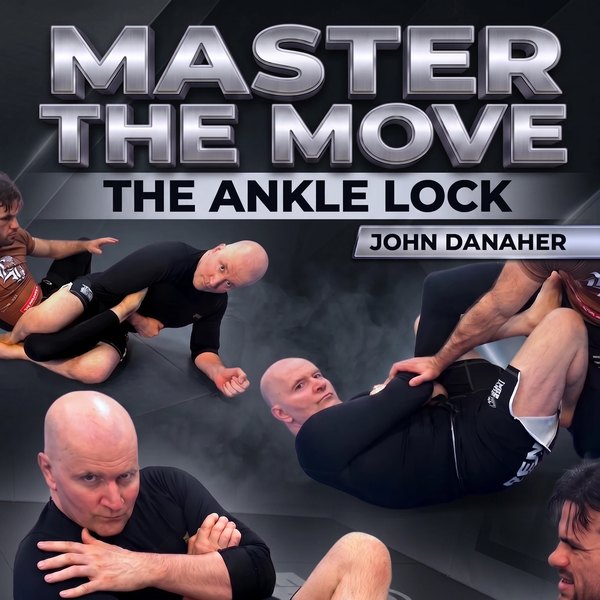
Master The Move: The Ankle Lock
John Danaher · No-gi
Your ankle locks never get the tap: the finish, in detail.
3. When he turtles or comes back up
Good opponents do not stay flat. You need answers for the turtle and the front headlock.

Craig Jones · No-gi
He turtles or comes back up and you stall: front headlock and turtle answers.
4. Stay on his side long enough to pass, optional
Getting to his side is not the pass yet: you have to stay there until it opens.

J-Point Camping (Things I Didn't Show To Craig Jones)
Jozef Chen · No-gi
You reach his side but cannot stay: camp there until the pass opens.
The cover says 'Things I Didn't Show To Craig Jones'. It is the same course, sold as J-Point Camping.
The rest of our brown belt picks, with who each one is for.
Best instructionals for brown beltsBlack belt
Consistent high-level judgment and broad technical literacy, usually with deep expertise in several areas. You finish from the main top positions (collar chokes from mount and side control, armbar) and can explain why a technique works, not only show it. IBJJF: at least 19 (18 for an Adult World Champion at brown), and 1 year at brown.
Not a finish line. The question becomes what you want to do with it.
You will recognize this
- The belt does not make you feel finished. If anything, it feels like starting over.
- You roll lighter and let people work. The hungry blue belt still treats tapping you as his graduation.
- If you compete, your division now holds people who have worn the belt for twenty years.
What to learn now
1. A game that ages well
Your training partners get younger every year. This is for a game that does not need you to keep up.
Our pick is already in the white belt path: Ageless Jiu Jitsu, built for grapplers who lost a step, or never had one.
From here you pick by position, not by belt: our full ranking of BJJ instructionals.
How it compares with other arts: the longest black belts in martial arts.
These descriptions are deliberately broad. Age, competition level, coaching role, training history and academy culture all affect what a belt looks like in practice.
IBJJF belt rules are not a universal curriculum
The IBJJF graduation system (version of June 2026) sets three kinds of rules:
- Minimum ages: blue and purple from 16, brown from 18, black from 19 (18 for an Adult World Champion at brown). Kids under 16 use grey, yellow, orange and green belts.
- Minimum time at each adult belt: none at white, 2 years at blue, 1.5 at purple, 1 at brown. So 4.5 years from blue to black at the fastest for an adult. The times are shorter or zero for 16 and 17 year olds, for people who came up through the kids belts, and for an Adult World Champion at that belt.
- Who signs: colored belts by an IBJJF-affiliated black belt, black belt only by a black belt with at least 2 degrees. Stripes up to brown are the professor’s choice.
It does not publish a list saying every blue belt must show a particular sweep, pass or submission. The full rules, with the kids belts and black belt degrees: how BJJ belts work.
So for promotion requirements, ask your coach. If your gym runs formal tests, ask for the exact syllabus. If it promotes through observation, ask which positions currently hold you back. Either answer helps you more than comparing your timeline with strangers online.
Five curriculum mistakes to avoid
- Studying submissions before defense. Attacks are more fun, but you need a guard and an escape before you get to use them.
- Changing your guard every week. Give one home base enough rounds to reveal its real problems.
- Counting techniques instead of decisions. “Frame before bridging” matters more than owning six side-control escapes.
- Only drilling cooperatively. Add positional rounds with a clear win condition and gradually rising resistance.
- Chasing the belt itself. A promotion date is outside your control. The next position you need to improve is not.
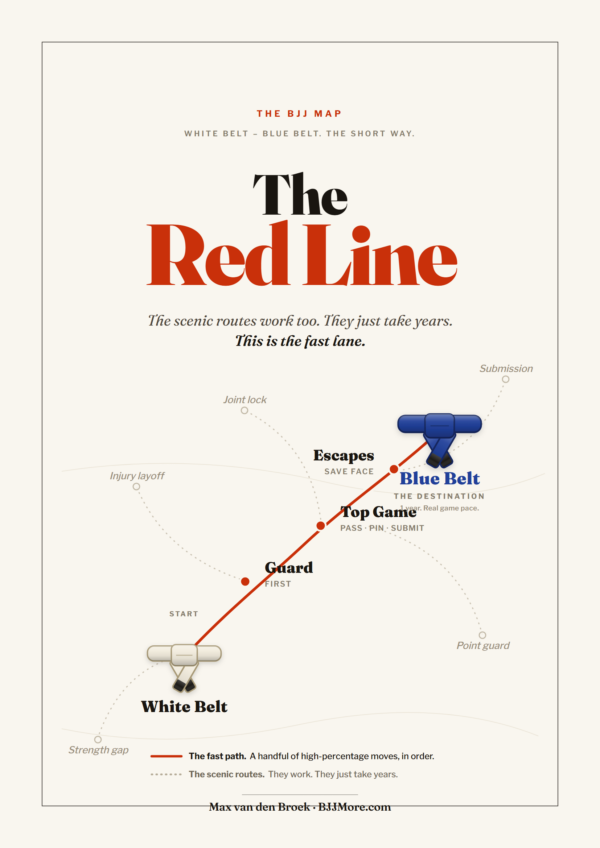
Preview the Map before choosing your next focus
Read the opening Map chapters free: seven training tips, the 40/40/20 training split and beginner guard choices. Email is required for the chapters and BJJMore training emails; you can unsubscribe anytime.
Read the free Map chaptersStart with free resourcesBJJ belt requirements FAQ
How long does it take to get a BJJ blue belt?
About 2.3 years on average in Gold BJJ’s survey of nearly 2,000 practitioners, but there is no guaranteed timeline. Training frequency, coaching, injuries, previous grappling and academy standards all matter. The IBJJF sets no minimum time at white belt, only a minimum age of 16 for blue. More in how long each belt takes.
Do I need to compete to get promoted?
Usually not. Competition gives your coach extra evidence, but many practitioners earn belts without competing. Your academy sets the standard.
How many techniques should a white belt know?
There is no useful universal number. A compact, connected game that covers survival, a guard, escapes, passing, control and finishing is a stronger target than memorizing a large list.
Does the IBJJF decide who gets promoted?
No. Your coach promotes you. The IBJJF sets minimum ages and minimum time at each belt, and only recognizes a promotion signed by an affiliated black belt.
What should I learn first in BJJ?
Start with safety and the basic positions. Then get one guard you can land in (we say half guard), learn to escape back to it, and build from there: keep your guard, pass, hold top position, finish.
What should a purple belt know?
A connected A-game: one guard whose sweeps and submissions chain together (for example armbar, triangle and omoplata from closed guard), a passing system, and the ability to explain and teach the basics. Under IBJJF rules you must be 16 or older, and an adult needs at least 2 years at blue.
Pick your next step: the ranking for your belt (white, blue, purple, brown), how long each belt takes, or how the belt rules work.
Just starting out? Best instructionals for beginners and white-to-blue curriculum courses.